

The Pesticide Scare In The '80s That Led To The Recall Of 10 Million Watermelons
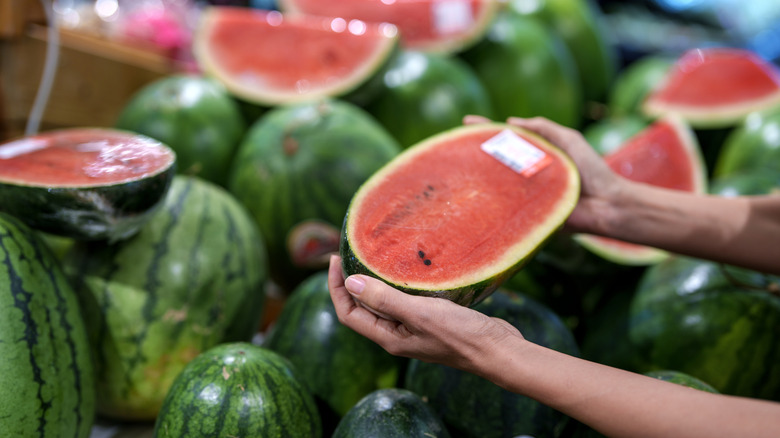
On a hot summer day, there are few treats more delicious or refreshing than a juicy cut of watermelon. We always want to get the best ones we can, which is why it's so important to look for warning signs when buying fresh produce. Sometimes, though, produce is contaminated before it ever even reaches stores, as was the case in a pesticide scare in the '80s that led to more than 10 million watermelons being recalled.
In 1985, a recall was announced for several U.S. states and parts of Canada for California-grown watermelons. Typically, food recalls are issued because of contamination from harmful pathogens, as was the case with the 2024 Trader Joe's recall that saw organic basil tainted with salmonella pulled from shelves. In this case, however, the watermelons were recalled due to contamination from a pesticide, Aldicarb, which went by the brand name Temik and today is illegal to use in the United States. Consumption caused various symptoms, including nausea and diarrhea.
All in all, over 10 million watermelons were affected by the recall, amounting to more than a third of California's melon crop at the time, and it's likely the amount sold and consumed was even larger. With no way to discern which melons were good and which were tainted, every one that had reached retail stores had to be destroyed. Afterward, more could only be sold if the farm products tested as safe from Aldicarb.
How the Aldicarb watermelon recall happened
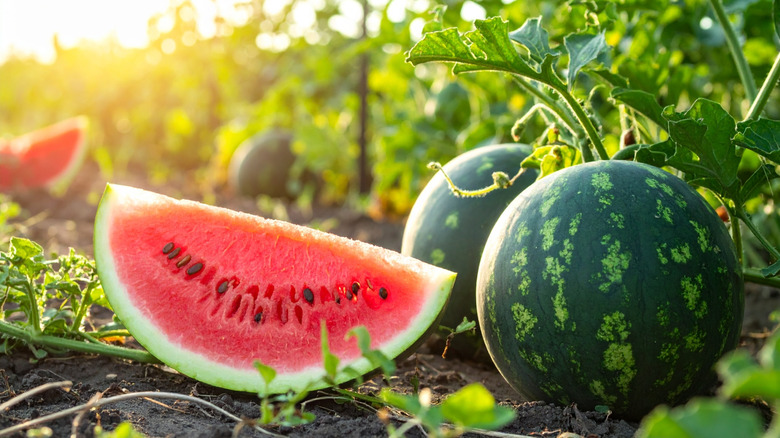
The recall was first officially announced on July 7th, 1985 after a rash of reports of illness following consumption of watermelon starting July 4th. By that time, the tainted fruit had become so intermingled in the supply chain that the only way to be rid of them all was to destroy every watermelon that had entered the market.
The cause of the contamination was linked back to farms that had previously applied Aldicarb to cotton crops, then grew watermelon on the same plots. The pesticide was supposed to leave the soil after 100 days, but it lingered in the soil for years instead and contaminated the melons that were later grown there. While about 1,350 cases of poisoning were linked back to the incident, no deaths appear to have been caused directly by Aldicarb, unlike a 2023 recall for cantaloupes sold by Aldi.
The makers of the pesticide, Union Carbide, denied any wrongdoing and insisted that the farmers who grew the watermelons had misused Aldicarb somehow. Union Carbide had become infamous following a deadly 1984 leak at one of its pesticide plants in Bhopal, India, which killed thousands. Aldicarb itself had been controversial since its registration in the 1970s and was put under special review by the Environmental Protection Agency (EPA) in 1984. In 2001, Union Carbide was acquired by the Dow Chemical Company. In 2010, 25 years after the California watermelon disaster, Aldicarb was finally banned in the U.S. following a joint decision by its manufacturers and the EPA.