

12 Mistakes Everyone Makes Using Parchment Paper
We may receive a commission on purchases made from links.
The kitchen has always been a space for invention and innovation, and not just when it comes to playing around with ingredients. The way we cook has evolved from stirring a pot over a blazing hearth fire to pushing a button on an air fryer (even if we keep making this mistake). While some of the tools in the average kitchen come with lots of whistles and bells, others lend their culinary support with much less fanfare. Parchment paper is just such a thing.
Parchment paper was developed in the 19th century by French scientists and quickly snapped up as a way to transport and store food, particularly butter. Scoot forward in time to the 1950s, when paper was coated with wonder material silicone and touted as a non-stick solution for bakers. While some people use silicone mats, their quality can vary, making parchment paper a more consistent choice.
But are you getting the best out of this hard-working yet humble kitchen essential? If all you do is tear a section off the roll, slap it on a baking sheet, then throw it in the garbage when the cooking is done, probably not. Strap in for our look at mistakes everyone makes when using parchment paper.
Confusing parchment paper with baking or wax paper
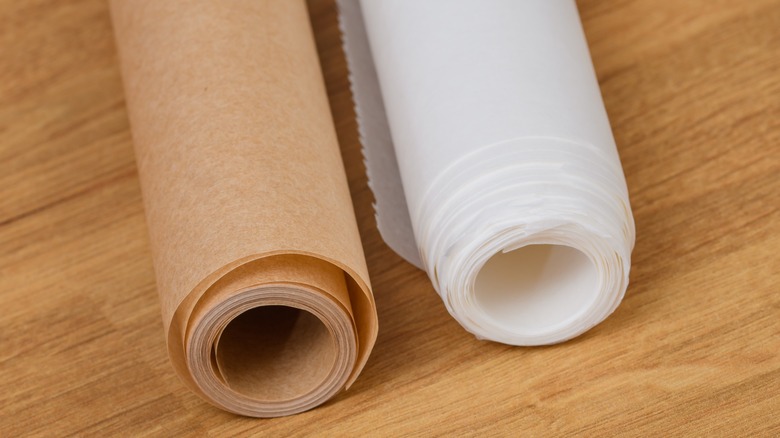
Lining a sheet pan with something to keep it clean while baking some cookies should be easy, right? Well, yes and no. Choosing the right product to protect your bakeware is important, because not all papers are the same. Most parchment paper is coated with a thin layer of silicone so food doesn't stick, but it's different to baking paper.
Also known as greaseproof paper, it has a non-stick surface that helps prevent foods, for example cake or cookie batter, from sticking to it. Baking paper is also designed to withstand high temperatures of around 440 F, while not all parchment papers can. There are also considerable differences between parchment paper and waxed paper.
While they sound similar and are both great at preventing food from sticking to them, waxed paper is absolutely not suitable for oven cooking. Many kinds have a thin coating of paraffin wax which is ideal for keeping moisture out, but a major fire hazard when put in a hot oven. Not to mention it will make a big mess if you mix it up with parchment paper. Waxed paper is best used for covering dishes cooked in the microwave, storing cold items or rolling out onto countertops to keep them clean while preparing food.
Not wetting and crumpling up parchment paper
Few things are as frustrating as trying to get parchment paper to sit neatly inside whatever receptacle you're trying to keep clean while using it to cook. It's like a weird food Olympics. On a sheet pan, parchment paper rolls up into a cylinder in less time than it takes to fire the starting gun, and it can leap it from any kind of cake tin onto the floor with 10 out of 10 for both style and technique.
The internet is full of tips for cutting a piece of parchment paper so that it fits a round cake pan. We like folding it into a triangle, placing the point at the center of the pan and using the edge as a guide to cut the paper to size. Alternatively, you can buy brands with pre-drawn grids on them to make getting a straight edge that bit easier. Both require precision and neither can prevent your parchment paper from misbehaving.
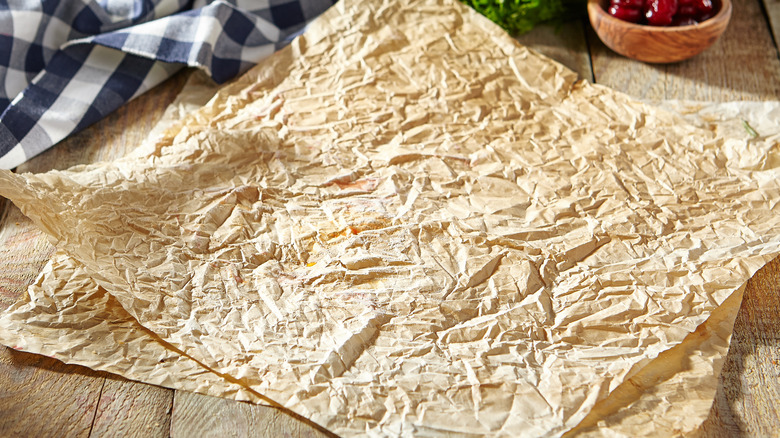
Happily, there is a quick and simple solution: Wet your parchment paper while scrunching it up as you go. A few sprinkled drops won't cut it, you have to hold the paper under the tap as you crumple it, so it's good and covered (don't worry about excess droplets, they'll evaporate in the cooking process). As if by magic, your parchment paper won't just fit perfectly in your sheet or baking pan, it will stay exactly where you put it.
Using the wrong side of your parchment paper
The argument about which side of aluminum foil was the right one has long since been settled, with a draw declared between Team Shiny and Team Matte. Unless, of course, you're using a specific non-stick kind of foil, then you have to do as the manufacturer says. However, the "which side is the right side" void left by aluminum appears to have been filled by parchment paper.
Social media can be a misleading source of information, with many commenters believing both sides of a sheet of parchment paper are exactly the same. Likewise, some influencers also contend that it doesn't matter which side of your parchment paper you use, while many home cooks are totally baffled by the question because they had no idea there was any reason to check in the first place.
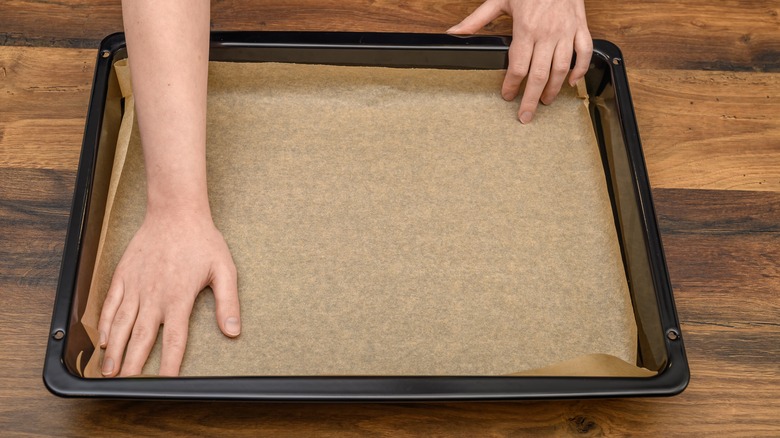
The fact of the matter is, unlike foil, it does matter which side of parchment paper you use. If you look closely, one side is slightly shinier than the other. This is the side that has a fine coating of silicon and will prevent food from sticking to the paper, so clean-up is easy breezy. The other side is not coated and it might not be as easy to remove your cookies or pastries. Make sure you check first to avoid potential "argh" moments.
Letting parchment paper flap around the air fryer
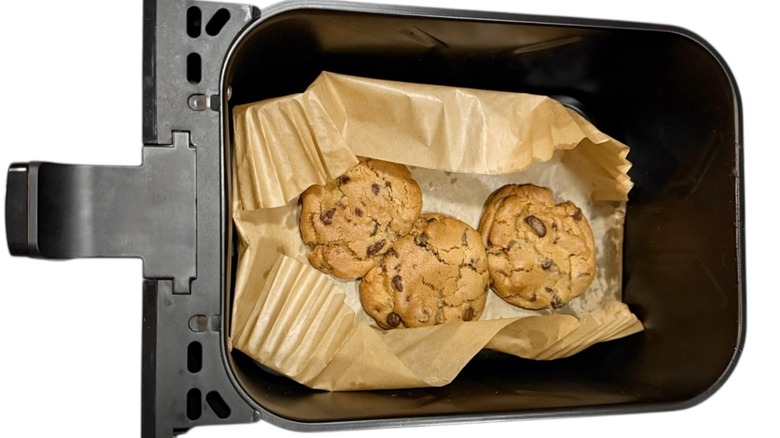
Air fryers have been arguably the biggest kitchen gadget revolution in years. They can handle everything a full-sized oven does, from baked potatoes to flawless cakes or cookies. They will even heat up leftover pizza (step aside, microwaves) with zero fuss — almost. The "almost" that comes with air fryers is that business of cleaning out the pans after they've been used.
Suddenly, all that flexibility becomes a liability when you're scrubbing them day in, day out. You can line your air fryer with aluminum foil but that too gets messy after a few meals and it doesn't play nice with acidic ingredients. But where a wafer-thin roll of metal fails, parchment paper succeeds. Lining your air fryer with parchment paper will keep them clean and you won't need to worry about reactions with particular foods.
However, there is the risk it will flap around when the drawer is closed, covering your food or becoming a fire hazard if it touches the element. The easiest way to avoid this is by weighing the parchment paper down with whatever you're cooking. If that's only a little food, or you're using pre-formed air fryer liners that sit snugly inside the air fryer drawer, you can buy these cool magnets. They will stop the paper flapping and help ensure your food cooks evenly.
Forgetting the parchment paper sling

Nothing feels as good as seeing a beautifully risen cake or delicious brownie sitting in the oven. But all the effort that went into getting your baked goodie to that state is for nothing if you can't get it out of its pan in one perfect piece. Sure, you lined it with parchment paper to stop it sticking, but unless you made a sling, there could be trouble ahead.
It's a trick used by many home bakers; all you need is a square or rectangular pan and a steady hand. To make a parchment paper sling, cut two pieces that are the same width as your pan, but a little longer in length. You can do exact math, but carefully cutting by eye will work, too. Place one sheet in your pan, so it covers two sides, then lay the second on top. There should be a couple of inches of paper overhanging when pressed into place. If you're concerned about it flapping while in the oven, these metal bulldog clips will hold it in place.
When your brownie or cake is cooked and ready to be removed from the pan, take off the clips, hold the two overhanging sides from the lower piece of parchment paper, and gently lift out your baked dish. No more scratching your bakeware with knives to prize out food, and no more undercooked or damaged items because of floppy parchment paper.
Cooking parchment paper at a very high heat

Parchment paper comes in two different coatings, silicon and Quilon. The former is a natural material found in quartz and sand, while the latter comes from Chromium+3, which is present in many foods, as well as water and soil. There has been a lot of debate in recent years about the coatings on parchment paper and whether they are safe to use at very high heats.
The answer is both can withstand temperatures of up to 450 F without any problems. However, foods like Yorkshire puddings, pizza and roasted vegetables need more heat to cook properly, and that potentially puts your parchment paper in danger. Prolonged exposure to high heat could cause the coating on parchment paper to effectively melt, causing an unpleasant smell.
Parchment paper products that use Quilon can be cheaper than their silicon counterparts, but come with a little extra baggage all their own. They too can tolerate high oven temperatures but, push them too far past the 450 F mark, and they can release chemicals that are not safe for the environment. Not to mention the possibility of your parchment paper scorching and scattering burned bits all over your food. The safest option is to read the manufacturer's instructions and stick to them. If you need to cook food at a high heat, pop it in a non-stick dish or tray.
Sidestepping cooking en papillote
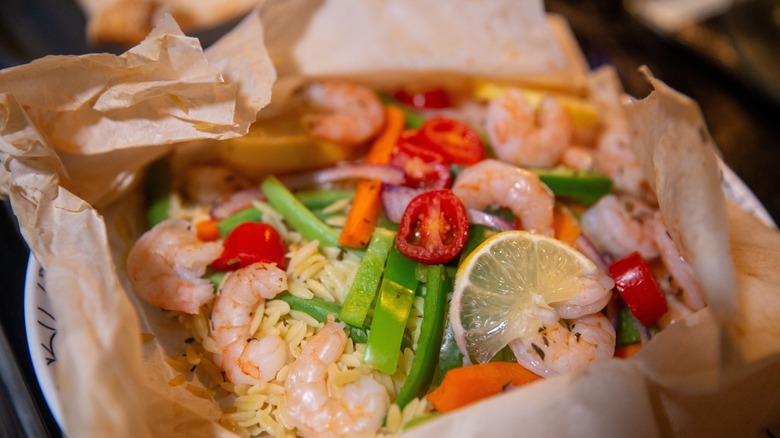
One of the greatest things about being a foodie is exploring the many different ways to make what we love to eat. Parchment paper comes in handy if you're trying this method for yellow cake or giving these easy chickpea cookies a whirl, but it's also the key to a particular style of cooking, known as "en papillote." Lots of cultures wrap their food in leaves to cook it, but using parchment paper became very popular in France.
The premise is simple: Take a piece of parchment paper, put the food you want to cook in the middle, then fold the paper tightly around it to create a sealed bag or package. During the cooking process, steam from the food stays inside the bag, enhancing the flavor, and creating a delicious, ready-made sauce. En papillote is one of the best ways to cook fresh fish, as it stays juicy, but it's ideal for all sorts of foods, including vegetables, meat, and rice.
Adding aromatics to your parchment paper envelope before sealing will help add complexity to the ingredients inside, and in some recipes will puff up as whatever's inside generates steam as it cooks. You can use the en papillote method in a traditional oven, but it's ideal for a barbecue or campfire, too. Best of all, you get an amazing "tada!" moment when you unwrap the parchment paper and reveal the delicious meal inside.
Using fat, instead of parchment paper, for sautéing

Keeping our pans and skillets in good condition can be tough, even the most durable non-stick coating can wear down over time. As a result, we end up throwing a little more fat in the pan to stop food from sticking, and if you prefer butter over olive oil, it's not ideal for our health. Splashing out on new pans every few years isn't the answer either, but parchment paper is.
Just ask chefs Kenji Lopez and Grant Lee Crilly, who hopped onto social media to announce they had succeeded in searing several foods, including eggs and hash browns, using parchment paper. The comments demonstrated that people around the world also put parchment paper in pans, but it's not just brilliant for keeping them clean.
Using less grease or fat will of course make whatever we eat that little bit healthier, without compromising on flavor or having to retire your perfectly seasoned cast iron pan. Putting parchment paper in a skillet, frying or sauté pan works with everything from meat to vegetables, just remember to wet it before you start cooking so it doesn't slip and slide.
Throwing away parchment paper after one use
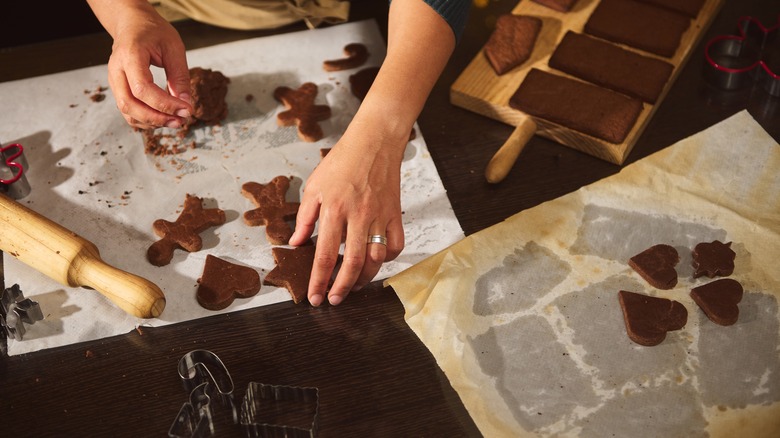
Many people are trying to be a little more sustainable these days, and home cooks are no exception. From buying seasonal produce to investing in wooden utensils rather than potentially toxic plastic ones. Parchment paper is another tool that, depending on what you do with it, can be used more than once. First things first, how does your parchment paper look? If you last used it at a very high heat and it's a little scorched, or it's brittle and tears easily, then into the trash it should go.
Second, make sure your parchment paper is as clean as possible after its initial go-around. If you've used it to roll out dough or to line a cake tin, or if it was used to cook fatty foods, if you can't get every scrap off, then you're better off throwing it in the garbage. It's also vitally important not to reuse your parchment paper if it's come into contact with raw meats like chicken or seafood, to prevent contamination.
If your parchment paper is not burned or weakened, and has only been used with fat-free, clean foods like making cookies, then you can use it up to three times. Clean it by wiping it with a dry cloth or brush, if it's moist then make sure it's completely dry, then lay it flat in a cool, dry place. After three uses, it's ready for the trash.
Presuming you can compost or recycle your parchment paper
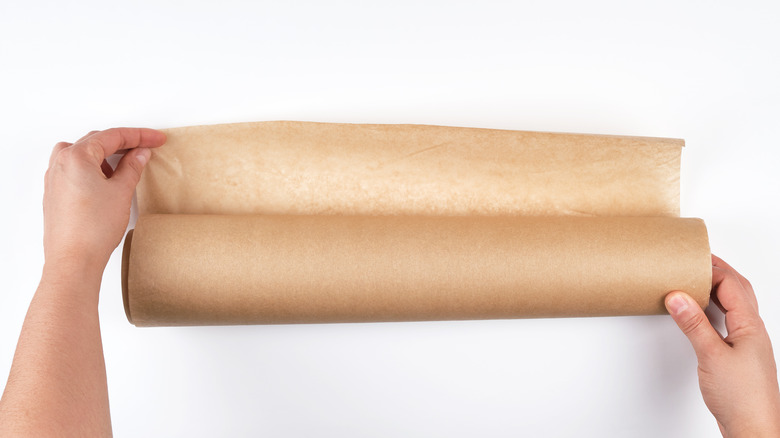
There are endless ways we can put kitchen bits and pieces to good use in the garden, rather than throwing them into landfill. This hack for plastic takeout boxes and what you can do with mesh produce bags are just two smart solutions. However, when it comes to recycling or composting your parchment paper, it's not quite as straightforward as you might think.
The feature that makes parchment paper great — its non-stick properties — is also a fundamental barrier to its sustainability. That thin layer of silicone is difficult to separate from the paper itself, making any silicone or quilon-treated parchment paper unsuitable for recycling. Only parchment papers that are unbleached and untreated can be recycled and composted, and finding products that tick both boxes can be a bit of a slog. It took a lot of digging online to unearth a single brand of uncoated parchment paper.
Although there are lots of unbleached parchment papers available, many of which are labelled "natural" or "chlorine free," but closer inspection of their details reveals many still have some form of silicone coating. If you can't get your hands on uncoated parchment paper, a solution of sorts could be an uncoated, unbleached butcher's paper, but be aware it's designed for low, slow heating rather than higher temperatures.
Forgetting parchment paper is more than a liner

The best kitchen equipment has multiple uses, from the humble ice cube tray to the unique things a Keurig coffee maker can do. One big mistake many home cooks make with parchment paper is thinking it's only good for lining tins and sheet pans to keep them clean, when it's actually got several tricks up its sleeve.
Cloth or plastic piping bags and syringes can be difficult to manipulate for kids, but a small cornet makes decorating buns and cookies much easier. Tear off a square of parchment paper, fold it along the diagonal to create two triangles. Take the two farthest points and wrap them around each other to form a cone, then fold over the top to stop it unfurling.
Parchment paper is also invaluable when it comes to storing leftover foods. Got some pizza slices but no space in the fridge? Stack them up with a piece of parchment paper in between for no sticking nonsense. If you've a yen for some sushi but haven't got a rolling mat, parchment paper is a great alternative, and it's a great surface for home cooks working with chocolate. Don't forget to use parchment paper as a practical liner for drawers and to protect your work surfaces, just tear off a new piece whenever you need.
Only using parchment paper in the kitchen
Parchment paper has cemented its position as a workhorse in our kitchens, but did you know you can print on this handy, low-cost material? If you've ever wanted to be more ambitious with your chocolate or cookie designs, it makes a great template. Inkjet printers work well with parchment paper, but if you have access to a laser printer you will get sharper results, though it's worth double-checking you have the heat-resistant kind of paper, otherwise disaster may ensue.
Away from its myriad culinary uses, parchment paper is a brilliant tool for anyone who wants to make their own clothes — it's ideal for sewing patterns. Home cooks who also love to craft can use it for colorful window ornaments, and if you find you're out of wrapping paper and need a robust replacement, it makes for a surprisingly lovely alternative.
Likewise, you can use parchment paper — either with a printed design on or not — to make treat bags for all kinds of occasions. If you're a lover of candles and want to take them to the next level, use a piece of parchment paper (crunched up slightly for extra texture) to create a beautiful luminary. If you get bored of it, you can always unroll it and use it for your next batch of cookies.