

20 Types Of Olives, Explained
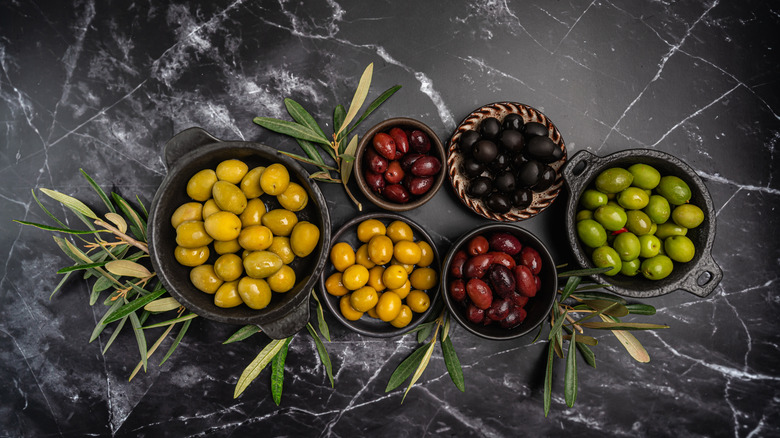
In many cuisines — Mediterranean, Middle Eastern, Greek, Italian — olives are a revered ingredient. These tiny gems have a history that spans millennia, dating back to ancient civilizations when they were present at many a feast and are, in fact, one of the oldest fruit trees ever domesticated by humans.
There are thousands of varieties of olives around the world, each with their own flavors, uses, and appearances. The olive is a food of many purposes, be it consumed as-is or with its oil extracted to use as fuel, medicine, cosmetic, and more. Because of this, its importance across multiple cultures cannot be understated.
Like wine, much of the flavor of olives comes from its terroir, or environment. Diverse terrains, varying climates, and more all contribute to the unique flavors, textures, and even colors of olives. How they're then processed — be it with lye, dry-cured, wet-brined, or soaked in wine and herbs — adds another layer to these polarizing fruits. Love them or hate them, read on to learn more about different types of olives from around the globe.
Kalamata olives
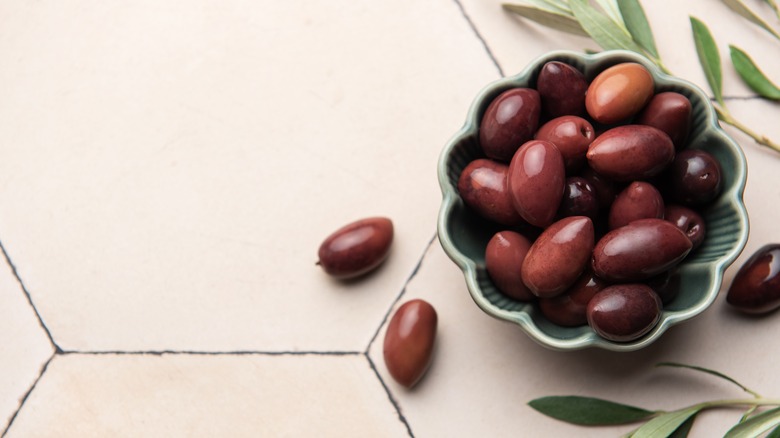
An olive you're likely already familiar with is the Kalamata olive, be it on pizzas, in salads, or simply as an ingredient in antipasto. Large in size with a slight almond shape and a dark purple color, this olive variety is considered a black olive. The Kalamata olive is a revered fruit that only earns its name (for the city of Kalamata) if it grows in the Peloponnese peninsula in southern Greece, as a protected designation of origin.
When eaten raw, these olives have a bitter flavor. However, they're frequently cured in red wine vinegar, red wine, and/or olive oil for a rich, smoky, and fruity taste. A popular choice for table olives, Kalamata olives make a great snack as well as an addition to many dishes. They're a natural antioxidant and contain high levels of iron and vitamin A.
Cerignola olives
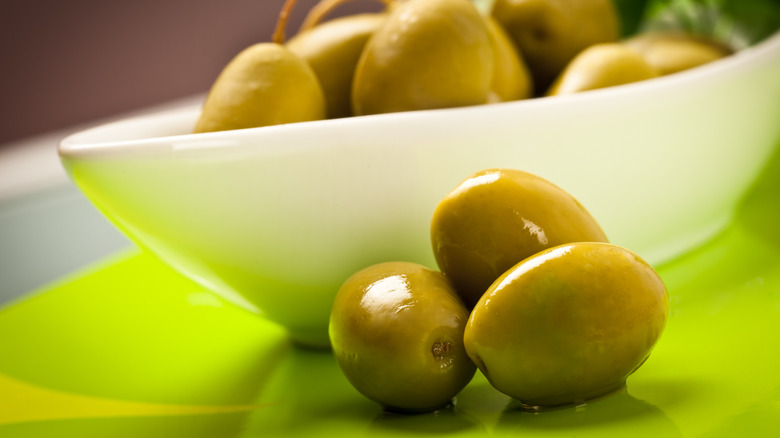
Another big player in the world of olives is the Cerignola olive. Literally, these olives are large. They tend to be green but can also be black and have a meaty, buttery flesh and mildly tart and buttery flavor. Red Cerignola olives also exist, but they are dyed that hue and do not come by it naturally. Their mildness makes them a good starter olive for those unfamiliar with the taste.
The Cerignola olive gets its name from the town of Cerignola, in Italy's Puglia region. Like the Kalamata olive, these olives are excellent table olives. They're cured in brine and their large size makes them a great option for stuffing. At your next dinner party, try serving Cerignola olives stuffed with items like cheese, garlic, salami, or sun-dried tomatoes.
Castelvetrano olives
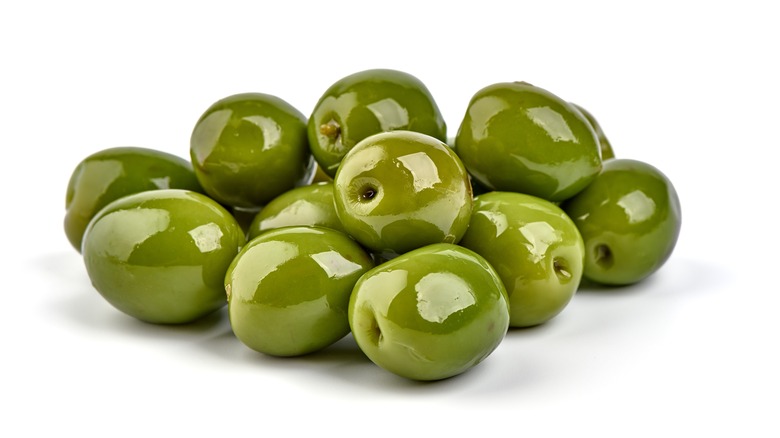
If you've never been particularly fond of olives, you might just change your tune upon tasting the Castelvetrano olive. Firstly, these olives are kind of adorable to look at. They're round, bright green, and moderately sized. Hailing from the Castelvetrano region of Italy, these olives are actually considered quite sweet and mild in flavor.
With a firm, buttery flesh, they're much less salty and briny compared to most varieties. This is because Castelvetrano olives are cured with lye rather than salt or brining, which helps eliminate any natural bitter flavor without rendering it salty. A snackable olive popular in Italy, we also wouldn't be opposed to trying Castelvetrano's sweeter tasting notes in something a little more assertive, like a dirty martini.
Gaeta olives

The third Italian olive in a row on our list is the Gaeta olive. Named for the town of Gaeta, these smaller, slightly rounded olives are harvested once they're fully ripe — later in the season — and have turned a purplish-black color. The late harvesting also means that these olives can have a slightly wrinkled appearance, versus firmer-textured, younger olives like Castelvetrano.
Gaeta olives have a tart, almost citrusy taste with the smallest hint of sweetness. Their unique flavor lends itself well to different dishes, specifically pastas and salads (although they can also be enjoyed simply out of a bowl for snacking). They are cured in brine, which leaves them plump and juicy, or in salt, which enhances the shriveled look and leaves them more chewy.
Niçoise olives
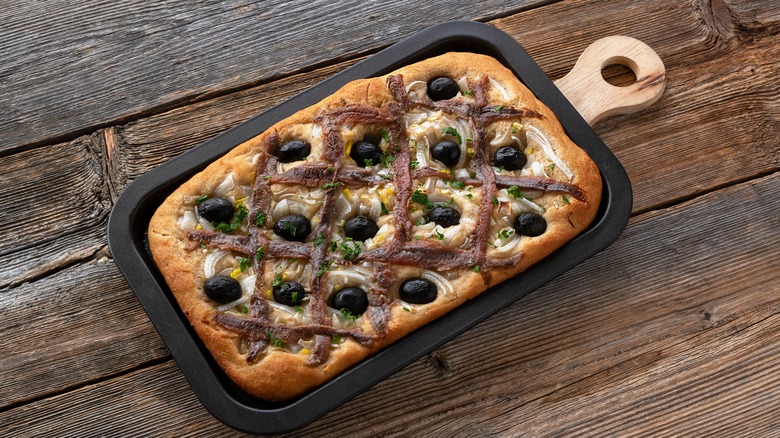
Moving over to France, we have the Niçoise olive. This olive variety comes from Southeastern France and, unlike other olives on this list, the name doesn't just refer to the area it comes from, but also the method by which it's processed. Niçoise olives are allowed to ripen on the tree until they're a dark brownish color, verging on black. Then, they're cured in a liquid of water, salt, and various herbs and seasonings for several months. This gives them an assertive flavor with a herbal aroma that's not entirely overpowering.
Niçoise olives are used in plenty of dishes, as well as eaten as a snack. Try them on pizzas or in sauces or paired with poultry or seafood dishes. For the most classic dish, try using Niçoise olives in a Niçoise salad.
Mission olives
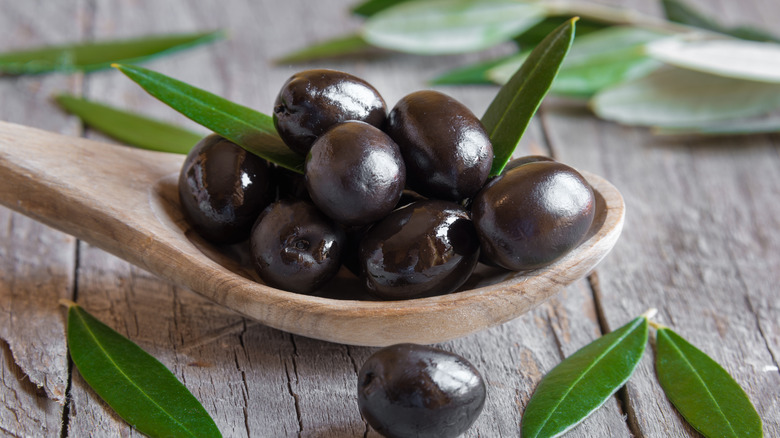
The only olives on our list to have roots in the United States — California, to be specific – Mission olives have been in the Golden State since the 1700s. Originally brought over by Spanish settlers, much of the harvested Mission olives end up processed into olive oil rather than eaten as-is. That being said, the hardiness of these olives lends itself well to salt-, lye-, and brine-curing, as they won't lose their firm texture. The juiciness of these olives also lends itself well the oil-pressing, meaning these olives are dual-purpose and quite efficient — ideal for early settlers.
Small, round, and usually black (although younger Mission olives are green), these olives have a mild, grassy flavor. When processed into olive oil, younger, greener Mission olives can impart a more astringent taste, while the oil from the more mature fruit tends to be smoother and milder.
Gordal olives
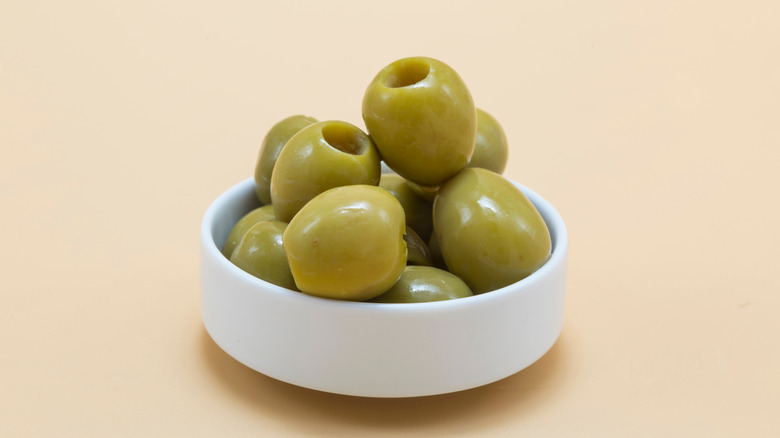
For an olive that could have a body complex if it wasn't so beloved by the culinary community, we have the Gordal olive. Meaning "fat one" in Spanish — where this variety originated — these large olives have a big, meaty texture and briny flavor to match.
Thanks to their size, these Andalucian-grown olives do well with being stuffed in addition to being enjoyed as-is table side. With their impressive size, you would think that Gordal olives would also be bursting with oil, too. However, with their firm texture, these olives are better suited to tapas. They don't contain much oil within them at all, meaning they belong exclusively to the snacking realm. Consider adding Gordal olives to your menu the next time you host a Spanish tapas night (which you should do ASAP).
Nyons olives
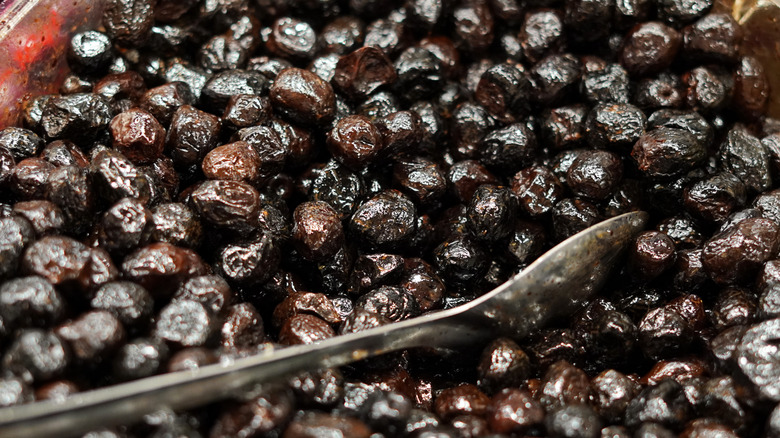
On the polar opposite end of the spectrum (at least when it comes to size) we have Nyons, or Nyon olives. Picked when they're at their most mature, these small olives are dark black and wrinkly when they're harvested. With a mild bitterness upon being picked, Nyons olives are then packed in a saltwater brine for six months, wrinkling their skin further while maintaining the juicy, plump interior.
Grown around the region of Provence, France, Nyons olives have an intense, aromatic flavor. While they can be enjoyed as-is, they're also frequently used in dishes like olive tapenade and a spread made with olives and anchovies. These olives can be a bit more difficult to track down — as well as more expensive — making them highly prized by the olive connoisseur.
Liguria olives
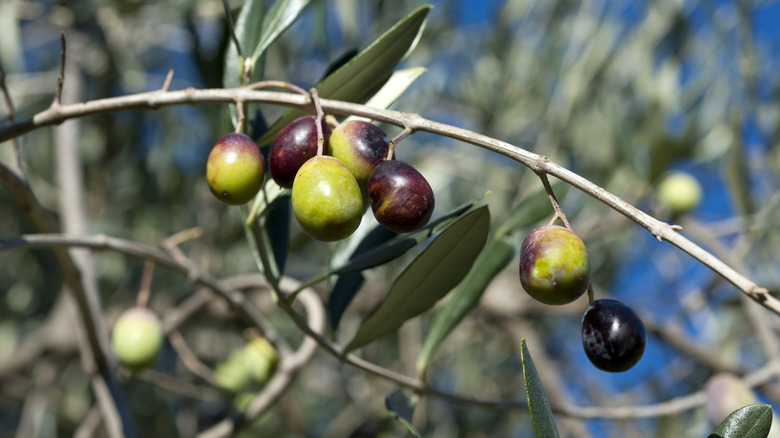
Liguria olives are also known as Taggiasca olives, due to where they grow: the Liguria region or northern Italy, specifically around the town of Taggia. These olives are on the smaller side, especially where table olives are concerned, and have a green and purplish-black color. If they look similar to Niçoise olives, that's because they are — the two varieties grow just miles away from one another.
With a fleshy texture and fruity flavor with after-notes of nuttiness, Liguria olives are a favorite for olive oil production as well as in recipes. Their unique flavor lends itself extremely well to high quality olive oil, but also stands apart in charcuterie, salads, and meat dishes. Try adding Liguria olives to a focaccia recipe or pairing it with proteins like roast beef or lamb. Or, upgrade your pizza sauce with the addition of olive oil made with Liguria olives.
Manzanilla olives
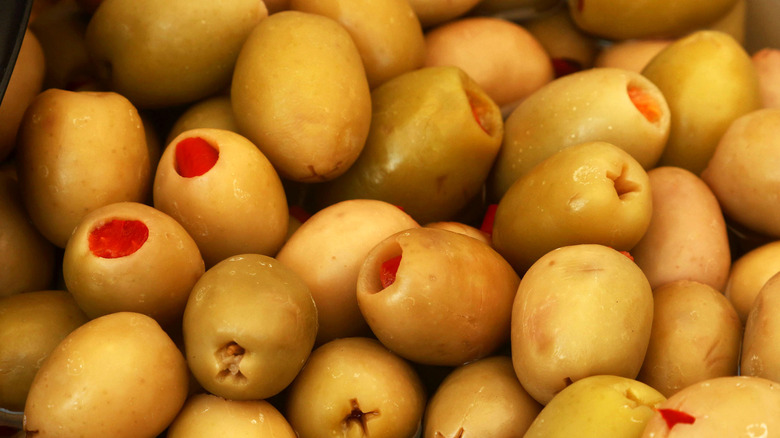
When you picture an olive in a martini glass, chances are what you're envisioning is a Manzanilla olive. The reason that might be the case is that this olive variety is the most common of all the olives, thanks to its abundant yield. Originally from Sevilla, Spain, these smaller, oval-shaped olives are a classic olive green hue, plump, and meaty. Often stuffed with things like pimentos or garlic, on their own they boast a smoky, almond-y flavor.
These olives are younger when they're harvested — which explains their green color — and cured Spanish-style, with a sea salt brine that lasts three to four months. Try pairing Manzanilla olives with Spanish Manchego cheese, spicy chorizo, or using them as an all-important garnish in your next dirty martini.
Beldi olives
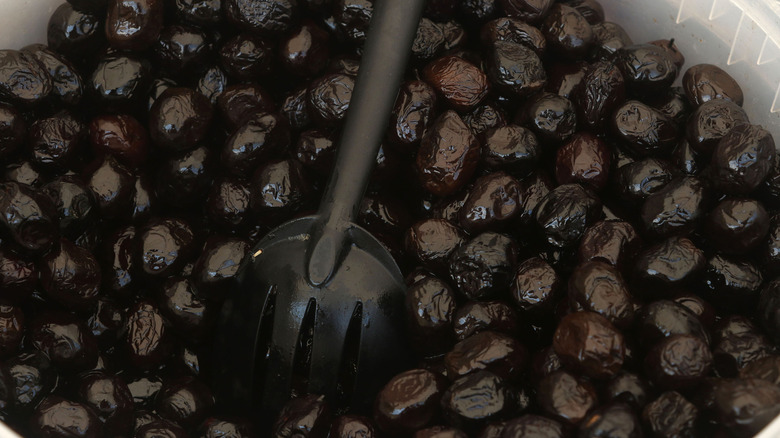
Don't count out these little guys. While they're small in size, they make up for it in big, robust flavor. Native to Morocco, Beldi olives are a prized commodity, since the country exports so few of these tiny gems. With their black, shrivelled appearance, you might get a hint that these olives have an intense taste that's unmatched by many others.
Unlike some other olives which are cured in brine, Beldi olives are salt-cured, which means they're placed among layers of sea salt. After they're finished, they have a unique, chewy texture rather than a juicy, meaty one. Beldi olives are a frequent ingredient in many Moroccan dishes, including tagines, as well as spreads and salads. You can also opt for something a bit more simple, like Beldi olives sprinkled with a high quality olive oil and chopped hot peppers to rally accentuate their intense flavor.
Picholine olives
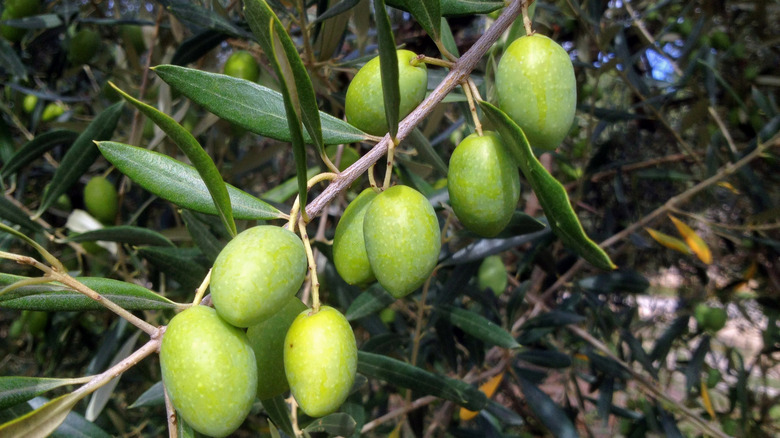
Unlike many other olives, which are round or oblong in appearance, the Picholine olive possesses a unique, torpedo-like or almond-like shape. Crisp and crunchy with a firm texture, Picholine olives mostly grow in France in the Riviera region, but also pop up in abundance in Italy and Morocco, as well.
This type of olive has a classic olive green color and a tart, slightly citrusy taste, which makes it well suited to pair with seafood dishes. These olives are also known as "cocktail olives," which means it's processed with a lye cure and brine-fermented for up to a year, removing any notes of bitterness and enhancing its salty, fruity taste. If the French Picholine olive captures your fancy, try using it in salads or a tapenade recipe that calls for black and green olives.
Alfonso olives
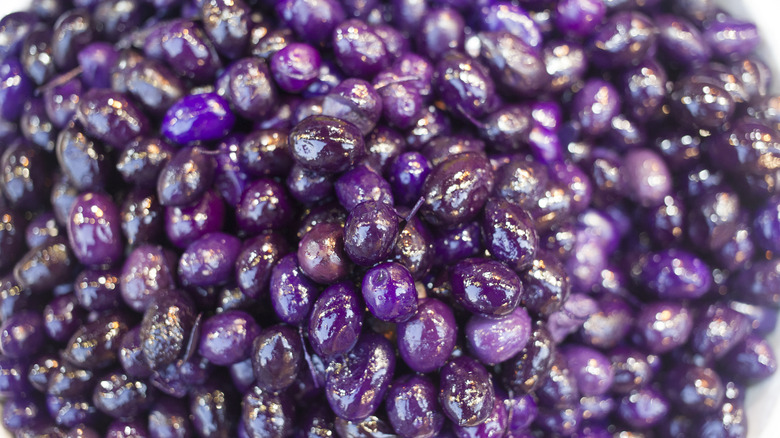
Oh, wow, are these some gorgeous olives! While plenty of olives run the (somewhat muted) color spectrum from brown to black to green to dark purple, Chilean Alfonso olives are a deep purple, thanks to being packed in red wine and picked when they're already purple in color.
Sometimes called Maddalena olives, Alfonso olives can be found in other South American countries like Peru and Argentina. They're not only notable for their striking appearance, but also for their meaty, soft, and tender texture and rich flavor, which has a sour bitterness to it. When it comes to using and enjoying Alfonso olives, they're best consumed as-is, since their flavor is so assertive. Pair with a full-bodied red wine and other snackables on a charcuterie board and you have the best vehicle to savor this beautiful olive variety.
Arbequina olives
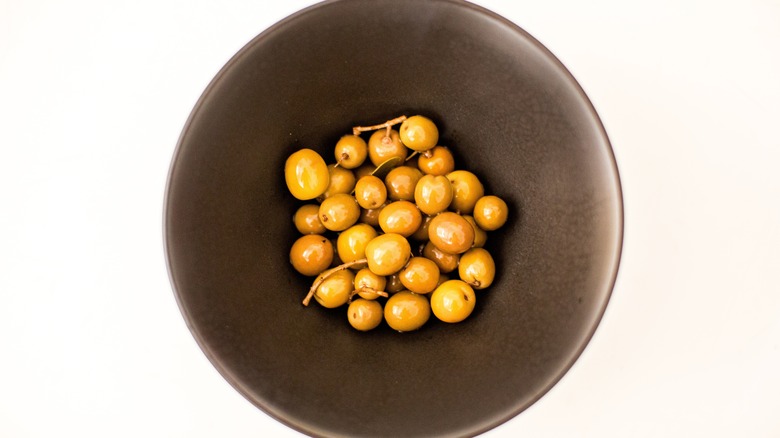
If you're in the market for a quality olive oil, you might want to look at those made with oil from Arbequina olives. Although these olives — grown around the Catalonia region of Spain — work as table olives, they're also revered for how much delicious oil they pack into their small size. While we know olive oil does, in fact, belong in desserts, using Arbequina olive oil as a starring ingredient in something like an olive oil cake would really give this fruit a chance to shine.
Should you choose to go the savory route and use Arbequina olives as-is, try looking for ones that are pinkish or orange in color as a vibrant addition to your table. Although many Arbequina olives tend to be brownish or greenish. With a firm, meaty texture and mild, buttery, and slightly fruity flavor, these olives are a show-stopping addition to Mediterranean dishes, tapas, and more.
Empeltre olives
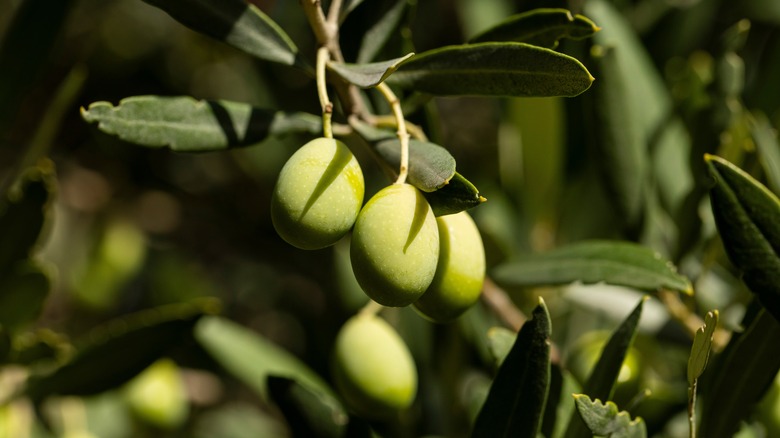
Another olive from the Catalonia region of Spain (as well as the Aragon region and Balearic Islands) is the Empeltre olive. Medium-sized, elongated, and slightly asymmetrical, these olives, like many, begin green before maturing into a black color.
While they are processed into oil, Empeltre olives also make delicious table olives, due to their mild and fruity flavor. There are notes of apple, almond, and even banana in this unique fruit. Like other olives, Empeltre olives are also brined and occasionally even marinated with different herbs and spices to help accentuate the fruitiness they possess. These olives are delicious in salads, tapenades, and even as a snack, thanks to their smooth texture. Their oil can be used in salad dressings and marinades, or drizzled over fish and vegetables.
Amfissa olives
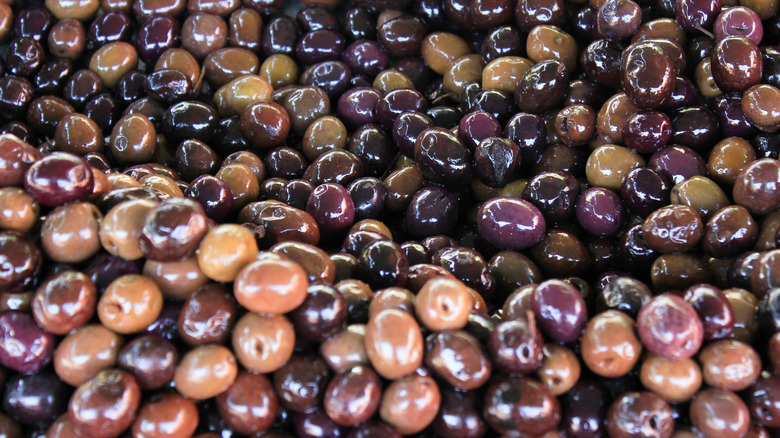
Amfissa olives are usually available in two varieties. The younger, green Amfissa, which is briny and buttery and has a firm, crisp texture, and the more mature, black Amfissa, which is slowly brined for a mild, fruity flavor and meltingly soft texture.
Amfissa olives are grown in central Greece and are one of the country's most popular varieties of the small fruit (yes, olives are a fruit). These olives are frequently used in the production of olive oil — particularly the younger version — because of their bright, lemony flavor. If you're looking to enjoy Amfissa olives in their entirety, we suggest pairing them with other Greek foodstuffs, like tangy feta cheese, creamy goat cheese, or adding them to soups and stews, as they do in Greece.
Hojiblanca olives
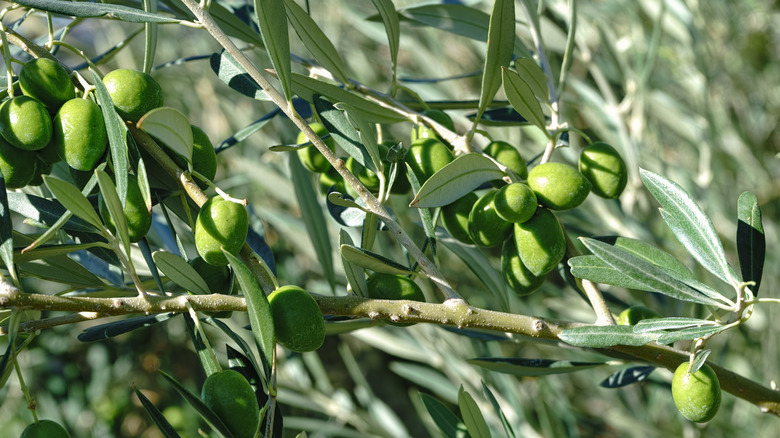
You'd be forgiven for assuming that the Hojiblanca olive would be white, because of its name. Instead, this Spanish-grown olive gets its moniker from the silvery underside of its leaves — "hojiblanca" translates to "white leaf." That coloring is what distinguishes Hojiblanca olive trees from others in the Andalusian area, where this variety of olive grows.
Hojiblanca olives themselves are medium-sized with an almond shape and green color and have a slightly bitter, peppery taste. As such, they're typically used to produce richly-flavored olive oils to preserve their unique tasting notes, which also include hints of herbs and fresh almonds. In addition to olive oil, Hojiblanca olives as a whole are frequently used in dishes like salads, tapas, and grilled vegetables. To mellow out their bitter notes for consumption, Hojiblanca olives are treated with lye or otherwise brined.
Picual olives
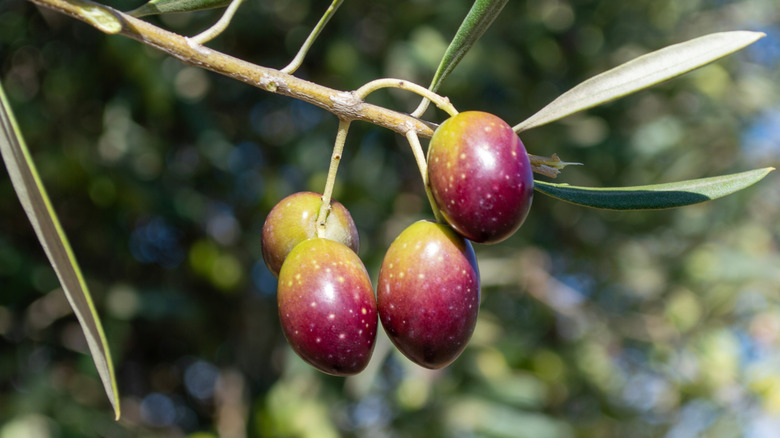
An important part of Spanish cuisine, Picual olives have been in the country for over a millennium. Small to medium in size, these firm, meaty olives contain plenty of oil in their diminutive stature, making them a vital component of many Spanish olive oils. In fact, Picual olives are the most common olive used for oil production in the country.
These olives have a robust, slightly bitter and peppery flavor with notes of almond, tomato, and green apple. Those tasting elements add a depth and complexity to the oil they produce, as well as the olives as an ingredient in and of themselves. If you happen to get your hands on olive oil made with Picual olives, we recommend trying it as a finishing oil versus a standard cooking oil, to really enjoy those robust, nuanced flavors. Try it as a dipper with bread or finish a pasta with a quick drizzle.
Koroneiki olives

A beloved choice for Greek olive oil production, Koroneiki olives are the small olives with the long name (and bold flavor, to boot). These tiny olives are legendary when it comes to Greek olive oil production, having been used for over 3,000 years. Grown in the Peloponnese and Crete regions of the country, these minute fruits count more than a quarter (27%) of their weight as oil.
While they have a slightly bitter, fruity flavor and a peppery finish, it's rare for Koroneiki olives to be eaten table-side. Instead, it's their high quality oil that's most prized. Smooth and well-balanced, try it drizzled over salads or pizzas, used in pasta dishes, or sprinkled over dips to truly appreciate its rich, robust flavor.
Leccino olives
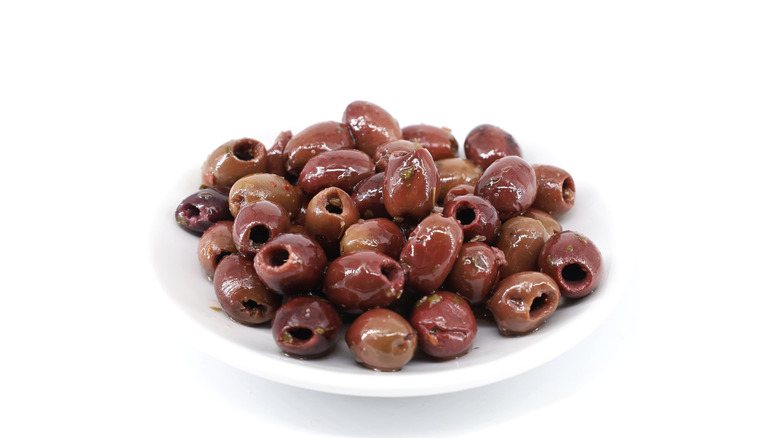
Yet another olive that's prized for its oil is the Leccino olive, which is native to Tuscany, Italy. These medium-sized olives are a dark purple or black color when ripe and have a mild, delicate, and slightly sweet flavor. This makes them an excellent choice for many dishes when you don't want that signature "olive" or briny flavor to detract from the rest of the ingredients. Instead, it's adaptable enough to use in Tuscan or Mediterranean recipes, as well as enjoyed on its own with charcuterie or light wines, like Chardonnay or Prosecco. Their easily detachable pit makes them a convenient choice for many diners.
The delicate flavor of Leccino olives also lends itself to more versatile olive oils. Rather than stronger, more robust olive oils, an oil made from the Leccino olive is more suitable for cooking dishes rather than finishing them or flavoring them.