

How To Properly Reheat Prime Rib Without Drying It Out
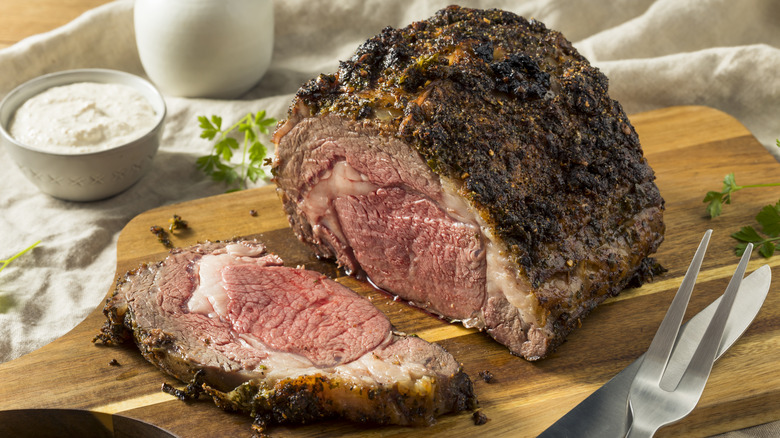
Prime rib, sometimes also known as standing rib roast, can be an incredibly flavorful and delicious cut of beef. However, it's far from the most affordable steak cut, so we typically reserve it for special occasions like holiday dinners. Once all of those dinners are done, you may find yourself with leftovers if you're lucky. If you are, it's very important to reheat your leftover prime rib properly to prevent it from drying out and losing flavor. The last thing you want to do with your expensive prime rib is turn it dry and tasteless by reheating it incorrectly.
The secret is to use the oven low and slow — and steer clear of the microwave, please. Low heat and a long cooking time help prevent evaporation of all the juices that give prime rib so much flavor. Use an oven-safe pan, add some au jus or beef broth, and cover with foil. Reheat the prime rib at 250 to 300 degrees Fahrenheit until warm, up to 30 minutes depending on temperature. Just like in baking, avoid the oven's convection setting since it creates a drier atmosphere.
Another important part of reheating prime rib the right way is to properly store it. Correct storage ensures that it's as fresh as possible once you're ready to enjoy it again. Before storing, let your prime rib cool completely, then put it in the fridge or freezer in a sealed container or airtight wrap. It can last up to a week in the refrigerator or six months in the freezer.
Rehating prime rib in the microwave is dicey
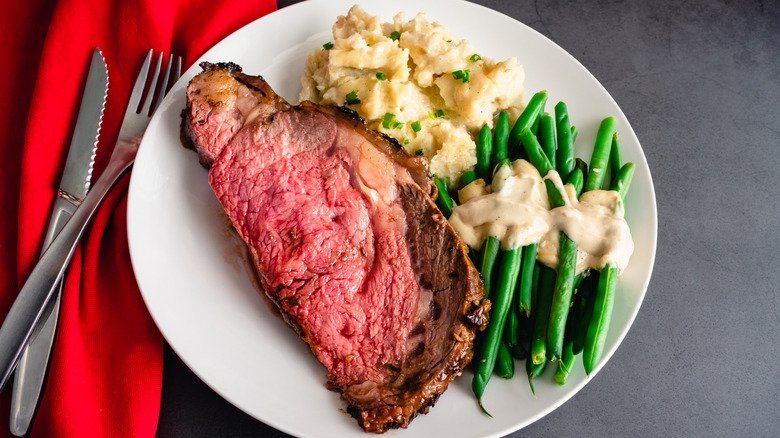
One thing you should practically never do when reheating prime rib is use the microwave. It may be convenient, but it's not worth it. The microwave is inferior to the oven for reheating any kind of steak, but prime rib is an especially bad choice because of how juicy it's supposed to be. Put it in the microwave, and it will likely come out dry, tough, and bland. If you want to preserve the prime rib's juiciness and flavor, the oven is the way to go.
The reason microwaves are so unideal for prime rib is because they use short periods of intense heat, the exact opposite of the ideal conditions for reheating this cut. Much of the liquid within the meat evaporates, leaving it gray and lifeless. Trying to keep that moisture in using sealed containers or foil can cause the container to pop or break while the foil could also send off a shower of sparks.
If you absolutely must microwave your prime rib for some reason, you can mitigate a few of these pitfalls. Cut the beef into slices, use a microwave-safe bowl, and just like in the oven, include au jus or broth. Cover with a lid (leaving space for steam to escape) and keep the microwave time short to help prevent it from drying out. One to two minutes is usually enough. Once it's done, immediately take the meat out and move it to a plate to minimize carryover cooking that could doom the leftovers.