

10 Of The Oldest US Food Brands That Are Still Around Today
We may receive a commission on purchases made from links.
The United States of America marks its 250th anniversary in 2026, but there are a handful of brands still doing business which are even older. Rhode Island-based Caswell-Massey soap company, founded in 1752 and toolmaker Ames, dating back to 1774, are just two. Although soap and shovels will likely never go out of fashion, the same can't be said when it comes to food. Recipes in the pages of valuable vintage cookbooks can sometimes be the only clue as to what people ate way back when, because the companies that sold particular food items have long since shut up shop.
From canned products that nobody buys any more to side dishes that were popular before the American Civil War, everything from shifting public tastes to economic hard times have laid waste to thousands of food products and brands — but not all. There are a few that haven't just gone the distance — they are thriving, either as standalone firms or as part of larger conglomerates, more than a century after they were founded and produced. Here's our look at some of the oldest food brands in the U.S. that are still around today.
Jell-O
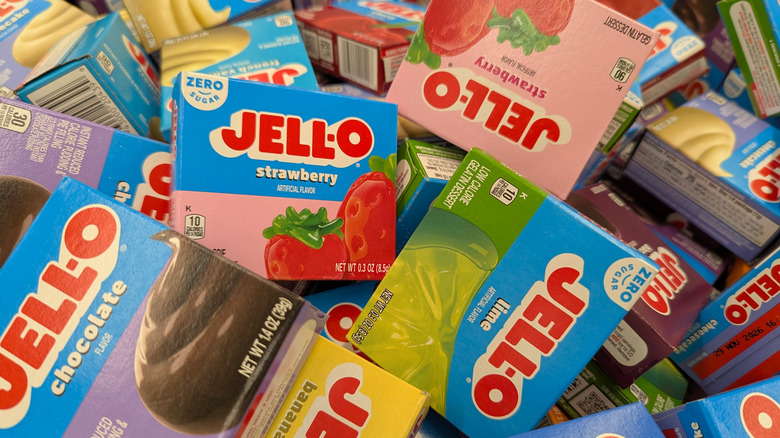
Some of the greatest foodie inventions are the result of happy accidents. Without them, we wouldn't have tea bags, microwave ovens or the fun, fruity, and colorful dessert Jell-O. While aspic had been used for centuries to preserve food, it took until 1845 for Peter Cooper to perfect a way to make gelatin. His flavorless, odorless creation wasn't a hit, but in 1897, Pearle B. Wait added both sweetness and fruit flavors to the wobbly stuff, which his wife dubbed Jell-O.
The name stuck but Wait couldn't market it, so he sold Jell-O to Genesee Food Company founder Frank Woodward two years later. Woodward threw everything into advertising the dessert, including free samples and printed recipe books, but sales remained stubbornly low. By around 1900, Woodward looked to ditch Jell-O, asking a paltry $35 but, just in the nick of time, the brand's fortunes picked up and it became a national treasure. In 1923 the Jell-O Company was snapped up by the Postum Cereal Company (later rebranded as General Foods) and today it's owned by Kraft/General Foods.
Celebrities including Norman Rockwell and Jack Benny helped sell Jell-O desserts over the years, while new flavors and products have both come and gone. The 1950s and '60s were undoubtedly a golden age for the product, and even though others might sneer at some of the most beloved American foods like Jell-O salads, this iconic brand is delighting a new generation of foodies, thanks to social media.
Quaker Oats
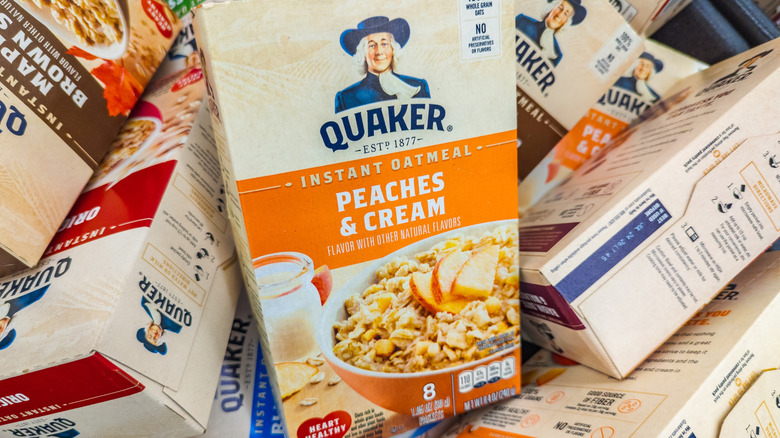
Oatmeal is one of the healthiest foods around, even if there's more to cooking it than meets the eye. If you'd offered someone a bowl of it in the mid-1800s, they'd be insulted at the thought of eating like a literal horse — but that didn't stop Henry Parsons Crowell, who owned Ohio's Quaker Mill. In 1877, his image of a man in Quaker clothing (known in company circles as "Larry") became the first breakfast cereal to be granted a trademark.
Nine years later, Crowell joined forces with two rival millers to create the Consolidated Oatmeal Company, which expanded to become the American Cereal Company in 1888. By 1901, it was renamed the Quaker Oats Company and evolved into a food manufacturing giant, buying up brands including Aunt Jemima and Gatorade producer Stokely-Van Camp (more about that brand later). The business faced significant financial headwinds in the 1990s and 2000s, but despite all the horse trading and global expansion, the Quaker Oats brand managed to weather the storm.
Eye-catching cylindrical packaging made it a standout from the start, while a "quick" version made oatmeal even more convenient. Alongside clever marketing, Quaker Oats also cemented its legacy among consumers in 1997, when the brand was the first to label its packaging with FDA-approved claims that it was good for consumers' health. Today, around 150 years after the brand was launched, home cooks still use Quaker Oats in their overnight breakfast oats recipes, batches of cookies, and healthy treats.
Campbell's
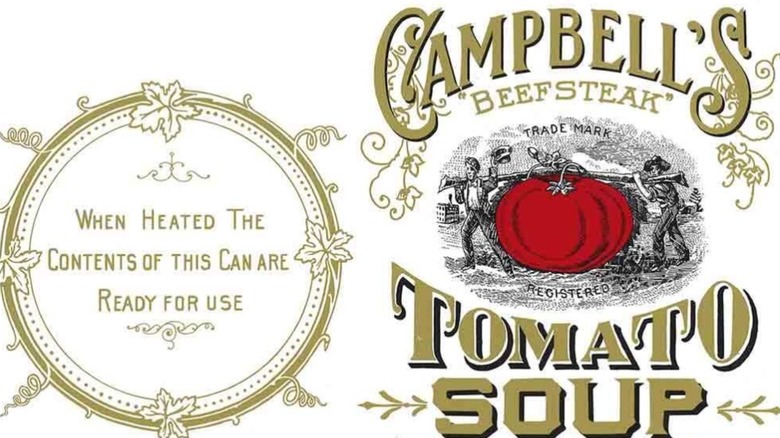
In 2026, after more than 150 years of trading, the Campbell's Company is home to a wide variety of foods and drinks, including jarred sauces and tasty snacks, but it will forever be world famous for its tinned soups. It began life in 1869 as a canned food joint venture between Joseph Campbell and Abraham Anderson. By 1895, the latter was long gone and Campbell, who then teamed up with Arthur Dorrance to launch the Jos. Campbell Preserve Company, had retired.
Yet it was his name on the brand's first-ever can of soup, Beefsteak Tomato, which went on sale that year. But competition among canned food firms was ruthless, and Campbell's was hemorrhaging cash. Enter Arthur Dorrance's nephew John. He believed making lighter, smaller cans of condensed soup (wrapped in their instantly recognizable red-and-white colors), and selling them for 20 cents would revive the company's ailing fortunes. It might have worked too, had it not been for a pesky, skeptical public who gave Campbell's soup a wide berth.
Luckily for Dorrance, his soup won a bronze medal at the 1900 Paris Exposition, and the award was slapped on the front of every tin, helping to bring consumers round. By 1922, the newly named Campbell Soup Company was on its way to becoming the iconic brand that is known and loved today. As for the expansion beyond cans of soup, it prompted another tweak to the company's name. In 2024 the word "Soup" was dropped after a shareholder vote.
Heinz
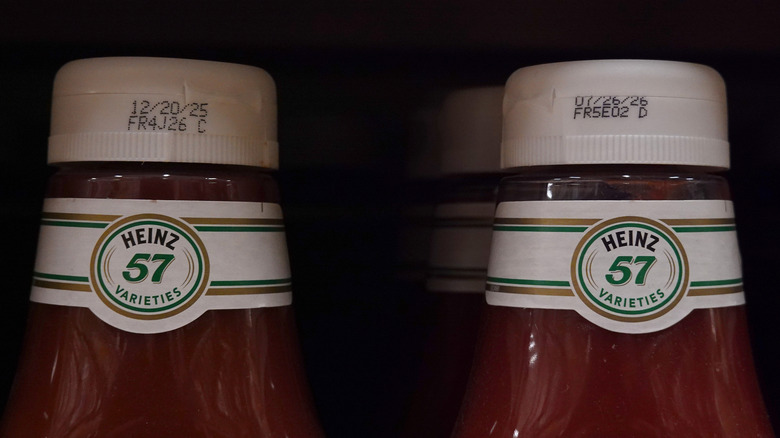
Most food businesses that have been around for over a century would be content with having one international hit product among their range. But Heinz? It's got a bunch of them, ranging from condiments to canned foods. As with many successful companies, Heinz can be traced back to one ambitious entrepreneur: Henry John Heinz.
As an 8-year-old, Heinz sold vegetables grown in his mom's garden and by 1869 had graduated to pickles and horseradish (the latter notably bottled in clear glass) to make a buck. It took seven years for Heinz's "Catsup" — later renamed Tomato Ketchup — to hit stores, and by the start of World War I, baked beans, salad cream, and cream of tomato soup were among the range of Heinz products delighting customers on both sides of the Atlantic. Many remain best-sellers in the United States, the United Kingdom, and around the world to this day.
Although the reason behind the "57 Varieties" label on Heinz products isn't clear (the company website suggests they were Henry and his wife's lucky numbers), the company's legacy extends far beyond being the producer of "America's Favorite Ketchup." Heinz was also a brand that was way ahead of its time, offering workers perks such as access to a library or roof garden, backing a federal Pure Food Act, and using proprietary seeds to grow the tomatoes for its products. It remained a family-run business until 1969, and in 2015 became Kraft Heinz, following a merger with Kraft Foods Group.
Tabasco
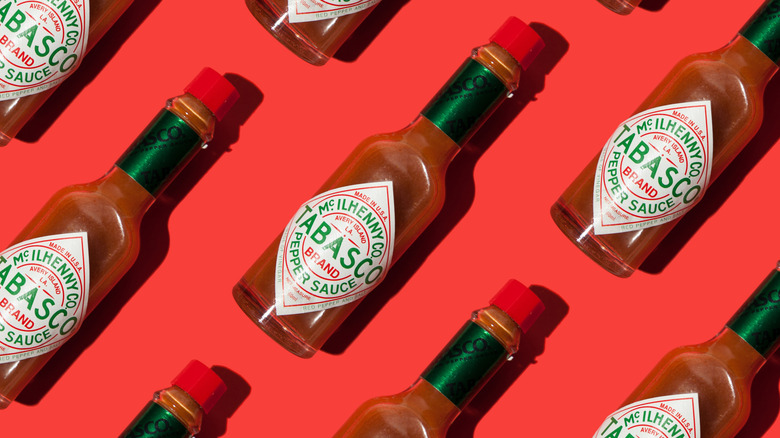
As surely as oaks spring from acorns, the sauce shaken out of slender glass bottles of Tabasco packs a mighty punch, and has done so since the company's first crop of peppers in 1868. That was planted by Edmund McIlhenny, whose family continue to run the company in the 21st century, but he wasn't the first person to discover the delights of a sauce made from tabasco peppers. Maunsel White was doing much the same as far back as 1849, long before the McIlhenny business was established.
No matter who claims the credit for its invention, it is the latter's condiment that has conquered the world and is even used to give store-bought BBQ sauce an extra kick. Tabasco sauce is one of the rare foods whose recipe and production methods have barely changed over the decades. Initially poured into perfume bottles and sealed with wax, the current iteration was launched in 1927 and, aside from different labels for the range of sauces, it has remained the same.
There's been very little messing around with the sauce itself, too. The peppers are picked only at a very specific shade of ripeness, while the pick of each season's seeds are kept in two places, one of which is a bank vault, so there's no risk of them running out. The pepper mash is blended with distilled vinegar and salt from the company's Avery Island HQ, and kept in former whiskey barrels for up to three years.
Van Camp's
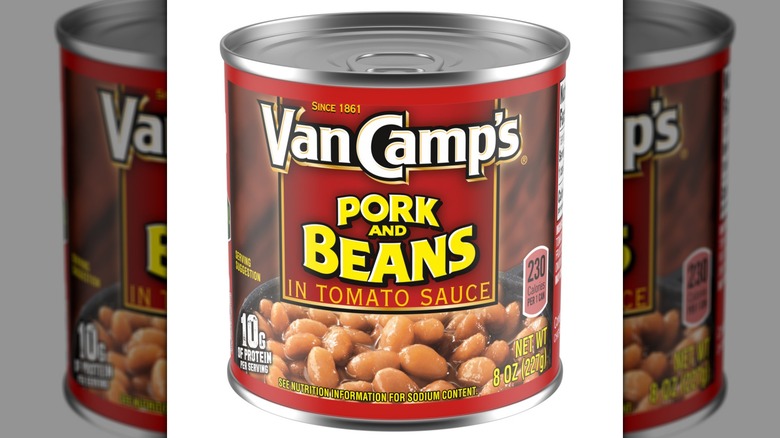
Van Camp's pork and beans can trace its roots back over 160 years. It began in 1861, when Gilbert Van Camp, Sr and his wife Hester tinned and sold fruit in Indianapolis, supplied by farmer Martin Williams. Both men also created the first cold storage warehouse in the United States, helping the kitchen-table enterprise become a dedicated retail business.
Things really took off with a contract to supply the Union Army with canned foods, and the G.C. Van Camp & Son Packing Company was incorporated in 1875. Its pork and beans in tomato sauce appeared in 1882, the year after a fire gutted the canning facility. Many claim Gilbert Van Camp's son Frank devised the sauce, adding some of the family's catsup to liven up dry beans. Whether true or not, Van Camp's pork and beans became a sensation, and are on sale to this day.
Not content with (potentially) creating his family firm's best-selling product, in 1914 Frank Van Camp acquired the California Tuna Canning Company, renaming it the Van Camp Seafood Company, but today it's better known as Chicken of the Sea tuna. As for his father's business? It was sold to James and John Stokely in 1933 who rebranded it as Stokely-Van Camp. Among its purchases were the rights to sell Gatorade, then a burgeoning drink line, in 1967, but in 1984 the company was snapped up by Quaker Oats. The Stokely arm was sold off the following year, and a decade later, ConAgra became the new owner of the Van Camp's brand.
Keebler
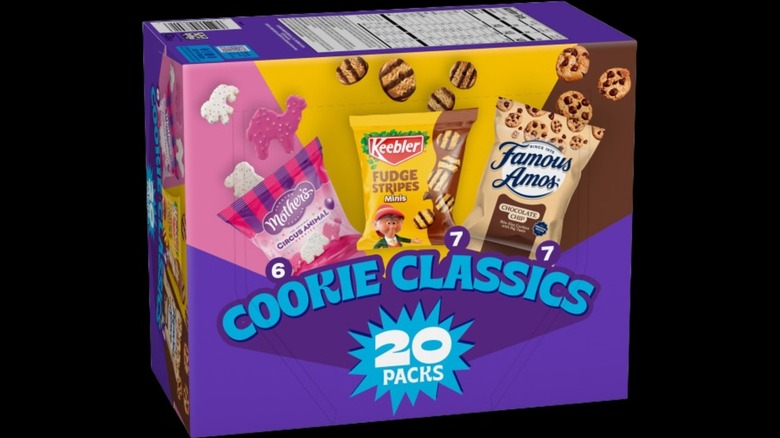
German immigrant Godfrey Keebler opened his Philadelphia bakery the early 1850s, but he had been in the business well before then, closing an outlet in 1846. The company bearing his name was founded in 1853, and while its sweet and salty treats are still enjoyed today, the Keebler brand has faced many highs and lows.
Keebler's bakery was a marvel, using steam-powered machinery to crank out cookies and crackers. In 1890, the Keebler-Weyl Baking Company was created after Keebler, three years before his death in 1893, partnered with Augustus Weyl. It was the core of a network of local bakeries that became the United Biscuit Company of America in 1927. In 1934, the growing business partnered with the Girl Scouts of Greater Philadelphia Council, paving the way for the national program. By the 1960s, the United Biscuit Company of America rebranded as Keebler, and the elves were introduced as a marketing strategy.
In 1974, Keebler was sold to a U.K. company called United Biscuit P.L.C. – not to be confused with the company that predated Keebler itself — for $53 million, but that's when things started to go wrong. Keebler was pitched as a rival to Nabisco and Frito-Lay but it struggled to compete in the cut-throat savory snack sector. So, it went back to what it did best: Making "uncommonly good" crackers and cookies. After steadying the financial ship and buying brands including the Sunshine Biscuit Company, the Keebler brand was eventually sold to the Kellogg Company in 2001, and again to Ferrero in 2019.
Underwood deviled ham
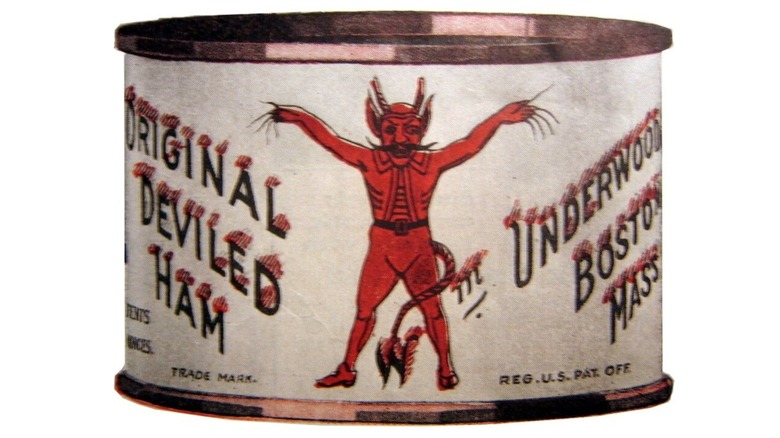
Another migrant to the United States, William Underwood, has forever earned a place in foodies' hearts thanks to his passion for canning foods. He learned the trade during his time at British company Crosse & Blackwell, before setting up his company in Boston in 1822.
While glass containers gave way to cheaper metal "cans" in around 1836, Underwood Deviled Ham made its first appearance in 1868. Devised by his sons, it became popular among the pioneers heading west, while Union soldiers chowed down on it during the Civil War. It took until 1870 for Underwood to secure its eye-catching red devil logo (which came complete with a possible "W" for William at the end of its tail). It now holds the record as the oldest trademark for a food product still in use.
Of course there's no devilry inside the flagship can of meat. Just cured ham, spices, turmeric, and mustard flour, giving it that distinctive, delicious kick. But it's not the only reason Underwood should be celebrated. The work done by the company and MIT scientists to make canned foods safer not only meant its deviled ham was the only one the Massachusetts Board of Health would allow to be sold in 1906, it also paved the way for decades of important research between the two organizations. The Underwood Company stayed in the family's hands until 1982, when it was bought by Pet Inc, and it's been owned by B&G Foods since 1999.
King Arthur Flour

For some people, historic moments are golden opportunities, and the fledgling United States of America was just that for Boston importer Henry Wood. Established in 1790, Henry Wood & Company was the state's inaugural food firm, and the country's first flour company.
In 1820 it stopped importing British flour in favor of grinding home-grown wheat, and by 1895 it was known as the Sands, Taylor, & Wood Company. The Sands family retained control until 2004, when the business (later renamed the King Arthur Baking Company) became 100% employee-owned. That mean the business — which officially began selling King Arthu flour in 1896 – has witnessed some of the most impactful moments in the history of the U.S., from the expansion from 13 states, the Civil War, and the Great Depression, through to today's modern, digital age.
The company has both broadened and reduced its lines to meet changing customer demand and ensure it survived economic ups and downs, all the while supporting people who love to bake. Today, its nationwide Life Skills Bread Baking program and Baking School helps people across the country explore their passion and create a range of delicious baked goodies. Flour may be regarded as a humble ingredient, but for more than 235 years, King Arthur's has definitely lived up to its noble name.
Baker's Chocolate
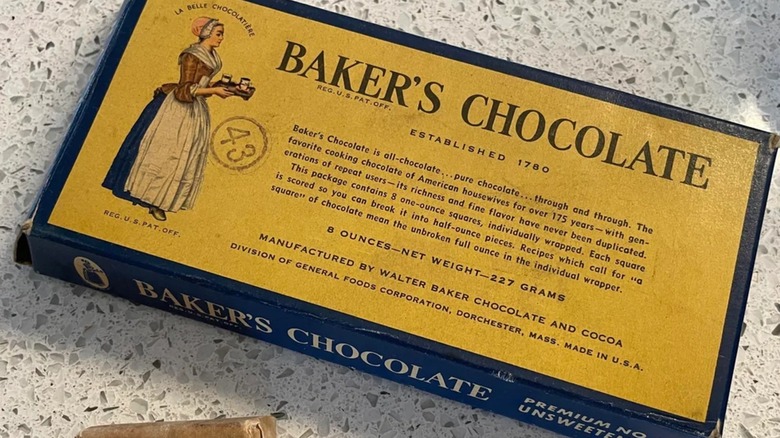
It takes absolute confidence to offer a money-back guarantee on a product, but the chocolate made by Irish immigrant John Hannon (financed by Dr. James Baker) from 1765, came with just such a promise. Hannon ran the hugely successful Massachusetts chocolate mill until 1779, when he disappeared from history, but Dr. Baker did not. He bought out Hannon's widow and founded the Baker Chocolate Company in 1780.
Its first branded product was No. 1 Premium, still known and loved today as Baker's Unsweetened Chocolate, with powdered cocoa, the Caracas bar and German's chocolate added to the lineup over the years, as the company sought to keep up with competitors and new trends. Baker's Chocolate continued to be run by members of the Baker family until 1854, when Henry Lillie Pierce took the reins. Under his stewardship, the business grew at a pace, until his death in 1896, when the Baker's Chocolate Company was bought by a group of investors known as The Forbes Syndicate.
In 1927, General Foods (then called the Postum Cereal Company) acquired Baker's Chocolate Company and moved production from the historic Neponset site to Delaware in 1965. Today, Baker's Chocolate is part of Kraft Foods, owned by Altria (formerly Phillip Morris). Although some of the old chocolate mills near the Neponset River are now condominiums, Hannon and Baker would be thrilled to know their chocolate is still delighting people more than 260 years after they first met.