

The Canned Food You Should Avoid Storing For More Than A Year
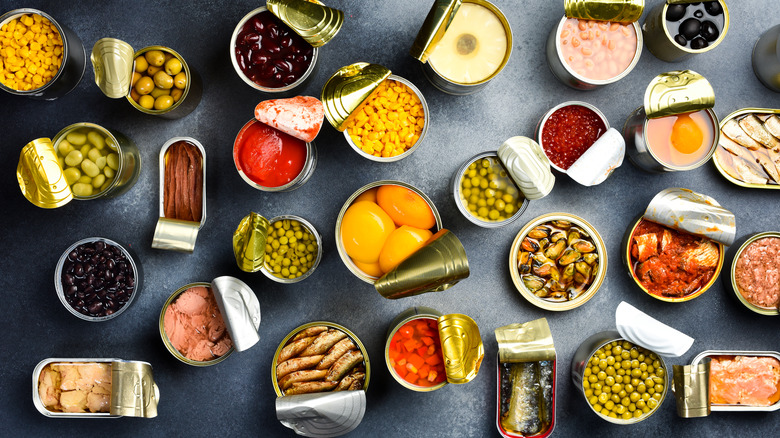
Growing your own food is a wonderful way to cut down on your grocery bill. When you have extra and need to store it, one of the best ways to preserve your homegrown produce is to can it, as canned goods can last in your pantry for a very long time. Look at almost any canned good, and you'll see an expiration date years off, and even after the date, many canned foods are still safe to eat if they were stored properly. But some canned foods don't last as long as others, notably the canned tomatoes you prepared at home.
The reason why home-canned tomatoes shouldn't be stored long-term, even if we're talking about the best canned tomato brands, is because they're acidic. Tomatoes naturally have a low pH, to the point where commercially canned tomatoes actually have acid added during canning to help preserve them. Over time, that acid can wear down canning vessels. That corrosion can alter the flavor and nutritional value of the food inside, leach unwanted materials into it, or even compromise the cans and leave the tomatoes more vulnerable to spoilage.
There is some disagreement between experts on exactly how long home-canned tomatoes can last. You may see a range of one year to 18 months, though that's often quoted for (potentially more stable) store-bought tomatoes. Per the USDA and a number of university agriculture departments, your home-canned goods are best consumed in about a year, no matter what food it is. To be safe, use your canned tomatoes for dishes like three-ingredient tomato soup sooner rather than later, and follow a first-in, first-out policy.
How to spot spoiled home-canned tomatoes
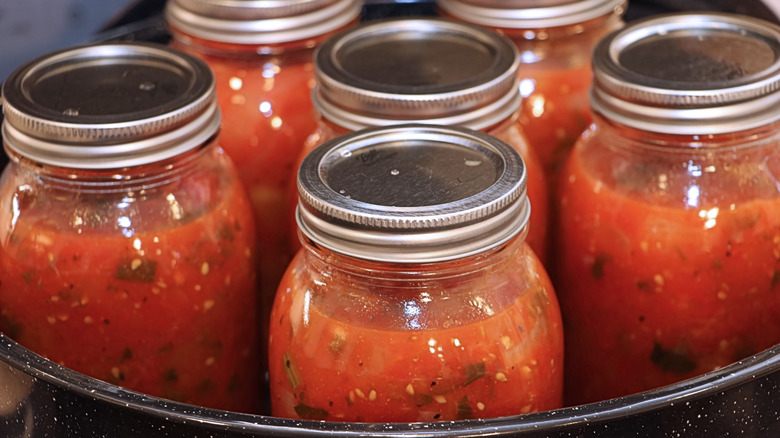
How do you spot bad canned goods, home-canned or otherwise? One of the best ways is to examine the vessel itself. If a metal can is bent or has significant dents, especially on the seal or with sharp edges, it's likely unsafe to eat. Avoid rusty cans, too, as rust may create tiny holes that allow harmful bacteria to enter. Another big sign of spoiling is bulging, which can indicate bacteria. What's more, cans stored at higher temperatures spoil faster since the heat accelerates chemical reactions like corrosion.
If you open the can or canning jar, look out for signs of spoilage in the food itself. If liquid spurts out, that's a sign that your canned tomatoes are no good. Other tells include mold growth, a foul smell, discoloration, sliminess, or any other changes from how it's supposed to look. Signs of spoilage or contamination are the same whether you're dealing with home-canned or store-bought foods.
When in doubt, throw it out. Never taste or eat food from a can you suspect has spoiled. While it's rare, especially in high-acid foods like tomatoes, botulism is a serious danger that's not readily seen or smelled and can be fatal. Moreover, acidic foods like tomatoes don't always display the same signs of spoilage as others. Home-canned foods are especially susceptible to spoilage and contamination from botulism or other pathogens since you simply don't have access to the same kinds of sanitation and canning equipment that the professionals do.