

Not Quite Mexico: Here's Where Fajitas Were Really Invented
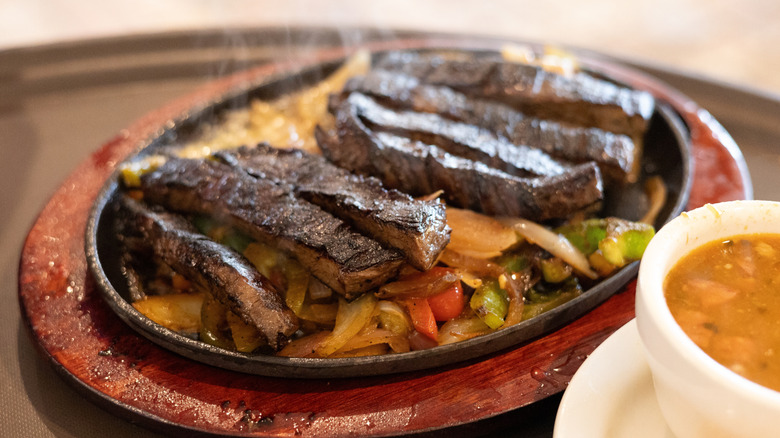
If you've ever been to a Tex-Mex restaurant, you've certainly seen and smelled huge, sizzling platters of fajitas being hefted around by servers. A wisp of beefy smoke trails them, making everyone else in the restaurant want to order their own. But fajitas weren't born in restaurants. The true origin of the dish lies in the ranches of southern Texas, where it was distinctly shaped by Mexican foodways and ranching culture.
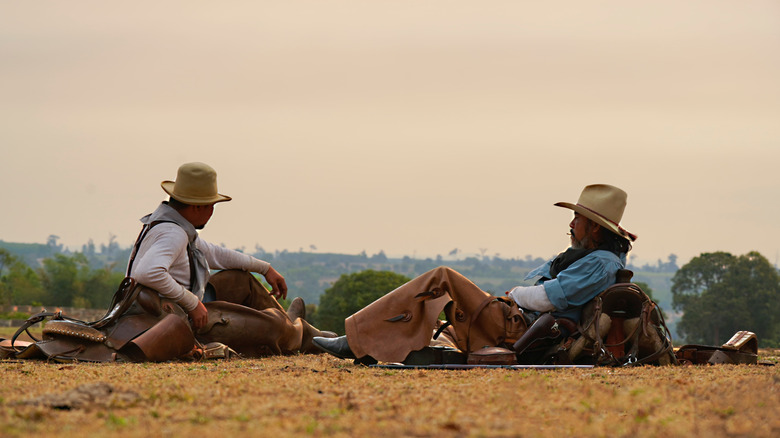
The word fajita comes from faja, Spanish for "belt," a reference to the cut of meat used in the dish: skirt steak. Back in the 1930s, skirt steak was considered a tough, undesirable cut by most butchers. Unlike today, where skirt steak is popular as a less expensive cut, back then it was considered a throwaway meat. During cattle roundups, skirt steak was often given as part of payment to the Mexican vaqueros (cowboys) who worked the Texan cattle drives.
Vaqueros made the most of what they had. These ranch workers grilled the tough meat over open flames, seasoning it with just salt and cooking it quickly with high heat. The result was a deeply flavorful meat with wood-fired flavor, sliced thinly across the grain to make it tender. It was practical, portable food meant to be eaten immediately, often wrapped in fresh tortillas or eaten straight from the fire. While we can't know who made the very first fajita, most agree the dish had its origins somewhere in this vaquero context in southern Texas. Back then, there were no sizzling cast-iron skillets or elaborate toppings of pico de gallo or salsa, just technique and necessity.
Fajitas today have adapted to American tastes
For decades, fajitas remained largely unknown outside the Rio Grande Valley. They were part of a regional food culture with deep roots in Mexico. That all began to change in the late 1960s, when the dish made its way into commercial kitchens in the U.S. Several Texan figures are credited with bringing fajitas to the mainstream. Houstonians name Maria Ninfa Rodriguez Laurenzo (more commonly called Mama Ninfa) as their Fajita Queen, a single mom-turned-restauranteur who began selling her version of tacos el carbon, a Mexican street food, in 1973. Once the gringos figured out how to eat fajitas with their hands, it was a wild success, quickly copied by other Houston restaurants.
Austinites like to claim fajita credentials by pointing to meat market manager Sonny Falco (called "the Fajita King"), who began selling fajitas at a concession stand in 1969. Falco helped standardize the name and brought the dish to a wider audience through rodeos and outdoor festivals. By the 1980s, fajitas were well-known enough that the Austin Hyatt hotel's opening chef put them on the menu. The signature dish was so successful that the restaurant, La Vista, became the most profitable eatery for the entire Hyatt chain.
As fajitas spread beyond Texas, they were further adapted to American tastes and are now likely on many menus of the best Mexican restaurants in every state. Today, fajitas are often assumed to be "Tex-Mex" in origin, but they're better understood as a creation rooted in Mexican cowboys and ingenuity and carried along by American entrepreneurs.