

Why A Rare Steak Is Usually Safer Than A Rare Burger
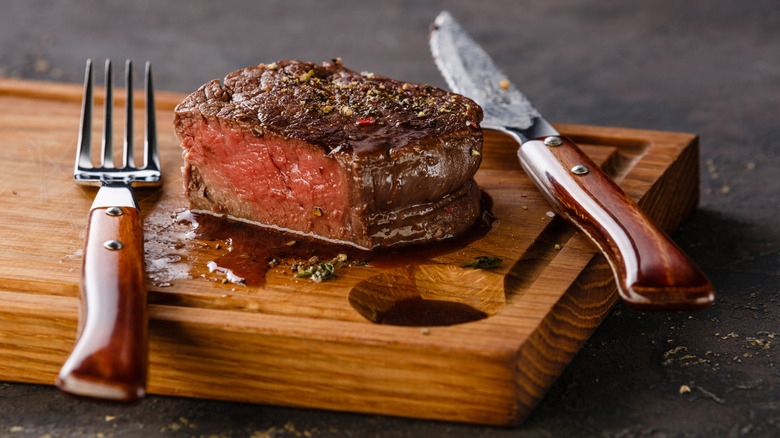
They're both beef, can look equally red in the center, and are commonly cooked on a grill. But from a food safety standpoint, rare steaks and burgers are fundamentally different. The distinction comes down to how bacteria behave and what happens when we grind up beef versus cutting a steak from one cow. Knowing the difference is key to understanding food safety and why sourcing meat is so important. It's also key to why rare steak is nearly always safer to eat than rare hamburger.
The infamous E. coli bacteria normally live in both human and cow intestines but can be transferred to the meat during the butchering process – that's where things get dangerous. Foodborne bacteria like to live on the surface of meat, but don't easily make their way deep inside the muscle. That means when a whole cut of beef (like a steak) is butchered, contamination generally stays on the exterior, while the interior of a properly prepared cut can remain practically sterile. This is why you can conceivably throw a steak on the fiery grill briefly (we like the rule of threes for steak success here), then eat it rare. That searing heat kills off surface bacteria, so even though the inside isn't completely cooked, it's safe to eat (provided it's from a reputable source).
Ground beef changes that equation entirely. To make a burger, beef from multiple cuts (and usually multiple animals) is run through a grinder. This process churns the surface of the meat all throughout the batch, potentially spreading that nasty bacteria from the outside right into the interior. What used to be a surface problem may now be a whole-patty problem.
A lot of cows can go into one burger patty
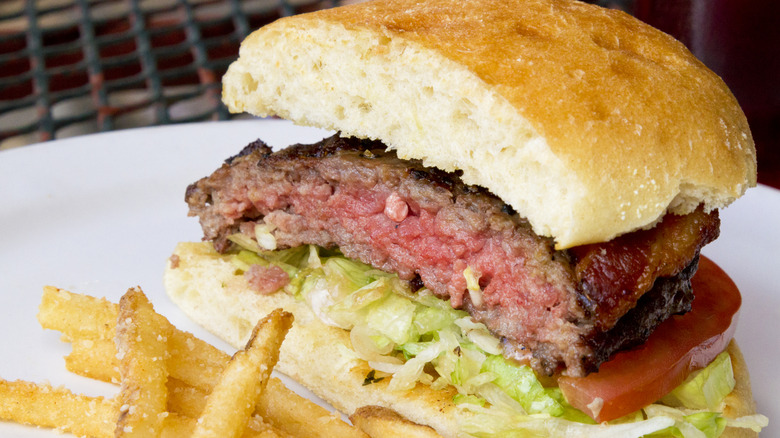
When burgers are cooked rare, the center may never reach a temperature high enough to kill pathogens, allowing them to happily survive inside the meat — and make their way to you. This is why understanding our complex global supply chain and access to transparent sourcing are important. As mentioned, a single steak usually comes from one cut of meat from one cow. But when ground beef is commercially produced, it combines trimmings from dozens or even potentially hundreds of animals, increasing the odds of contamination. With so many meats swirling together in one patty, an outbreak may be more likely. This is why ground beef has historically been linked to multiple nationwide foodborne illnesses, while contaminated whole cuts are less likely to be in the news.
So even though some of your favorite chains may use fresh, never-frozen burger patties, it doesn't mean that their ground beef is bought directly from your neighborhood farmer. Rather, most fast food restaurants buy pre-made patties from processors all over the world. Because of these risks present in both restaurants and home-cooked ground beef, food safety guidelines don't mess around. Whole cuts of beef can be served rare because the outside is exposed to bacteria-killing heat, but ground beef ought to be cooked to an internal temperature of 160 degrees Fahrenheit, per the USDA. This isn't about being a show-off chef; it's about microbiology and meat germs, so don't cut corners when it comes to food safety.