

The Cut Of Beef Julia Child Used For Her Ideal Pot Roast
We may receive a commission on purchases made from links.
Pot roast is a hands-off dish that's slow-braised for hours, ideally resulting in fork-tender, succulent beef in a rich, complex braising liquid, which is made into a sauce. Of course when Julia Child made it, it was full of French culinary flair. Her recipe for "Boeuf a La Mode" from the iconic 1961 "Mastering the Art of French Cooking" cookbook sounds exhausting on paper but essentially only involves marinating, browning, and braising the meat, then reducing the liquid into a sauce. Different cuts of beef call for different cooking methods, and for making pot roast, Child preferred to use rump roast.
True to the name, rump roast comes from the hindquarters of the cow. Since this part of the animal is regularly worked, the cut is usually quite lean. Such lean cuts are best cooked slowly to render them more tender and flavorful, since they lack much marbling. There are two cuts from the rump, specifically, that Child calls out in her recipe: Pointe de Culotte and Aiguillette de Rumsteck. The former is a long, thin cut from the top of the rump, while the latter is a thin, pointy cut that often has a fat cap (aiguillette translates to "little needle" in French, referencing the shape). We've also discovered that brisket is a fantastic cut for making pot roast, but it's worth digging deeper into why Child favored rump roast.
How Julia Child made rump roast into something beautiful
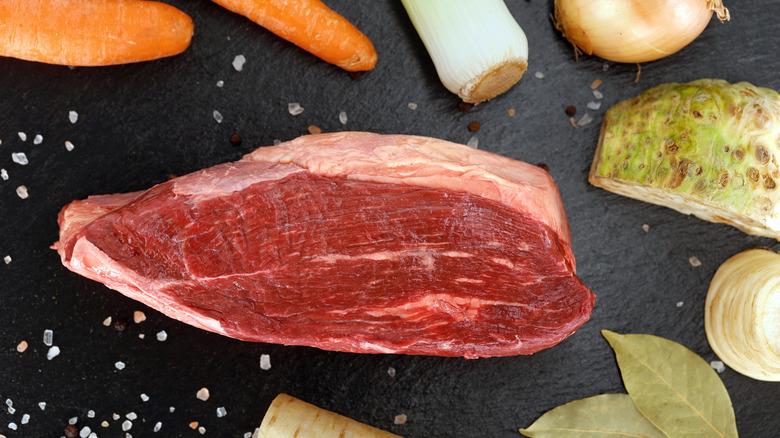
Lean cuts of beef like rump roast not only benefit from a low and slow cooking method but also a pre-cooking soak in marinade. Julia Child's recipe for Boeuf a La Mode called for a six to 24-hour-long bath in a red wine-based marinade that includes olive oil, brandy, and plenty of aromatics. Marinating a lean cut of beef can enhance the flavor and texture, as the salty elements brine and season the meat, while the acidic ingredients help to tenderize it.
Child also recommended that the rump roast be larded, which involves inserting pork fat into the cut of beef (this is something a butcher can do for you). The fat bastes inside the meat as it slowly cooks for hours, adding even more flavor. If you can't find a butcher that will lard the meat upon request, you can also add bacon or another cured pork to the braising liquid.
As for accompaniments, Child suggested serving the braised beef with parsley potatoes, buttered noodles, or steamed rice. If you're dishing this up at a dinner party, consider making Julia Child's favorite dessert – that would be oeufs à la neige — to cap it all off.