

So Many People Believe This Common Cast Iron Cooking Myth
We may receive a commission on purchases made from links.
Cooking with cast iron seems to be followed by much lore around the do's and don'ts. Uncoated cast iron pans can last for generations with the right care — which isn't as hardcore as most people think it is. One of the biggest myths that follows cast iron is that you can't use metal cooking utensils with the cookware, as some say it will scratch and remove the seasoned layer. Not only is this notion false, but in many cases, metal tools may be needed to cook a meal in cast iron properly.
Firstly, metal kitchen tools that are recommended alongside a cast iron pan include a stainless steel slotted turner, a smashing implement (for smash burgers, of course), a chainmail scrubber, classic steel tongs, and a solid stainless steel griddle turner. When searing meat or fish, the slotted turner is key for rotating the protein without ruining the golden crust. If you are cooking with sticky foods, stainless steel is necessary for gentle scraping, and when you're breaking up foods (like ground meat) or deglazing a pan, only steel will do.
The reason why using metal kitchen tools is okay is that it's much, much harder to scrape off the seasoned layer than people think. Most cast iron pans come pre-seasoned, which means polymerized oil is chemically bonded to the steel (which is why seasoning your cast iron pan at home before use isn't absolutely necessary). So even with a brand-new cast iron pan, it would take a lot to remove the seasoning — let alone a well-maintained one. Scratching or damaging the seasoning isn't impossible, though, and you may still wish to avoid metal tools when using an enameled cast iron vessel.
Properly using metal tools in your cast iron pan
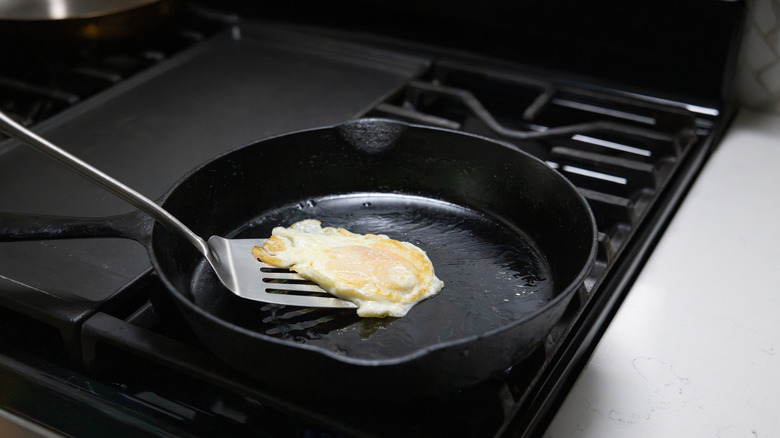
Now that you know you can, indeed, use metal kitchen tools in your cast iron pan, here's what to keep in mind so that you don't genuinely damage the vessel. Heavy-duty metal spoons or spatulas to scrape out the corners of the pan are a no-go, while anything that applies too much pressure in a scraping or cutting motion is off-limits. With that said — never, ever cut something right in your cast iron, even if the knife is dull. When it comes to washing, we mentioned chainmail, but only do this gently. Avoid using steel wool or anything overly abrasive. (Did you know you can clean cast iron with ketchup?)
If your dish requires constant or vigorous stirring or mixing, back away from the steel. These silicon coated whisks are a great solution. Lastly, your metal utensil could conduct heat if left in the pan for too long, so if this is a concern, reach for the silicon or wooden kitchen tools instead. So, the next time you're upgrading boxed cornbread by baking it in cast iron or boosting the nutrition in your mac and cheese, keep these tips in mind.