

This Unusual Vintage Pie Flavor Was Popular During The Great Depression
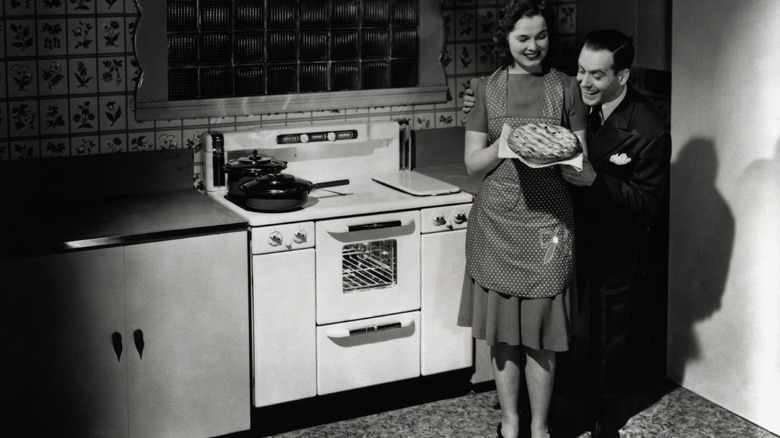
Water pie sounds like a sad little joke, but during the Great Depression it was a very real and surprisingly widespread dessert. The name isn't an accident: it's actually made with little more than water, sugar, flour, butter, and sometimes vanilla. Water pie represents a moment in American history when many people were in dire straits but still wanted to bring a little bit of sweetness to their lives. Its popularity wasn't driven by novelty or new-fangled ingredients, so much as raw necessity.
The Great Depression of the 1930s forced quite a few families to rethink what "dessert" could be. Eggs, milk, and fruit were expensive or simply unavailable. Home cooks, particularly in rural and working-class households, turned to recipes that stretched minimal ingredients into something resembling comfort. Water pie emerged as one of those solutions, passed along through handwritten recipe cards and community cookbooks.
Water pie was just one version of what people called "desperation" pies or "make-do" pies." Back then, people also whipped up other unusual desserts, including mock apple pie, wacky cake, and even vinegar pie. During the Depression, maintaining rituals mattered. Sunday dinners and church suppers could give a sense of normalcy when jobs, savings, and hope had disappeared. A pie on the table, even if it was just water pie, allowed families to participate in familiar traditions without the cost of eggs, dairy, or fruit.
Desperation pies are ingenuity at work
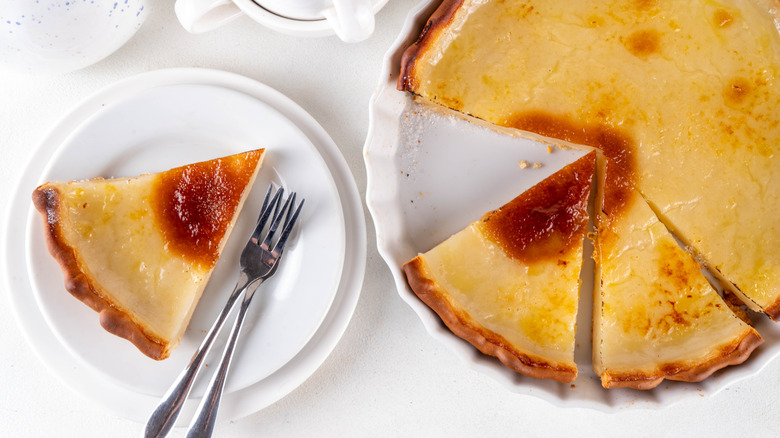
Making a water pie is easy enough. You'll want to fill an unbaked pie crust with water, then sprinkle flour on top to thicken it. Sweeten the mix with one cup of sugar, then drop dots of butter on top. As the pie bakes, a bit of magical chemistry happens. The mixture melds together and is transformed into a translucent, custard-like filling. Somewhat obviously, the taste of water pie is subtle. It's lightly sweet, a tiny bit buttery, and sometimes scented with vanilla or nutmeg (which is one of the seasonings in pumpkin spice blend). It's often compared to chess pie or sugar pie, but admittedly, not everyone loves it. Still, for kids in the 1930s desperate for a sweet treat, the novelty of a sweet slice was surely enough.
It's no surprise that after the Depression, water pie faded quickly into the past. As jobs returned and refrigeration became widespread, there was little reason to keep baking a pie without eggs or fruit. The recipe lingered in regional cookbooks and family collections, but mostly as a novelty item. In recent years, water pie has reappeared online, often framed as a curiosity or "weird vintage recipe."
With rising grocery prices and food insecurity becoming an increasingly visible issue, home cooks are once again embracing Depression-era dinners with limited ingredients. The water pie represents a generation of cooks (primarily women) who refused to give up small comforts and came up with ingenious solutions in the process.