

Why So Many People Think Food Is Better In Europe Than The US
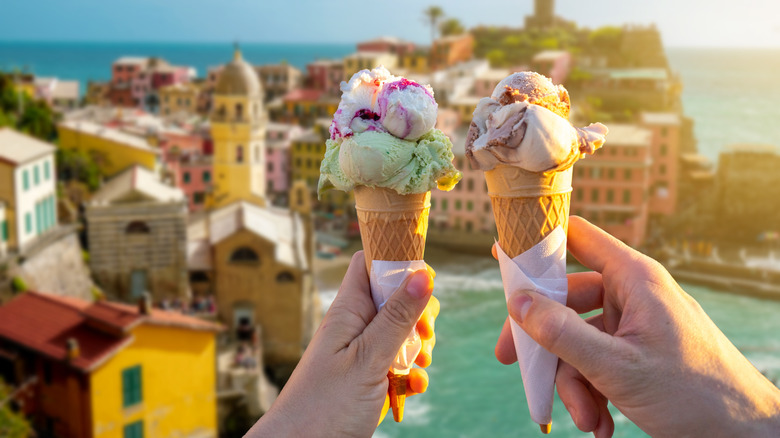
If you're lucky enough to travel to Italy, Spain, France, or elsewhere in Europe, you might come home thinking that food is so, so much better in Europe than in the States. We see this perception salivated over on social media, yearned after in travel writing, and overheard at coffee shops after a vacation abroad. While most of us accept this claim as simple facts, the reality a bit more nuanced. The mix of perceptions, food policy differences, and travel psychology all play a part in our idea of "quality."
One fact you certainly can't argue with is ingredient regulation. European Union food standards are stricter when it comes to additives, preservatives, and agricultural chemicals. Just consider that some of our most popular U.S. foods are banned in other parts of the world. Certain dyes and flavorings allowed in the U.S. are restricted or banned in the EU, which would make anyone think that European food is inherently "cleaner." If you've grown used to scanning long American ingredient labels, seeing shorter lineups on your snacks in Europe may feel reassuringly transparent.
Then there's the issue of portion sizes. Though of course things can vary from place to place, European meals tend to be smaller and more structured, with an overall emphasis on slow eating. Dinner can feel more balanced and intentional. When you're not overwhelmed by oversized servings of Bloomin' Onion appetizers or constant upselling of cocktails, it's easier to focus on flavor and quality. Now think about American dining culture. In some contexts, we're all about value meals and big portions instead of craftsmanship and quality, especially in fast food or fast casual restaurants.
Other factors affect this perception of better food
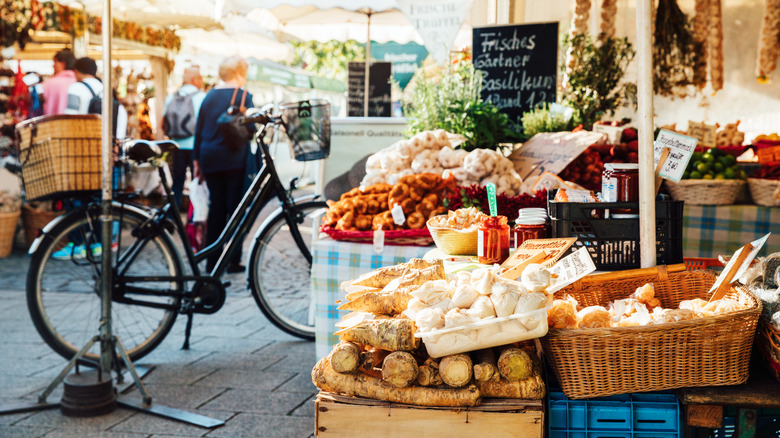
Of course, so much of our meal enjoyment is affected by environment. Consider the vacation effect. Most of us experience European food while traveling, strolling through walkable cities full of bakeries, neighborhood cafés, and fresh markets. Time slows down, meals are enjoyed without distraction, and few are scrolling on their phones while slurping spaghetti in Sicily. It's no wonder that Ina Garten's pro tip for exploring Paris is to just grab a good baguette and start walking. That same baguette eaten between museum visits will obviously taste better than one grabbed during lunch hour and eaten at your desk. Context is everything.
Marketing and cultural storytelling only make the contrast more stark. Many locales appreciate and treat food as heritage, highlighting centuries-old bakeries, protected geographic designations, and recipes tied to a single city. Consider protected designation of origin (D.O.P) products, in which wine, cheese, and even balsamic vinegar is fiercely guarded. American food culture, on the other hand, is frequently about around convenience and innovation. That doesn't mean we have absolutely no quality or that European foodies don't want shortcuts or see mass-marketed food products, but it can get muddled.
The idea that food is better in Europe says as much about food systems and culture — and the perception of that culture — as it does about taste. When we encounter a place where eating feels slower, more intentional, and less industrial, it's no wonder we believe that European food is simply that much better.