

This Fast Food Restaurant's Chicken Strips Aren't 100% Chicken
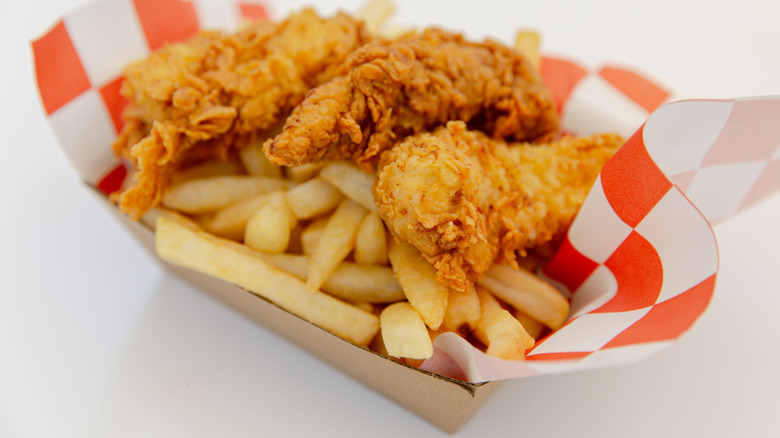
For those who love their fast-food tendies, listen up. Not all of them are created equal. That is, not all of them are 100% chicken. We'd like to think that when you order chicken strips at a fast-food restaurant, you're basically getting breaded chicken breasts dropped into hot oil. But that's not always the case. At Whataburger, the reality is a little more complicated. The "Whatachick'n Strips" are made from chicken breast, but they're also "enhanced" before breading and frying, which is not exactly what any diner wants to hear. Upon closer inspection of Whataburger's ingredient list, the strips also contain up to 12% of water, isolated soy protein, salt, and sodium phosphates.
What's isolated soy protein you ask? Well, it's certainly not natural, but it's an engineered food product that's in just about everything. It's technically a plant-based protein, and it's much cheaper than real meat, which is why it's often "mixed in" to cut costs and extend the product. This protein is in almost any plant-based meat alternatives and protein powders. Critics argue that since it comes from GMO-modified soybean crops, and often high in sodium and additives, it's yet another over-processed product snuck into our food by big manufacturers. This is standard practice in fast food (and increasingly in mainstream grocery meat products), but it does mean that most of the strips you're ordering through a drive-thru window aren't literally 100% chicken.
This is standard practice in fast food
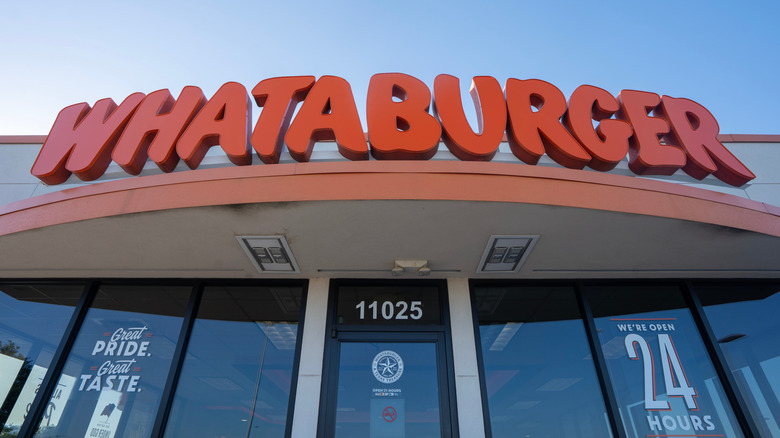
So does this kind of super-processing of snacks automatically mean lower quality? Unfortunately, it's not so black and white. Whataburger isn't trying to replicate a hand-breaded cutlet you'd get at a family reunion or a Southern meat-n-three. Its priority is consistency, speed, and a very specific flavor profile. Those strips are designed to taste the same at noon in Chattanooga and midnight in Memphis. It's also worth noting that Whataburger isn't an outlier. Many fast-food and fast-casual chains use similar solutions or extenders in their chicken products because it adds moisture, improves yield, and delivers a predictable bite that appeals to their mass audience. The good news is, there are a few fast food restaurants that use 100% real chicken, if you're willing to do your research.
For savvy diners, the presence of soy protein may matter, especially for those with allergies or who prefer minimally processed foods. For others, it's simply part of the tradeoff that comes with fast food: convenience and familiarity over quality and clean ingredients. Whether we like it or not, Whataburger's chicken strips are very much a product of modern American food culture. They're technically real chicken, "maximized" by science, and fried to satisfy a specific craving. Knowing what's in them might not ruin the experience for you, but it certainly reveals how much manipulation goes into a simple piece of fried chicken. You're probably better off skipping the fast food line and trying our list of the best fried chicken joints in every state.