

The Old-School Picnic Food From The '50s Hardly Anyone Makes Nowadays

When you hear the phrase "retro food," do you picture Jell-O salads and pink fluff? You're on the right track, because a certainly jiggly specimen was another old-school picnic food we don't see much anymore: tomato aspic. Though we may only think of Jell-O today in terms of shots (grab a few boxes), gelatin was the foundation of so-called "salads" that were considered the height of sophistication in mid-century America. Back then, "salads" was an umbrella term that included anything that quivered on a plate, whether it was sweet, savory, or something else. After WWII came the age of convenience and efficiency, when canned tomatoes and bottled tomato juice also became widely available. This handy canned vegetable was the perfect colorful, acidic base to balance the richness of the usual meat aspics.
A traditional recipe for tomato aspic back then included a wide array of kitchen herbs, lemon, celery, and onion, with the center often filled in with chicken salad or cold shrimp. Tomato aspic reached peak popularity in the years after WWII, a future-focused era when molded foods symbolized American technology and domestic expertise was expected at home. For housewives, it was a dish you could make ahead, and an incredible showpiece that showed off your culinary skills. Tomato aspic was popular at Southern funerals, country club luncheons, and in airline catering, where its lightness and gilded shape was considered quite classy. Though the Space Age and technological marvels certainly influenced the rise of these modern jiggly foods, there's quite a history behind them.
Tomato aspic reached peak popularity in the mid-20th century
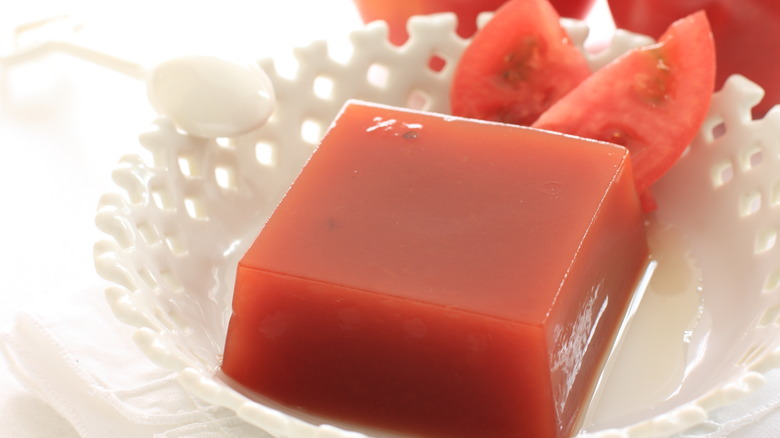
The roots of aspic go back almost a thousand years, or at least as long as we've known how to boil animal parts in water to make natural gelatin. In medieval Europe, it was originally referred to as savory jellies, where they specialized in pig's feet and calf's hooves. In 1600s Japan, they made gelatin out of seaweed, which was an early invention of agar-agar. A Scottish inventor came up with isinglass, which was a form of collagen created from dried fish bladders. Encasing foods like meat, vegetables, and eggs in a shimmering molded shape was not only practical, it was decorative. By the 18th and 19th centuries, aspic had become the hottest new thing in French haute cuisine. Tomato aspic would emerge when these Old World techniques collided with America's new and shiny convenience culture.
Today, aspics aren't exactly in fashion, but can be found being celebrated on certain corners of the internet. Facebook groups like "Show me your aspic" and "Aspics with threatening auras" have thousands of fans, and Instagram influencers are now making campy jelly cakes for major brands. Kitschy desserts, like Watergate salad and strawberry pretzel salad, which prominently feature Jell-O, are being praised by TikTokers and placed on menus at hip Brooklyn diners. But not everyone is on the gelatin train. Apparently, Ina Garten claimed a Jell-O salad was the worst thing you could bring to a dinner party.