

Yes, Older Egg Whites Are Easier To Whip. Here's Why
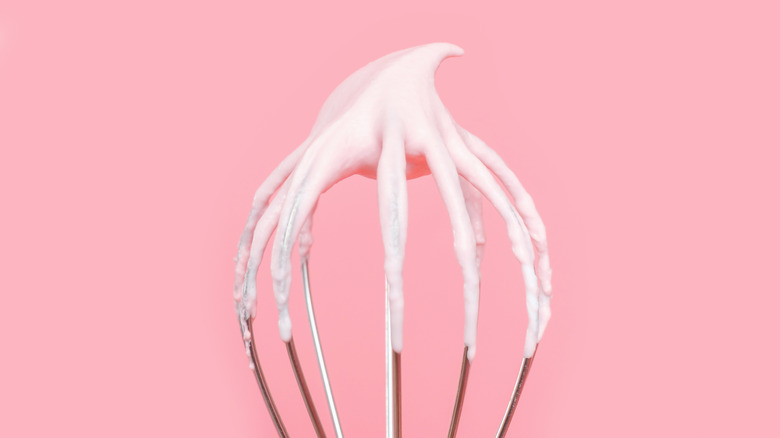
If you've ever struggled to whip egg whites into soft, medium, or stiff peaks, the problem might not be your technique — it could be how fresh your eggs are. As strange as it may sound, older egg whites aerate faster and more reliably than fresh ones. When whipped, egg whites (also called the albumen) foam because the force unfolds their proteins. The hydrophilic (water-attracting) ends stay in the liquid, while the hydrophobic (water-repelling) ends orient toward the air, allowing the proteins to stabilize air bubbles and link together into a foam.
The size and stability of the resulting foam depend on how old the egg is. As an egg ages, its proteins relax, making it easier for them to unravel, realign, and take in more air. Older albumens are also thinner, meaning they can yield larger (though less stable) bubbles more quickly; "younger" albumens take longer to whip into smaller, yet more stable bubbles.
What you want to make can inform what precise eggs you should use. Older eggs collapse more quickly, so don't dilly-dally if you're working with them. If you're making meringue, source fresh eggs because they'll hold their structure longer. Older egg whites will lose more volume when folded into other ingredients, like almond flour for macarons. But there are workarounds. Ultimately, you can theoretically use any kind of egg, as long as it's not a bad one — and how long eggs will last in the fridge before going bad depends on where you store them.
Egg white whipping tips and tricks
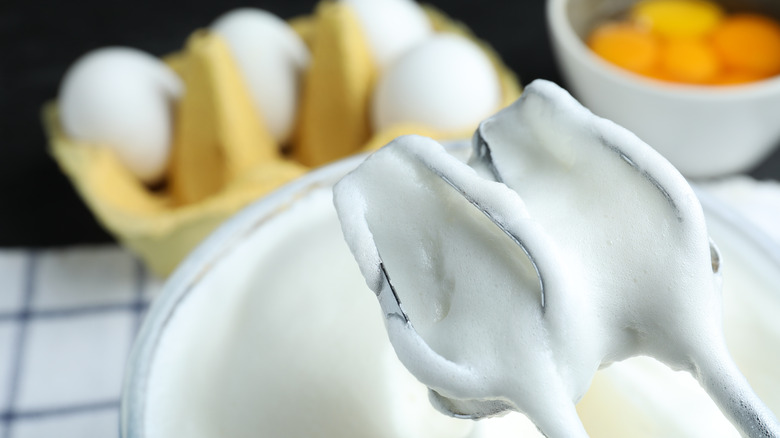
There are several things you can do to make sure your egg whites stay stable, no matter how old they are. One of Giada De Laurentiis's hacks that will make you a better baker is to add a pinch of salt halfway through the whipping. The salt stabilizes the albumens by making the proteins harder to break down. Doing the same with cream of tartar is another trick. Once you know what cream of tartar is actually made of, you can use it to your advantage. It's actually an acid salt (a derivative of tartaric acid, to be clear) that can be added to lower the pH of the albumens and increase their stability.
The temperature of your egg whites also matters. Because cold eggs can be easier to separate, consider taking the extra time to separate the eggs when cold but whip the albumens when they're room temperature. Being careful when separating the eggs is key, too, as even small amounts of fatty yolk will disrupt the protein-centric whipping process. Take your time and use the right age of eggs, and you, too, can make treats like JFK's favorite waffle recipe.