

Skip The Oven And Cook Your Prime Rib This Way For Way More Flavor
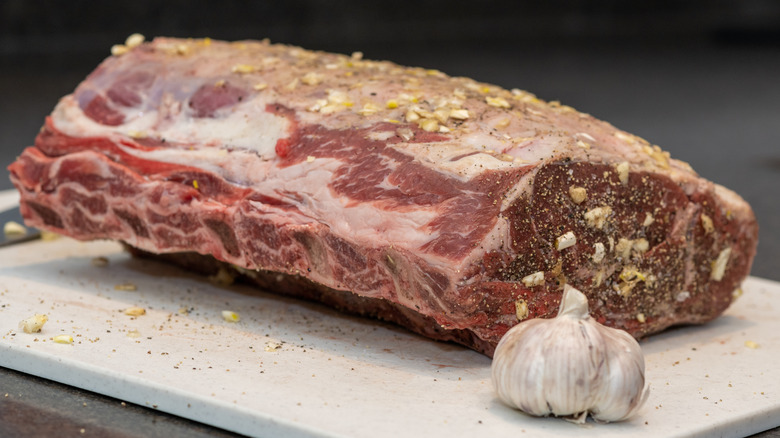
Prime rib is a go-to showpiece dish for big occasions and holidays. It's already rich and flavorful thanks to its fatty marbling, but an oven can only do so much. Look instead to your smoker or BBQ — which can do a lot more. By creating a gentle, delicious wood smoke that seeps into the fat, you can add depth and flavors that really can't be replicated inside your kitchen. Traditionally, prime rib is cooked in the oven, which uses dry heat to roast the beef until it reaches the perfect temperature. This environment is obviously more controlled, and makes timing and results more predictable. But if you're a BBQ lover or obsessed with obtaining that inimitable campfire flavor, give smoking a shot.
There's a lot to consider when buying prime rib at the grocery store, from how many pounds you'll need, choosing between bone-in and boneless, as well as choosing your grade of beef. Because this meat is going to be slow-smoked for several hours, you don't have to fret about buying the fanciest, most expensive cut of meat. Choice and Select grades of meat work perfectly well in this scenario.
A prime rib doesn't need marinades or complicated rubs, though you can certainly make your own steak rub with coffee grounds. Many recipes suggest salting it at least 24 hours in advance to enhance the flavor. Black pepper, garlic, and maybe a touch of rosemary are plenty. Let that beef shine.
Smoked prime rib adds personality and depth
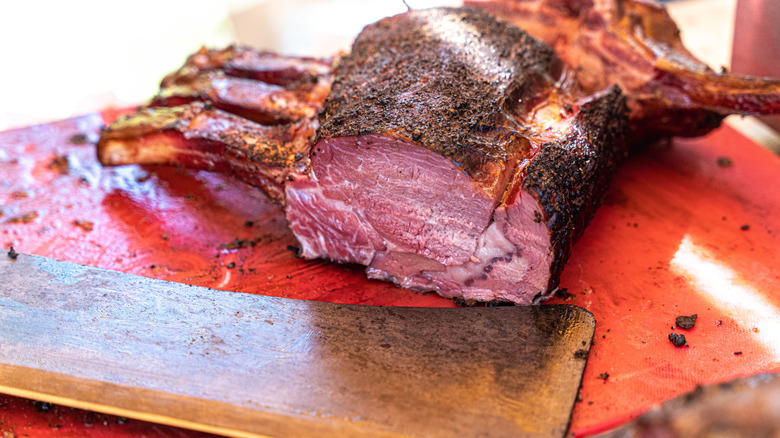
Smoking is all about temperature control, which means you'll definitely need a meat thermometer to keep track. It's a low-and-slow process, usually hovering around 225–235 degrees Fahrenheit. This gentle temperature allows the fat in the prime rib to break down gradually, basting the meat from the inside as it cooks. It also allows the meat to warm evenly from edge to center. Because a smoker uses indirect heat, the roast stays juicy and forgiving, even if you aren't a seasoned pitmaster.
Woods like oak, hickory, or pecan complement beef without overpowering it, while fruitwoods like apple or cherry add a lighter, slightly sweet note. Unlike heavy barbecue cuts such as brisket or pork shoulder, prime rib appreciates some restraint. A light smoke enhances the meat without overpowering it, and creates a savory perfume that hits before the first bite.
Most classic roasting methods start with a high-heat blast to get that coveted browning. You can achieve the sear here by taking the smoked meat out, letting it rest, then cranking the heat up to 400 degrees and putting it back in a second time. This hybrid approach gives you everything you want: smoky flavors, a juicy interior, and a bark-y, highly seasoned crust. Like many meat methods, resting is non-negotiable. Resting is the secret to unlocking a juicier cut of meat. Once off the heat, let it rest for at least 15 minutes before slicing and serving.