

Do Yourself A Favor During Lent And Consider Avoiding This Kroger Brand Frozen Fish
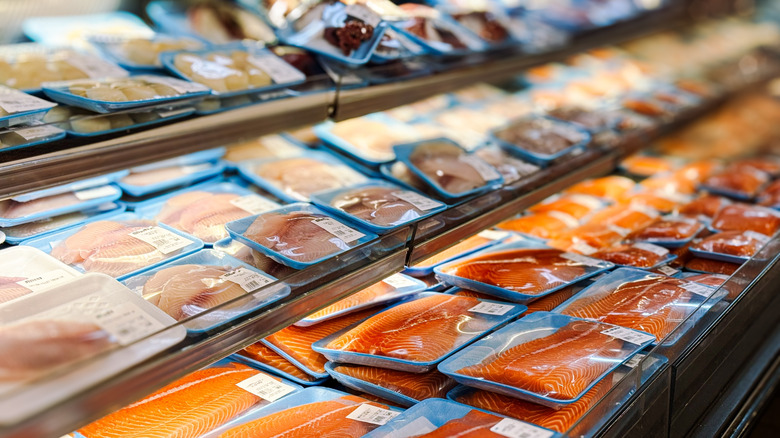
Lent is coming up, which means many of us might have fish on the brain. But whether you hit up a Friday night fish fry or prefer to poach your own flavorful seafood at home, it's always wise to make sure your fish choice is up to snuff. One might assume that something like frozen, wild-caught Pacific cod from your local Kroger is a safe bet. It certainly sounds promising looking at its online listing: boneless, skinless fillets that claim to be sustainably sourced and great for a variety of cooking methods. But if you dig into actual customer feedback, you'll quickly see that many cooks end up more than a little disappointed.
For starters, the average ratings on Kroger's own site are pretty revealing: the larger 32-ounce bag hovers around 2.9 stars, and the 12-ounce bag is even lower, floating at around 2.0 stars depending on the retailer page. That's not exactly comforting news for a fresh seafood product.
The most common complaint is about its texture. One review complained, "Can I give it a 0? VERY chewy and no, it wasn't the way it was prepared. Cooked another brand along with these and you could 100% tell the difference." Another reviewer wrote it was "more like white rubber. I hope the next two we cook are better or taking them back to Kroger." But wait, it gets potentially worse. Some reviews found that the cod had some extra friends in the package. As another customer wrote, they "found a worm in my fish. Very disgusted, never again. I would give 0 stars if I could."
Frozen fish can contain hidden additives
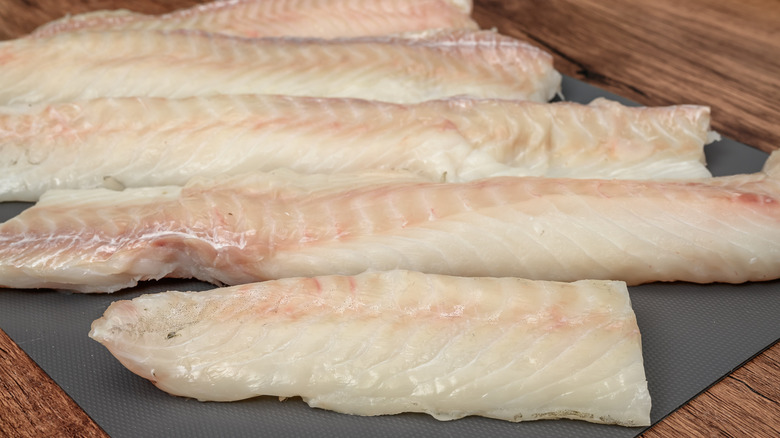
We hate to tell you this, but cod worms are pretty normal. As long as the fish is fully cooked or was frozen below zero degrees, it's safe to eat. Still, there are other potential issues. The ingredient list for Kroger's cod fillets includes sodium tripolyphosphate (STPP), an additive common to frozen seafood. You might not even know the chemical is in your food because the FDA doesn't currently require its labeling.
STPP is considered safe by the FDA and is allowed in regulated amounts, but its use is controversial among some chefs and seafood purists. That's because seafood is "soaked" in this chemical to make it appear shinier and firmer, which is a bonus for older fish. It can also leave the product denser and spongier than what you'd expect from fresh or flash-frozen fillets, especially if you're cooking with water (an ideal choice for some fish and other foods). Because STPP makes fish hold onto excess moisture, this can make it harder to brown the protein properly, and flavor can be lost. You'll also likely end up paying more for the extra weight. It's why higher-quality seafood brands and stores, including Whole Foods, may advertise products with no STPP as a selling point.
Though many of these Kroger reviews make it seem like you should just give up and go to McDonald's for a Filet-O-Fish sandwich (made from Alaskan pollock), good seafood is worth seeking out. Read the labels, perhaps look for seafood that's labeled "dry" (that is, without STPP), and always seek out trustworthy suppliers.