

This Massive Company Supplies Chicken To Many Big Fast Food Chains
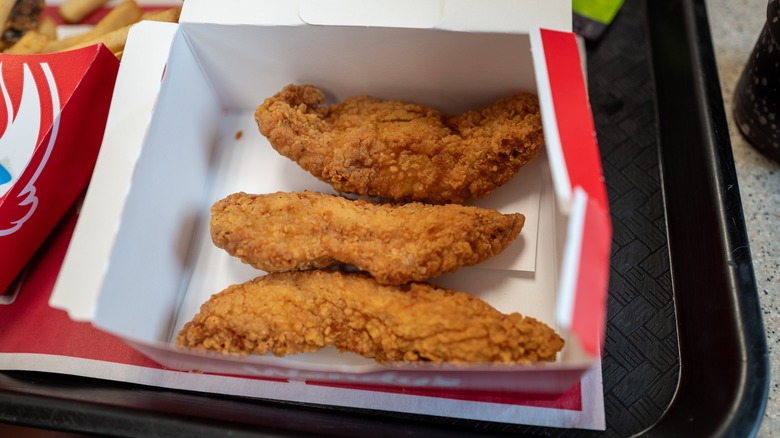
When you bite into a crispy chicken sandwich or nuggets, there's a very good chance that chicken didn't come from the brand's own farms and factories. Instead, it most likely came from Tyson Foods, one of the largest poultry processors in the world and a supplier to many of America's biggest restaurant chains. While most of us encounter chicken through fast food counters and grocery cases, you may not be aware that a huge portion of that poultry is coming from Tyson's operations — some sources estimate one of every five pounds of chicken, beef, and pork comes through this company. The company's scale and reach have helped make chicken incredibly cheap and plentiful in the U.S., but that kind of success has also brought near-constant criticism focusing on labor laws, animal welfare, and the environment.
As fast food chains have expanded nationally, they have needed suppliers that could deliver consistency at an enormous scale. Brands needed a chicken sandwich in Texas to taste the same as one in Ohio. Tyson built the infrastructure to make that possible. The company produces everything from raw chicken breasts to fully breaded products, which can be tailor-made to individual restaurant specifications. While chains don't go around blasting their suppliers, Tyson publicly acknowledges supplying chicken to quick-service restaurants like Burger King, McDonald's, and KFC. What's more, industry analysts commonly identify it as the secret supplier behind other fast food chicken menu items. It could very well be one of those things Chick-fil-A doesn't want you to know about its food.
Tyson Foods helped enable America's fast food boom
Tyson started out fairly small, with founder John W. Tyson delivering chickens from Arkansas farms to the Midwest during the Great Depression. Over the decades, through acquisitions and vertical integration, the conglomerate now controls its entire supply line (and most of the chicken we eat). Surprisingly, Tyson didn't invent the chicken nugget, but it certainly helped supply them around the country. The company currently employs over 130,000 people globally and is the U.S.'s largest processor and marketer of chicken by far.
But that kind of efficiency and nationwide reach reportedly comes with many trade-offs. For one, Tyson has repeatedly been investigated for allegations that it's employed minors, enabled dangerous working conditions, and exploited undocumented workers. And that's without even getting into its tangled history of environmental pollution and animal welfare. Tyson has been known to release toxic pollutants into water systems, including nitrogen and phosphorus, per a 2024 report from the Union of Concerned Scientists. Moreover, animal welfare groups have discovered what they deem to be unsafe and cruel husbandry practices in some Tyson operations.
Still, Tyson remains large in the fast food and grocery landscape, with products that are often sold under a variety of different brand names. It's up to you if you choose to avoid its products, though it's clear that understanding just where your fast food chicken comes from shows how a single company can quietly shape what millions of people eat every day.