

Forget Greek Yogurt: This Type Has More Protein
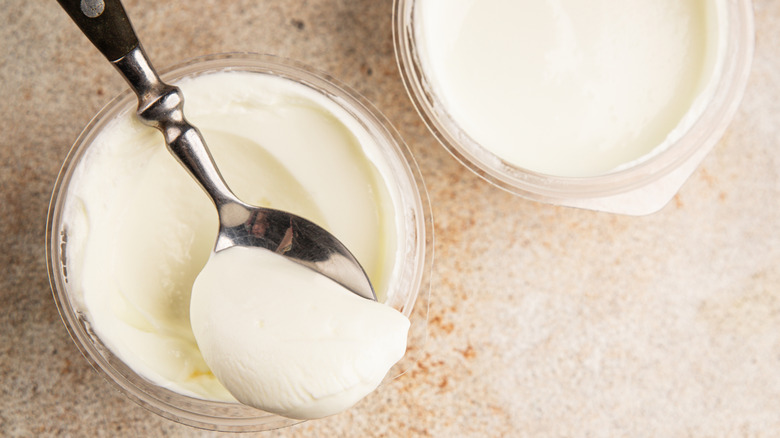
Greek yogurt has been the reigning champ of the dairy aisle for years. We love it for its thick, tangy, protein-packed nature. But if protein is the metric you're shopping by, it may be time to make room for a contender with deep Nordic roots: skyr. If you thought it was just yogurt, you'd be understandably wrong.
Often mistaken for yogurt, skyr (pronounced skeer) is a cultured dairy product that sits somewhere between yogurt and fresh cheese. It originated in Iceland more than a thousand years ago and has long been a dietary staple there. A typical 5–6 ounce serving of plain skyr can contain 15 to 17 grams of protein, whereas some Greek yogurt brands, like Oikos, contain just 13 grams (though this will vary from brand to brand). Obviously, both are excellent sources of protein, but those little grams can really add up day by day.
This rich dairy product is still part of the country's food culture. When the Norse people showed up in Iceland sometime in the 9th century, they met a harsh northern climate where fresh food was hard to find for most of the year. This made a deep, practical knowledge of milk preservation necessary. Crafted from sheep's milk back then, skyr kept well in cold conditions and delivered much-needed protein and other nutrients. Similar to the old-world European tradition of cultured butter, skyr was also traditionally fermented with lactic acid-producing bacteria. Even today, a Michelin-rated restaurant in Iceland is renowned for its butter, which is made by whipping it with local skyr.
Skyr is technically closer to a fresh cheese
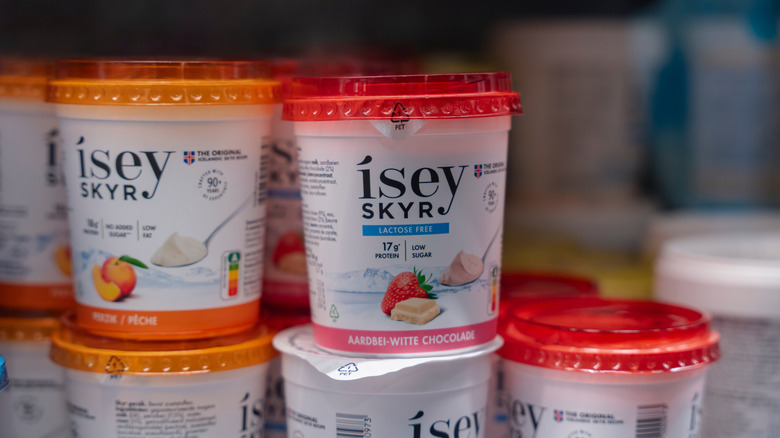
Skyr's flavor is mildly tangy but less sharp than many Greek yogurts, making it an easy swap whether you're creating a sweet or savory concoction. Skyr is technically closer to a fresh cheese than yogurt because it requires rennet, which is still used by old-school cheesemakers today. Traditionally, skyr is made with skim milk, which is heated and cooled before specific bacterial cultures are added. Once the milk is cultured, a small amount of rennet is added. Made from the stomach lining of young animals like goats, calves, and sheep, the enzyme is hardly ever used in the commercial production of skyr today.
Skyr works just as splendidly with fruit and honey as it does blended into smoothies, stirred into oatmeal or as a high-protein substitute for sour cream. You could also use it to make these 3-ingredient frozen yogurt bites, which are basically fruit parfaits to-go and much cheaper than Starbucks. That said, not all skyr is created equal. In Iceland, skyr is tightly regulated and traditionally contains just milk and cultures.
Of course, here in the States, some brands add cream and extra sugar, because Americans gotta get their sugar fix. If protein is your priority, plain varieties with short ingredient lists are the way to go. Does this mean we're throwing Greek yogurt out the door? Not at all. But if you're craving something different with a protein-packed punch, see what's been sustaining Icelanders for almost a millennium.