

Can You Freeze Cooked Ribs To Eat Later?
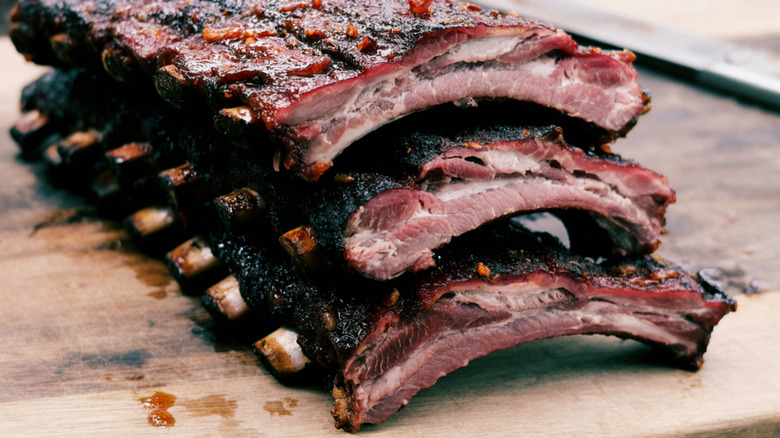
Whether you're dealing with leftover barbecue from a weekend cookout or want to be extra-prepared by making ribs ahead of the family reunion, you may sometimes find yourself with a surplus of cooked ribs. Fear not, as freezing is a solid storage solution that can easily preserve the ribs' flavor and texture. The key is figuring out how to best protect them from drying out in the freezer.
Believe it or not, cooked ribs actually freeze better than you might think because they're rich in fat and connective tissue that help insulate the meat during freezing and reheating. The biggest enemy to ribs isn't the cold itself, but exposure to air, which leads to the dreaded freezer burn. But with proper storage, you can prevent that.
Before freezing, let the ribs cool completely. Never put warm food into the freezer, because the heat can raise the entire temperature of the appliance and start to thaw out other foods. Once you've got your meat cooled, decide if you want to freeze it whole or in portions. Portioning is usually the smarter move if you don't plan to reheat the entire rack at once. Smaller sections will thaw more evenly and reheat more gently.
Wrap the ribs tightly in aluminum foil, pressing it directly against the meat. If you've got a vacuum sealer, even better — this moment is made for exactly that. Place the foil-wrapped ribs into a freezer-safe zip-top bag and either vacuum-seal or manually press out all the air before popping it in the freezer.
Eat your frozen ribs within three months
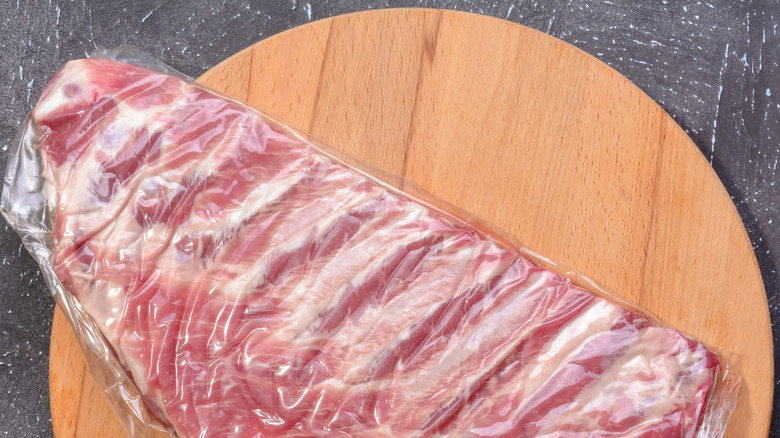
If your ribs are unsauced, consider brushing on a light layer of sauce or cooking juices before wrapping. Sauce is actually a great moisture barrier that can help protect the meat during freezing. For the best quality, your frozen ribs should be eaten within three months, though they can be safe to eat beyond that if properly stored. Still, eating year-old frozen meat does not always mean you'll have the best texture, color, or flavor.
Of course, you'll want to label your precious package with the date so you don't forget what's in the freezer (it happens to the best of us). When you're ready to eat, thaw the ribs slowly in the refrigerator overnight. Don't try thawing at room temperature, which can lead to uneven warming and food safety concerns. You worked hard to make the best fall-off-the-bone ribs, and you should work just as hard to preserve them the right way.
Once thawed, reheat them gently the ole' low and slow way, just like when they were cooked the first time. Wrap the ribs in foil and reheat at 300–350 degrees Fahrenheit until warmed through. If you want to revive the exterior, unwrap them for the last few minutes or finish them on a grill. If you absolutely must use a microwave, keep the power low and cover the ribs to trap steam. Just know that it's the least forgiving method, and your ribs deserve only the best.