

This Underrated Cut Of Steak Is Ideal For Your Grill (And It's Cheap, Too)
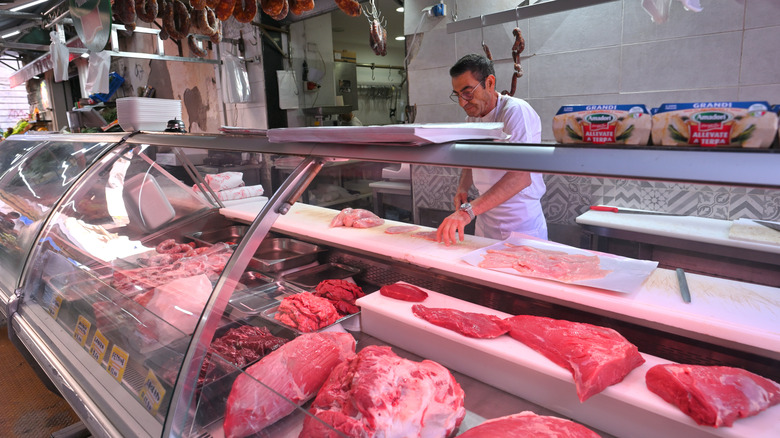
American beef has grown seriously expensive, which means there's perhaps never been a better time to educate yourself on underrated cuts that are way less costly than the usual suspects. Sure, we've all stood at the butcher counter lovingly eyeing those juicy ribeyes and New York strip steaks, which can end up costing an arm and a leg. But there are other cuts out there that deliver big flavor without the big sticker shock. Allow us to introduce you to the bavette steak — a French bistro staple that Anthony Bourdain was praising more than 20 years ago. The bavette is back, although savvy butchers and cooks say it never left.
Bavette comes from the bottom sirloin area and its name literally means "bib" in French, a nod to its long, flat shape. In the U.S., folks in the Northeast sometimes call it a "flap meat" or "sirloin steak tips." In France, it's often served simply with frites and a healthy slick of butter or sauce. For many American shoppers, it's still flying under the radar, which is exactly why it remains relatively inexpensive compared to trendier cuts. But don't mistake that affordability for mediocrity. Bavette is all about deep, beefy flavor. If you want a steak that actually tastes like steak, this is the cut to look for. No wonder it's sometimes referred to as "the butcher's cut," because butchers would often take this bit of meat home for themselves.
Bavette steak is an underrated, affordable cut
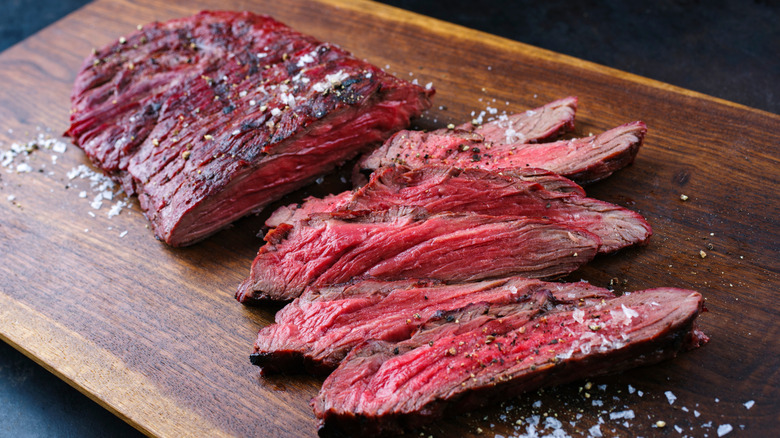
When it comes to texture, the bavette is more about a big beefy flavor than it is about melt-in-your-mouth tenderness. The meat has a loose, visible grain and is a bit more chewy than your standard ribeye or filet. That open grain helps it absorb flavors easily, which makes it an excellent candidate for a simple steak marinade. If you marinate, keep it short (30 minutes to a few hours), as long marinades can make the surface mushy. You'll want to cook it hot and fast on the grill, but most butchers recommend you keep it between medium-rare and medium. Any more than that and you'll lose its juiciness and tenderness. Because the meat is near the abdomen, there's less fat, so be careful you don't overcook it.
Some cooks on Reddit recommend coating the steak in cornstarch for the best sear. A light dusting of cornstarch absorbs surface moisture, helping the steak dry out more quickly before it hits the hot grill. Helping the steak get hotter faster gives you that coveted crisp sear. But be warned: do not miss the crucial last step of resting. To many, this step matters more with bavette than almost any other cut. Let the steak rest 5–10 minutes, then slice very thinly against the grain. This shortens the muscle fibers and helps to make each bite more tender. Cooking and slicing it properly is the secret to a beautiful bavette that tastes far more expensive than it really is.