

Carolina Style Ribs Vs Texas: The Differences To Remember
When it comes to barbecue, location is everything. The geography of your 'cue probably has the biggest impact on your style, cut, and preparation of meat. Perhaps nowhere is that more clear than in the difference between Carolina-style ribs and Texas ribs. They may start with meat and end with smoke, but everything in between tells an oftentimes dramatically different story.
Let's start with the Carolinas. In North and South Carolina, pork is king. Their barbecue centers on whole-hog cooking, so ribs are almost always pork — either baby back ribs or spare ribs, to be more precise. Eastern North Carolina barbecue is famous for its vinegar-pepper sauce that's meant to cut through the fat. Western North Carolina barbecue (often called Piedmont or Lexington style) has a tomato element, but is still tangy and acidic. Head down into South Carolina, and you'll find the iconic mustard-based "Carolina Gold" sauce.
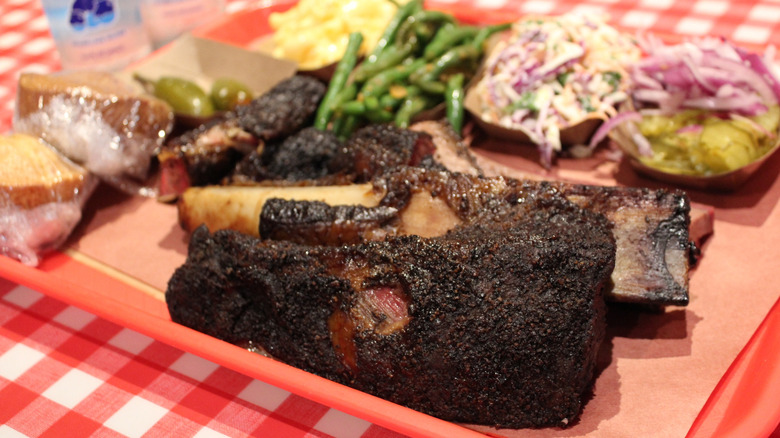
Meanwhile, deep in the heart of Texas, beef is what's for dinner. Most everyone is familiar with the Lone Star State's brisket game, but ribs matter here, too. While the Carolinas are all about the sauce, Texas traditionally likes its meat to speak for itself. Salt, pepper, and a pound of patience are the main ingredients. Beef ribs, sometimes called "dino ribs" for their oversized presence, are often on the menu. Pitmasters focus on creating the perfect crusty, thick bark on their ribs. While it can take 24 hours to smoke a brisket, beef ribs require only half your day, with an average cook time of 8-9 hours (oven-baked ribs may take even less).
Texas loves beef, the Carolinas love pork
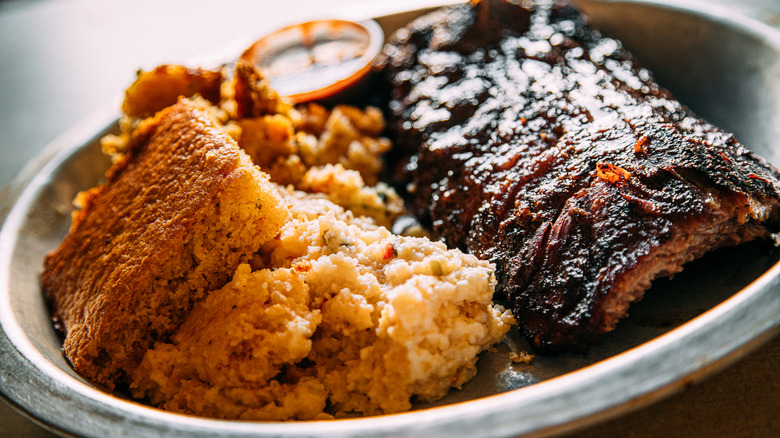
If you want to make real Carolina-style ribs, you need to focus on three things: pork, smoke, and acid. Traditionally, Carolinas use hickory wood for their smoke, while Texas sticks to oak. The sauce is as important as the meat, with pitmasters often using a wood-handled mop to baste their ribs multiple times throughout the process. The "mop sauce" is often made the day before to let the flavors meld together. This southern style of barbecue embraces acidity that keeps you going back for another bite. What you won't find is the thick, sticky, molasses-heavy sauce associated with Kansas City barbecue, which was actually Anthony Bourdain's favorite.
Texas barbecue brings more of a spotlight to the meat itself. If the brisket and ribs are done right, many folks reason that little else is needed. They say everything is bigger in Texas, including bone-in plate ribs, which range from 8-12 inches in length. Ribs this big need at least eight hours in the smoker, if not longer. Sauce is typically served on the side, but it's not a defining feature. A peppery, crusty bark is what pitmasters really obsess over. That and the coveted smoke ring, a perimeter of rosy-pink meat just below the thick crust that many believe is a sign of perfectly smoked meat.
Barbecue in the United States is impossible to fit into just one category. While we've picked the best barbecue in every state, each one is an expression of its origin and unique cultural background. Not one style is better; they just tell a different delicious story.