

McDonald's Filet-O-Fish Was Originally Made With This More Expensive Seafood
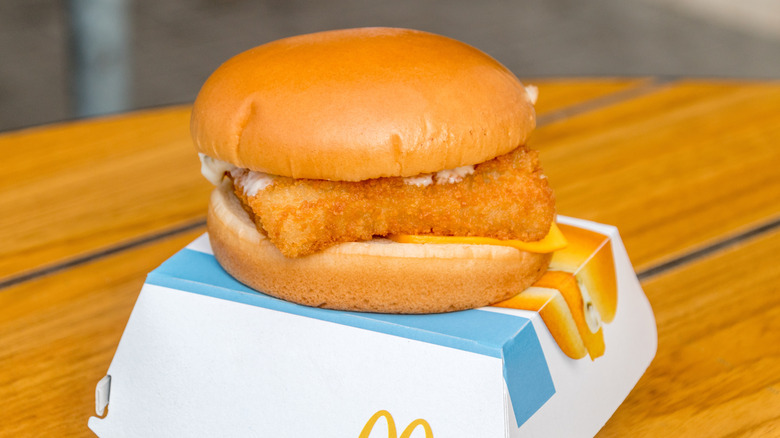
The Filet-O-Fish has always been a McDonald's sleeper hit. The quiet outlier on the menu is certainly milder and a lot less flashy than the Big Mac, but what many people don't realize is that when it debuted in the early 1960s, it featured a pricier fish. Today, the Filet-O-Fish is made with wild-caught Alaskan pollock, but the original version actually used halibut.
The sandwich has its own unique history. It was created in 1962 by Lou Groen, a McDonald's franchise owner in Cincinnati who needed a meatless option for his predominantly Catholic neighborhood, where many residents traditionally didn't eat meat on Fridays. At the time, sales dropped sharply at the end of the work week when customers avoided beef. Groen noticed many headed to a rival fast food restaurant to pick up an Alaskan cod sandwich instead.
So, he created his own fish sandwich, complete with a special batter and tartar sauce, and took it to McD's headquarters. Funnily enough, founder Ray Kroc was already working on his own meatless alternative — the Hula Burger. The Hula Burger featured a slice of grilled pineapple and melted cheese on a bun, but Groen was anything but impressed (customers wouldn't really bite, either). In a now-legendary sales showdown, Kroc offered to put both sandwiches on the menu one Friday to see which one sold more. Groen's fish sandwich won hands (fins?) down.
McDonald's switched its fish again in 2013
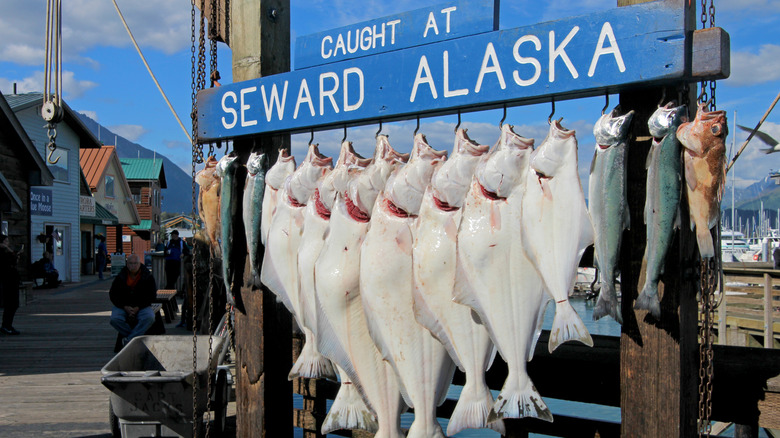
Lou Groen's fish sandwich had the honor of being the first-ever new addition to the original McDonald's menu. The only downside? He had to give up the more expensive halibut for another white fish: Atlantic cod. Years later, he still believed that his version was better, but cod was simply a better deal for the franchise.
Cod was widely used in American fish fries for years for its clean, flaky texture that worked wonderfully in a deep-fried format. But as demand for the sandwich grew nationally (and later globally), relying solely on Atlantic cod became difficult. Overfishing in the North Atlantic throughout the late 20th century dramatically reduced cod populations, driving up prices and creating sustainability concerns. For a global fast-food giant like McDonald's, sourcing enough cod consistently at the right price became increasingly difficult.
In 2013, the company transitioned to Alaskan pollock, a more abundant and affordable white fish with a similar mild flavor and flaky texture. The switch was also good public relations for McDonald's, as it helped align the product with sustainable fishing practices certified by the Marine Stewardship Council. Today, the internet is filled with all kinds of Filet-O-Fish ordering hacks, from adding hash browns and Big Mac sauce to switching out the buns. And though abstaining from meat on Fridays isn't quite as popular as it was 60 years ago, many people still don't eat meat during Lent, the 40-day season in the Christian calendar leading up to Easter, making the Filet-O-Fish a seasonally-appropriate fast food meal.