

What To Ask Your Butcher Before Buying A Prime Rib

We may receive a commission on purchases made from links.
Can we even call it a holiday if a slab of prime rib isn't cooking in the oven, filling the air with its mouthwatering aroma? It's especially popular at Christmas, but millions of families also sit down to a prime rib roast at the weekend. If your budget is limited, this inexpensive cut of beef is a decent copycat, but for those who want the real McCoy, there are lots — and lots — of things to remember.
Grocery stores like Costco stock a wide range of beef cuts, and experienced home cooks know basic things to look for when shopping for prime rib. The color of the meat is important — the deeper the red, the fresher it's likely to be. The marbling should be even, and if the meat doesn't spring back when you press it, it's probably older than it looks, and you should move on. But that's just the tip of the prime rib iceberg.
Knowing how big your prime rib needs to be for a dinner party can be tricky. Not enough meat, and your guests may be insulted. Too much, and it risks being left on the plate. According to Tanya Cauthen, owner of Belmont Butchery, the rule of thumb is one rib per two to three portions for a USDA prime rib roast. Cauthen lent us the benefit of her expertise with several other questions to ask your butcher before buying this delicious cut of meat.
What meat grade should I choose?
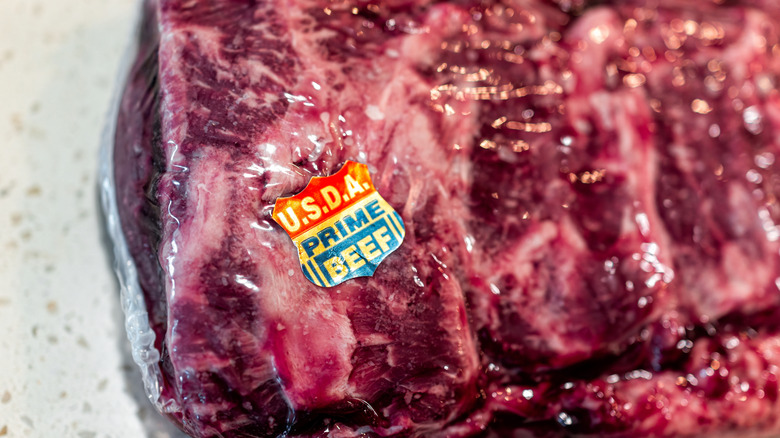
One of the most confusing things about beef meat, and prime rib in particular, is the wealth of names and labels for cuts, some of which are used interchangeably. The real difference between rib roast and prime rib, for example, is negligible. Consumers looking to choose the "right" grade can be left wondering whether the hunk of beef they've spent their hard-earned dollars on is actually worth the price.
Cauthen said the reference is a big clue to the quality of the meat. "If the reference is generic — AKA a rib roast — then the grade can be anything. That's why chain restaurants can do "prime rib" specials for cheap," she said. Cauthen warned that meat labeled USDA prime rib would be a quality grade, while bone-in rib loin, compared to a standing rib roast from the rib loin, where ribeye is cut from, can vary in quality.
Because prime rib as a description is used colloquially by many people, it doesn't have the same technical meaning as it would to a professional butcher. "Depending on the reference, yes — grade matters," Cauthen said. If you're in doubt about the grade of meat you should buy, book it to your nearest butcher.
What's the difference between the first and second cut?
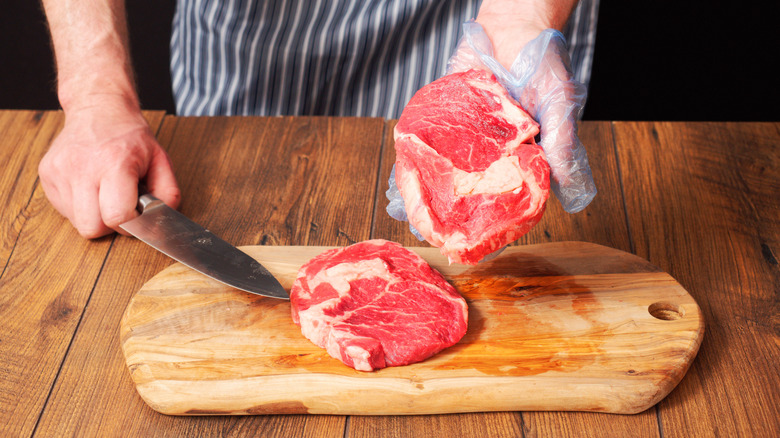
When a beef cow is butchered, the prime rib is one of the first pieces to be removed — hence the name. That initial slab of meat offers a choice of two cuts for home cooks, and depending on how your foodie tastes lean, there are significant differences between them.
The first cut comes from the small, or loin, end of the rib, which is marginally closer to the animal's hindquarters. The first cut can be a little more expensive than second cut, as it's a leaner, more tender piece of prime rib. And for Tanya Cauthen, it's perfect for a delicious steak. Take your time while cooking it for guaranteed juicy meat.
Second cut prime rib is located closer to the chuck end of the cow, so it has more fat marbled throughout the meat. This is what makes it really special. "Second cut also has the most spinalis as part of the cut," Cauthen said, referring to the spinalis dorsi, or rib cap. Known as "the chefs' secret," the spinalis used to be discarded. But now, it's regarded as a fantastic cut in itself. Second cut is best roasted low and slow if you want a mouthwatering centerpiece to a family Sunday lunch or holiday dinner.
Do I need to know if the meat has been blade tenderized?
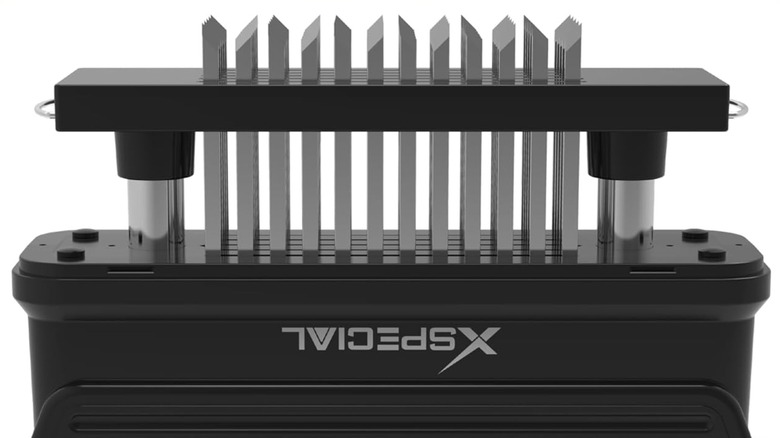
In 2016, the Department of Agriculture mandated that mechanically tenderized beef had to be labeled as such, so consumers across the country could make an informed choice. Blade tenderizing involves inserting tiny needles into the meat to break down the muscle and, as the name suggests, make it more tender. This can be done at home using gadgets like this one. But on an industrial scale, it's a different story.
Experts quickly raised the alarm about the mechanical needles' moving potentially harmful bacteria from the surface to the inside of the meat, while the FDA recommends cooking all steaks at 145 F, and letting them rest for a minimum of three minutes before eating. In the meantime, the online debate about whether the process is needed for meat that is naturally tender, such as prime rib, rages on.
As an experienced butcher, Tanya Cauthen would advise customers to give mechanically tenderized prime rib a wide berth, unless they were making thin slices for a Philly cheesesteak. In her opinion, tenderized meat is low quality. "Maybe it's appropriate for what you are doing — but to me, not as a steak or roast!"
Which is best, the chuck end or the loin end?
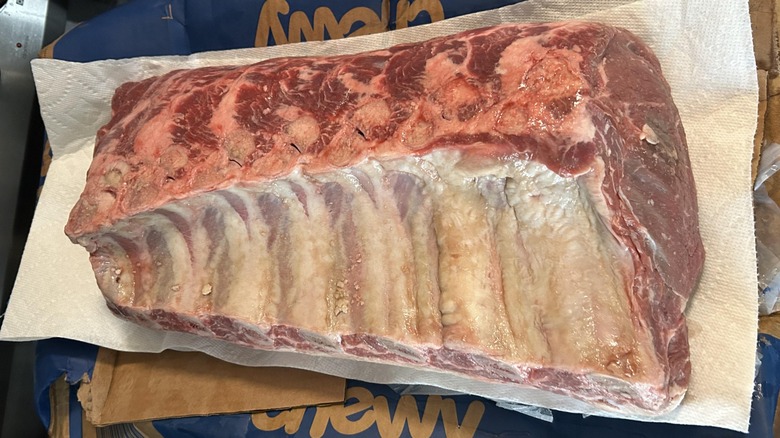
The internet can be helpful when it comes to finding out what are the best and worst meats to buy at Costco and similar places, but your culinary options could be limited by the cut that's lurking beneath the plastic wrapping. Looking at a hunk of prime rib, it's not always obvious that it has two ends: one from the loin side, which is leaner, and the other from the chuck side, which has more fat.
However, the question of which is the "best" end depends entirely on what you are planning to cook. Many home cooks and butchers, Tanya Cauthen included, will happily roast the chuck end and create steaks from the loin end of prime rib. Both will deliver flavorful, delicious platefuls that will please all the carnivores in your life — but it's not her only recipe suggestion.
"If you want to be CRAZY," Cauthen said, "Cut a roast from the chuck end and then deconstruct it. Separate the spinalis as a whole piece and then cut rib eye 'eyes' from the remaining roast."
Should the bone stay in or come out, and does it matter?
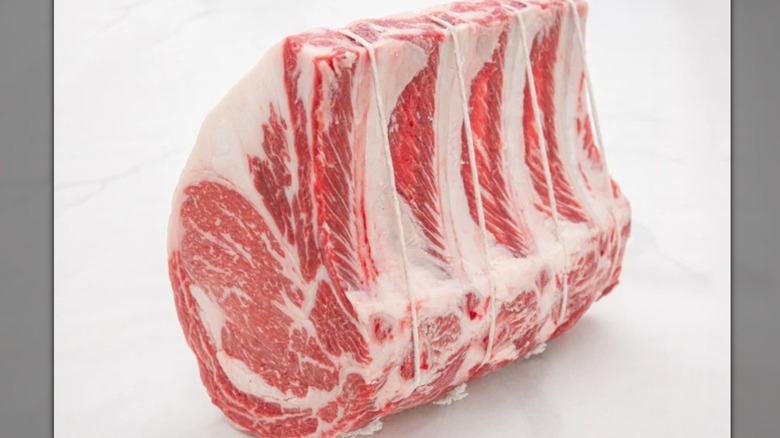
You could be forgiven for wondering why it can be optional to include the bone in a cut of meat that's called prime "rib," but bear with us. Strictly speaking, prime rib should contain the bone — though it's not a hard-and-fast rule. Some butchers automatically remove the bones, but as with many things prime rib, it's a more nuanced question than it first appears.
Removing the bones from a prime rib does allow you to cut thinner slices, and it shouldn't affect the overall quality of the meat. That said, leaving the bone in the prime rib helps ensure that it cooks evenly and stays juicy, while also lending a depth of flavor to the meat that bone-out can lack. Just ask anyone who has gnawed every last scrap of flesh from a rib.
They're also a gift that keeps on giving long after the meat has been devoured, as stock made from the boiled bones can be frozen for later use. For home cooks worrying about not being able to season their prime rib on the bone, you can have the best of both worlds. You can carefully cut the meat off the bone, season it, and then tie the bone back on — making carving easier, too. Or, if you don't trust your knife skills, ask your butcher to do it.
Does my prime rib need to be Frenched?
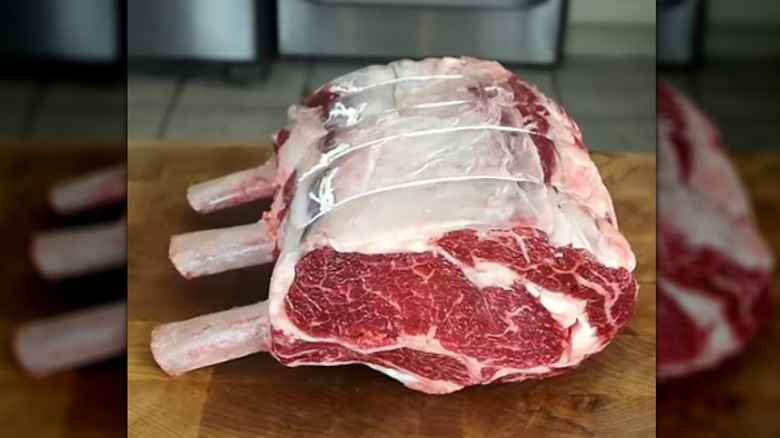
Cutting off the bone and tying them back onto the prime rib meat is known as a chef's style roast, and it's not the only thing your butcher can do with your beef cut. There's also a process called "Frenching."
Many high-end restaurants and some sellers often serve their lamb chops Frenched, which means their bones have been scraped completely clean of fat. Apart from looking striking, it can make them both easier to carve and less messy to eat (though we think that takes all the fun out of using your hands).
Although Tanya Cauthen appreciates the beautiful presentation that Frenching offers, she doesn't think it's appropriate for most roasts — prime rib included. It might feel slightly healthier to trim off any excess fat, but she warned that the extra labor to prepare the meat will force the per-pound price up. "I feel that if you are doing a single rib roast (AKA cowboy steak) then yes, you should French it! But beyond that — it's personal preference."
How do I choose between wet-aged or dry-aged?
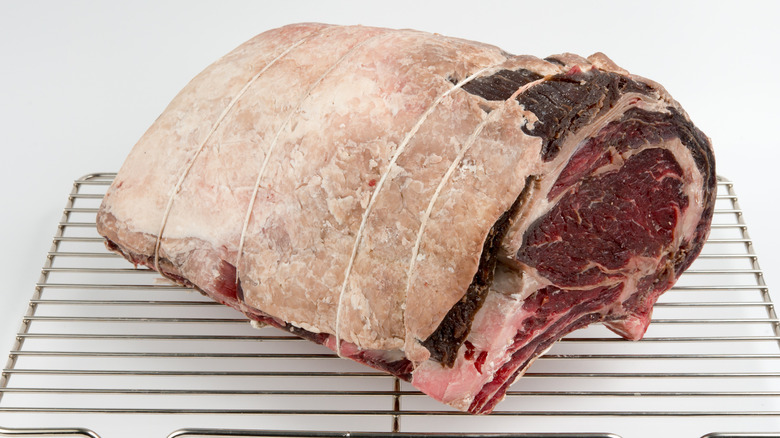
Butchers know that freshly-slaughtered meat doesn't actually taste that good. What we now call aging was for centuries known as hanging meat, leaving it on a hook for several days to allow the flavor to deepen and improve. The invention of refrigerators and specialized chambers made that a much safer process with stable temperatures that minimized bacterial contamination. Today, the majority of beef produced in the United States is aged using either the dry or wet method.
Dry-aged beef can be kept for up to several months in a special chamber where the conditions, including the humidity level and temperature, are meticulously controlled. During this time, a crust develops on the meat. And the longer it is aged, the more complex and delicious the flavor of the cooked beef. Dry-aging works best with fattier cuts, so it's ideal for chuck-end prime rib. Tanya Cauthen is a fan of dry aging and the intense flavor it lends to steaks and roasts, though she doesn't recommend it for a lower quality cut of beef.
Wet aging is a more recent process. Beef cuts are placed in vacuum-sealed bags, and the enzymes in its own juices break down the meat to tenderize it. Unlike dry aging, there's much less shrinkage — but the intensity of flavor isn't quite the same. Cauthen recommended meat be wet aged for between 30 and 75 days, but warned leaving it for too long can lead to a "waterlogged" and "flaccid" steak or roast.
Is a tapered prime rib worth buying?
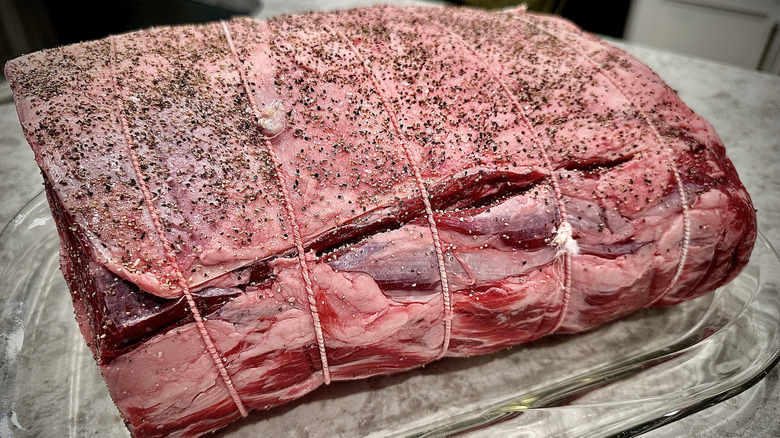
There are lots of things to consider when buying a prime rib, from the size and color, to how much fat the joint has, and whether that will need to be trimmed before cooking. But there's one more factor to include: the shape. Some prime ribs are thicker at one end — usually the loin — than the other, and while it's not an indication of quality, it can have an impact on how it cooks.
Known as tapering, this narrowing of the roast often means achieving a consistent level of doneness through the whole joint can be harder. While the wider end is a perfect medium rare, the thinner side could be done or even well done. For Tanya Cauthen, it's not that big a deal and can even be an advantage for home cooks feeding a tribe with different tastes. She also suggested that a tapered prime rib could be a bit of a bargain, as people are likely to choose a more uniform cut. "If the price is right, then it can be great," she enthused.
How should I store my prime rib before cooking, and for how long?
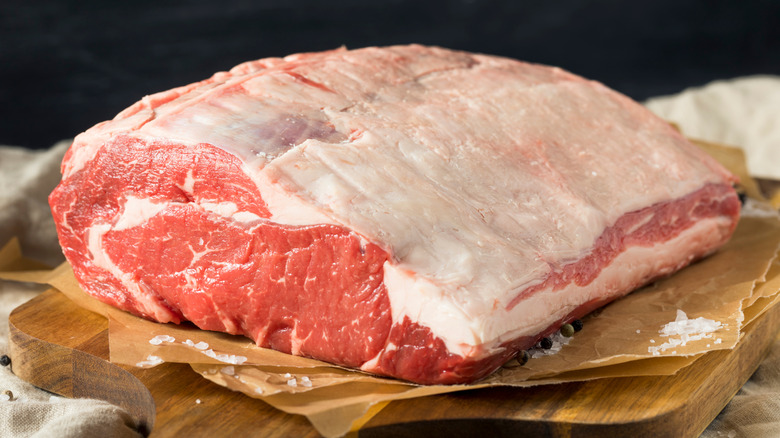
According to the USDA, uncooked beef should be either used or frozen between three and five days after being refrigerated. But don't underestimate the value of that time in your fridge. It acts as a brief dry age (even though it's more than likely already undergone the process) and will boost the flavor of your meat when you finally cook it.
"Beef is the most durable of proteins — which is why we can age them," said Tanya Cauthen. As far as she was concerned, prime rib being used for a roast should be fine for a week, depending on how it was wrapped. She added that, although there may be some oxidization, it would only affect the color rather than the flavor, and thinner cuts of meat should be used more quickly.
"Depending on processing date, and whether it's dry-aged or wet-aged, we will store rib loins for upwards to 75 days," she said. "But that's why you go to a butcher — to let us do the things we do!" For home cooks looking for a rule of thumb, she said storing your meat for one to 10 days would be okay, depending on the size of the roast. As for after it's cooked? Here's the best way to freeze prime rib.