

The Herb Planting Mistake Your Neighbors Will Hate You For
We may receive a commission on purchases made from links.
Nothing beats flavoring a home-cooked recipe with herbs grown in your own garden (except maybe harvesting fruit from your own trees). Sprinkling in that dash of greenery can take a relatively simple pasta dish to a whole new level, or bring depth and complexity to a sauce. While some herbs are tougher to grow than others — shout out to the multiple basil plants I've watched wither — mint is definitely on the easier end of the scale. It will thrive in most soils, doesn't need to be deeply planted and, once established, is hardy enough to cope with pretty much whatever Mother Nature throws at it.
If you live in colder climes, you should plant your mint in spring but wait until fall if you're in a warmer region, and always protect very young seedlings from frosts, wherever you are. There are lots of different kinds of mint to choose from, including orange mint, perfect for adding a dash of sharpness to balance cocktails. But where you choose to raise your mint is crucial.
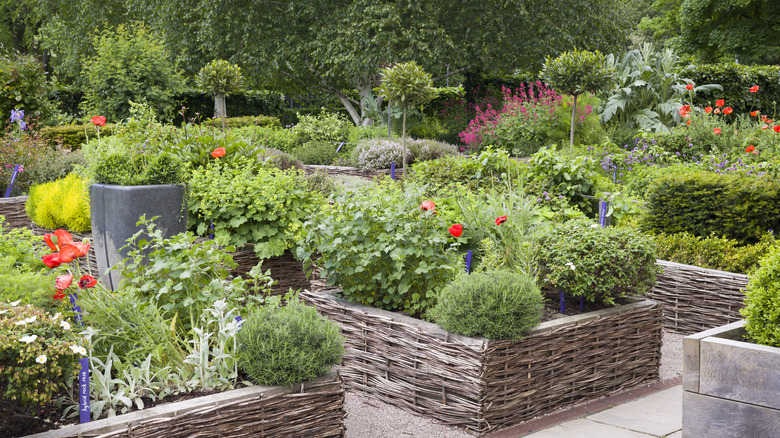
You might be tempted to greenify the patch of bare soil at the base of a garden fence with some spearmint, or fill an empty spot in the yard with a pretty herb garden that includes a mint variety. Both could be a huge mistake. The better the growing conditions, the more likely your freshly planted mint will grow like crazy on both sides of your fence, potentially causing problems between you and your neighbor, especially if they don't share your green thumb or culinary enthusiasm. Likewise in a cultivated herb garden, all the hard work you've put in creating a rich soil will be pounced on by the mint. It can run riot, swamping all your other herbs before you can say "I should have bought sage!"
Choose your planting location carefully
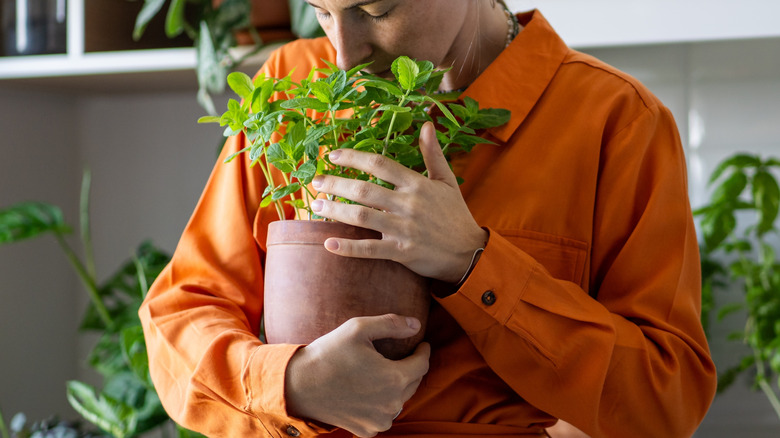
All of this doesn't mean you can only cook with dried mint alongside your fresh herbs. The best way to stop this vigorous plant from cratering your relationship with your neighbor or overtaking your yard is containment, containment, containment. Put your mint in a big enough pot — at least 12 inches in diameter is good — and it will never give you a day of trouble (beyond a bit of monitoring). You can get really creative with what you put it in too, from old or thrifted jugs and jars (though make sure to put some pottery shards or something similar at the bottom to promote good drainage), to these self-watering pots that are ideal for all kinds of herbs.
Even after you've planted your mint in a container, you've got to keep an eye on that sucker. Don't leave the pot sitting directly on grass or soil, because even the smallest drainage hole or slightest crack will give the roots an opportunity to make a bid for freedom. Before you know it, you'll be up to your ankles in mint and relying on this hack for excess herbs to make a peace offering for next door. Keep your mint contained, keep it healthy, and you'll have nearly year-round greenery and flavor for years.