

The Classic Vegetable You Need To Plant Early For A Robust Summer Harvest
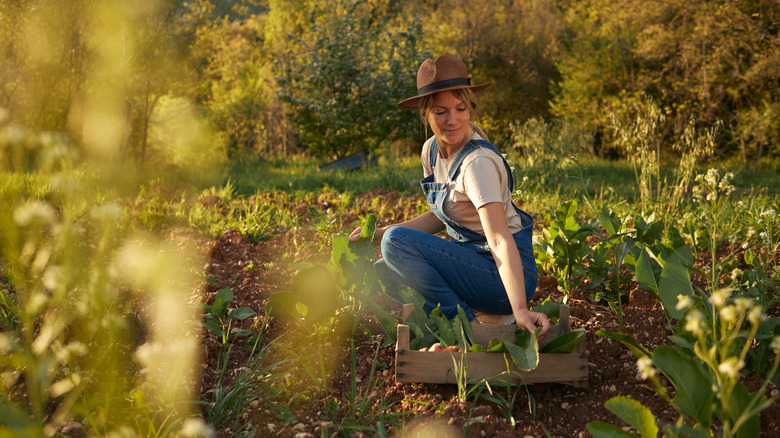
With winter finally thawing things out in the northern hemisphere (hopefully), you may already be thinking about what you want to grow in your garden once the ground becomes soft enough for planting. If you're the type of person who likes to eat what they grow rather than only have something pretty and fragrant sitting on your kitchen table, consider planting onions now.
The classic, versatile vegetable finds its way into plenty of savory dishes –– and it even pulls double duty as a great vegetarian alternative to steak with the proper caramelization. However, if you're planting onions, you want to ensure that they have plenty of time to grow nice and large. Onions need lots of water to increase in size, and the cool-season crop can actually be planted as early as March, depending on your growing zone. So, it may be time to get out those gardening gloves.
In addition to lots of water, onions are like us after a long time spent indoors — they want to get some sun. Sunshine, well-drained soil, and lots of hydration keep this crop nice and happy. If you have pre-started bulbs known as onion sets, plant them with the pointed end upwards and about one inch deep into the soil. This crop is wonderfully low-maintenance, so unless your area is experiencing a drought, you can let your onions do their thing.
Onions are great for novice gardeners
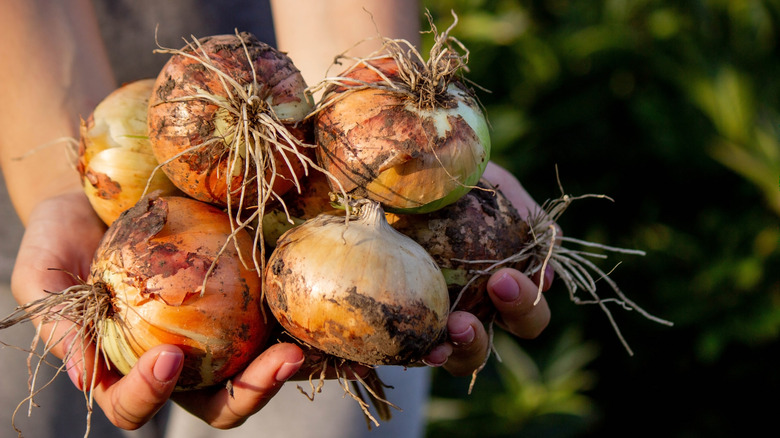
Green thumb not looking quite so strong these days? If you consider yourself the type of person who can barely keep a houseplant alive but still like the idea of growing your own food, onions are a great crop to start with. As one of the first veggies you can plant in spring, these forgiving root vegetables don't have to bring you to tears (even when you're cutting them, thanks to this Gordon Ramsay trick).
Unlike other vegetables, onions also don't attract many pests and actually repel some of them, including aphids, flea beetles, and ants –– another indicator that properly planted onions can yield a bountiful harvest of other plants, too.
One of the easiest ways to grow onions is via onion sets. You can find these at your local garden center, where producers plant onion seeds and then dry them while they're still small. You can also plant onions from seeds, which take a bit more babysitting –– which is fitting, since they're baby onions –– or source onion seedlings.
However you choose to grow your onions, and whichever variety you opt to plant, there are a few key things you should know after your summer harvest, including storing them properly so they maintain their crisp, crunchy texture.