

Not Quite Texas Or Mexico: Here's Where Chimichangas Were Supposedly Invented
We may receive a commission on purchases made from links.
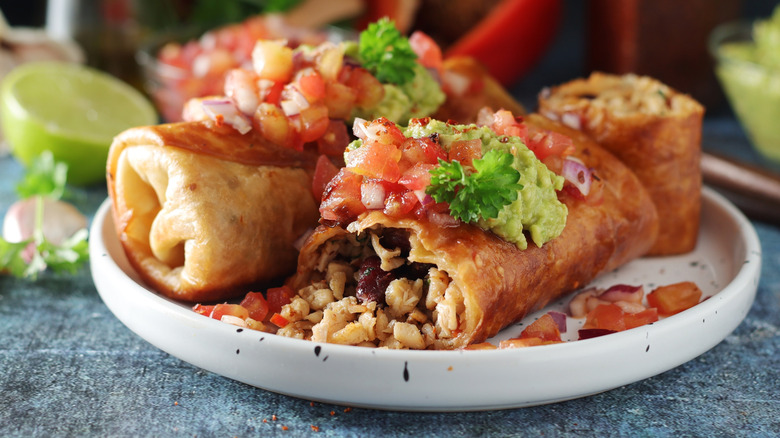
Chimichangas are among the most popular menu items at a slew of Mexican-American restaurants. Essentially deep-fried burritos, chimichangas are crispy parcels made from a soft, flour tortilla, filled with ingredients including beef, beans or cheese, and topped with silky guacamole or a spicy salsa. Although some of the best burritos can be found in California, the origins of their deep-fried cousin the chimichanga are a lot less clear cut. They might sound like a Tex-Mex invention, but in the century or so since they appeared on menu boards, arguments have raged about where they were invented.
Arguably the most widely circulated claim dates back to 1922 and the El Charro Cafe in Tucson, Arizona. The story features in John F. Mariani's 1983 book "Encyclopedia of American Food and Drink," and recounts how a traditional burrito accidentally fell into a fryer. The restaurant owner, taken by surprise but also in the company of her young nieces and nephews, thought on her feet and changed a curse word into a nonsense word. ("Chimichanga" translates to something akin to "thingamajig.") Some sources have suggested the original cursing included something rude about a monkey, while others say "changa" comes from the Spanish for a female monkey. Whatever the origins of the name, the food was a hit with diners.
Other claimants to the chimichanga crown
However, 100 miles or so down the road, iconic Phoenix eatery Macayo's insists it was responsible for bringing the chimichanga into the world. According to the chain's website, a burrito inadvertently being dropped into hot fat led to the recipe's creation, but it was Macayo's founder who did it in 1946. They swiftly topped it with fresh Pico de Gallo, relleno sauce, and sour cream, and it has been devoured by a delighted public ever since. In 2011, the restaurant's owners felt so passionately about their purported invention, they launched an ultimately unsuccessful petition urging the Arizona State Legislature to adopt it as a state food.
Cutting through all the culinary noise like Trader Joe's clanging bell comes the Sonoma region of Mexico, which has quietly laid its own claim to the chimichanga. A restaurant manager in south Tucson recalled eating smaller versions, known locally as "chivichanga," as a child in Mexico, while another native of the country pulled no punches: "There is no way any American could create something as tasty as the chimichanga," per Zócalo. Sounds definitive, doesn't it? But no.
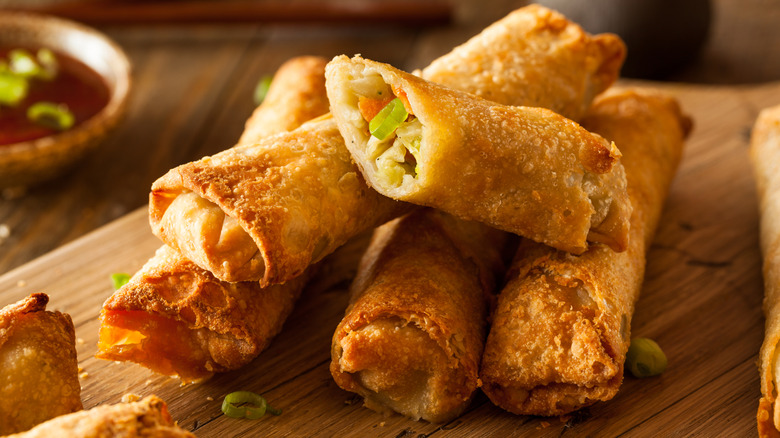
In 2015, a reader's letter to the Arizona Daily Star claimed that Chinese workers living in the Sonora region who married local women were the real inventors of the chimichanga. The letter credited Professor Francisco Paz of Sonora University for the theory they were created by wives cooking for their husbands, noting Mexican children called egg rolls "chimichanguitas." Next time you're tucking into chimichangas, you can decide whether it's a twist on a dough-wrapped Chinese egg roll or the result of a happy accident in a Tucson kitchen.