

The Safety Risk To Know Before Making Garlic-Infused Olive Oil
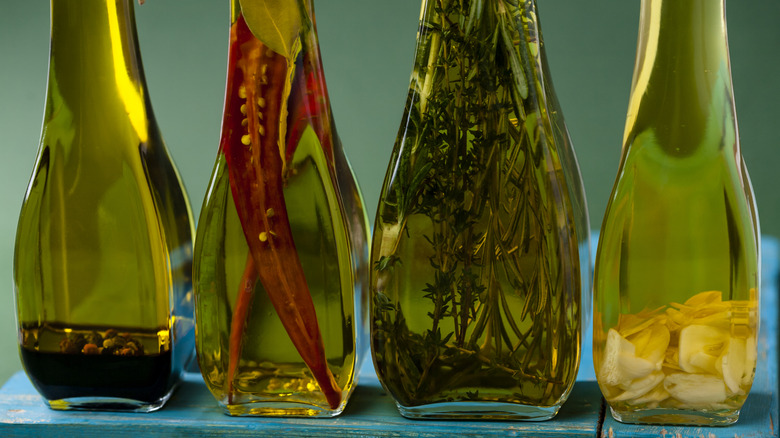
My husband loves to introduce lots of flavor to his dishes, and I'm a fan of elegant things in the kitchen, so infused oils were a win-win for us both. The lines of slender bottles of olive oil with herbs or garlic inside in the supermarket definitely ticked the boxes for both taste and style, but the eyewatering prices definitely didn't. So, we looked into making our own and ran straight into a safety concern that had never occurred to either of us: the risk of botulism.
Clostridium botulinum bacteria are naturally present in a wide range of soils across the globe. Decomposing plants and animals nourish a warm, wet environment that's a breeding ground for the spores, and anything planted in that soil — like a bulb of garlic — can absorb it. While all of this is a naturally-occurring process, when it comes to infusing oils at home, the potential presence of C. botulinum in garlic means you've got to be more careful.
Although you could peel some cloves and drop them into a bottle of olive oil, it's not advisable. If the garlic has been contaminated with botulism, the warm, wet liquid will help bacteria grow. Keeping it in the fridge only slows the process. Instead, chop the garlic and fry it gently in the oil until it's sizzling, let the mixture cool, then strain the oil into a bottle. You can also use your sous vide machine for this. Keep your infused oils in the fridge, but be aware that homemade infused oils will only last about a week.
Acidifying garlic and other oil infusion ingredients
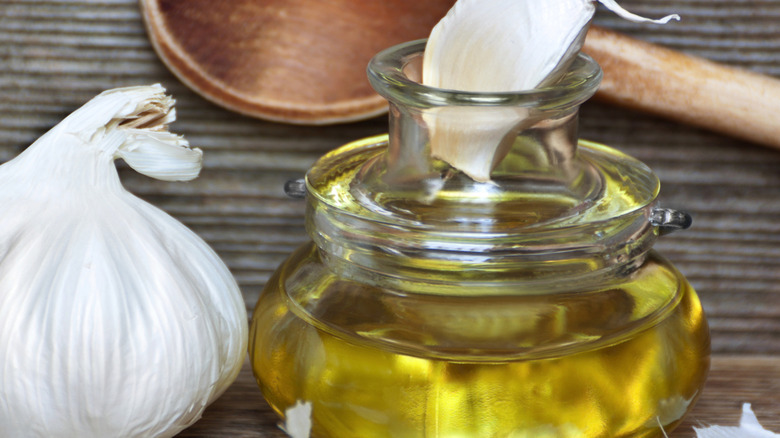
My first question when I found out about all this was, "So how do the big brands create infused oils without making people sick?" The answer is often citric acid (as well as pasteurization). Acid is used by many industrial food producers to reduce the pH of ingredients, acting both as a preservative and an effective way to prevent bacterial growth. Back in the day, it was taken from lemons, but today it's extracted from curated, fermented strains of the Aspergillus niger microorganism. But can we achieve the same results at home? Yes ... and no.
In 2014, University of Idaho researchers published a paper in Food Protection Trends laying out a way to "acidify" ingredients like garlic and herbs so they could be used to safely infuse oils to elevate store-bought soup, among other dishes. It recommended mixing a tablespoon of citric acid with two cups of water, adding two-thirds of a cup of garlic (which must be fully submerged in the liquid), then leaving it for at least 24 hours at room temperature. The process successfully reduced the garlic's pH, and the researchers said the method could be used to make infused oils without such a risk of botulism.
But why not play it safe? On balance, we're probably going to stick with store-bought versions. Even if you do make an infused oil via the safer, heat-based way, use your senses and common sense. If it ever smells off, has a cloudy appearance, tastes sour, sports mold, or otherwise seems suspect, just toss it.