

This Cheap Steak Cut Can Be Tempting, But It May Not Be Worth The Subpar Texture
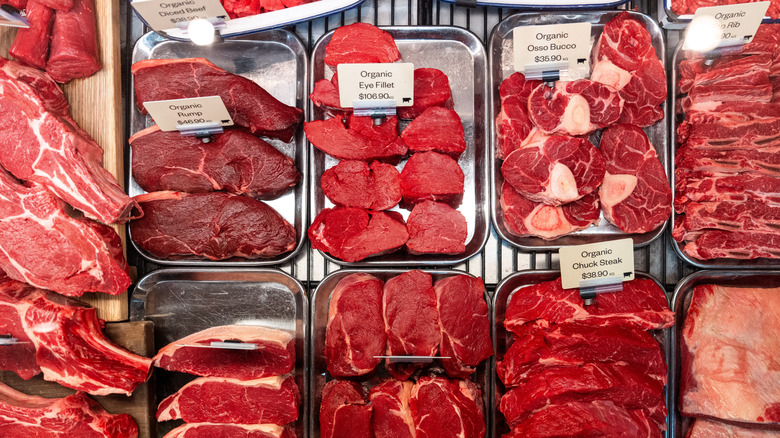
It's affordable, it's widely available, and at first glance, it looks like a bargain. But if cooked incorrectly, bottom round steak can leave cooks wondering why their entree turned out like shoe leather. As one of the least expensive cuts in the meat case, it's worth knowing how to cook this beef correctly. In a Chowhound interview with David Rose, the executive chef at Omaha Steaks, he acknowledged: "They tend to be tough and require long cooking times, and if not cooked right, they can end up dry or just bland."
Bottom round comes from the rear leg of the cow, a muscle group that does a lot of work. And when muscles work, they build connective tissue and stay lean. Unlike ribeye or short ribs, bottom round has very little marbling, and we all know marbling is what makes meat so tender and juicy. That lack of fat is why you can't cook bottom round like a typical steak — or you'll end up with something that's about as tender as beef jerky.
Because bottom round is sold in steak form, it's no wonder people assume it behaves like other steaks. But it simply doesn't. In fact, bottom round is often used for roast beef, deli slices, or London broil-style preparations where it's either cooked gently or sliced paper-thin against the grain. These are all dishes that braise or slow-roast the meat for hours. But braising doesn't have to be boring; there's all kinds of ways to get creative with your braising liquid for flavorful meat.
Bottom round shines when it's slow roasted
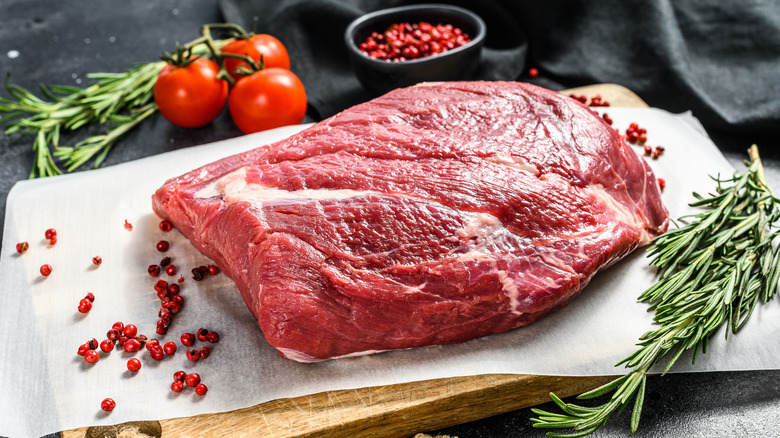
Okay, so it's not filet mignon. And yes, some people call it the "poor man's steak." But that doesn't mean you should throw the baby out with the bathwater. You just need to adjust your expectations and technique. One reliable approach is slow roasting. This is the perfect dish to put together in the morning, then drop it in a slow cooker and go about your day. By the time you're done with work, dinner will be ready. Slow cookers are safe to leave on overnight, as long as you have regular maintenance and proper placement of the appliance.
If you want guaranteed tenderness and don't mind sticking around the kitchen all day, braising is another option. Braising can be done in the oven, slow cooker, or stovetop, depending on the recipe. Sear the steak first, then simmer it gently in broth, wine, or tomatoes with aromatics. After a couple of hours of low, moist heat, the connective tissue softens and the meat becomes fork-tender. This method works especially well if you're aiming for deli-style roast beef or a hearty winter stew. For an especially thick beef stew, try using a cornstarch slurry.
Bottom round steak certainly isn't about luxury and special occasions. If you want a forgiving steak that melts in your mouth, buy something with more marbling. If you want affordable beef that rewards careful handling, this cut works.
Static Media owns and operates Foodie and Chowhound.