

This Cheap Dollar Tree Find Makes Growing Tomatoes So Much Easier (It's Less Than $5 Each)
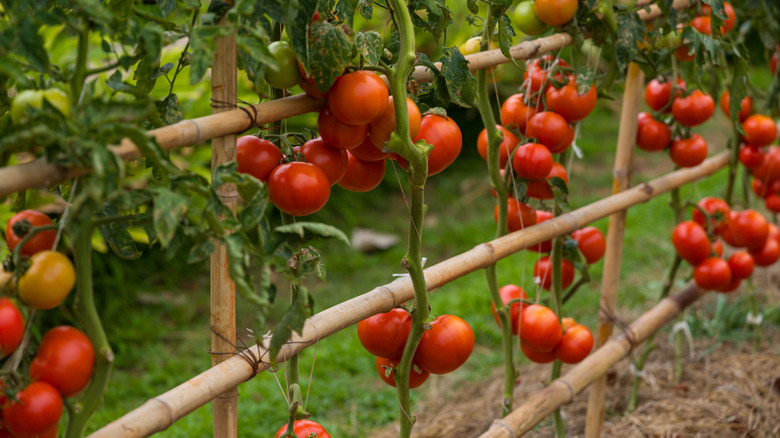
Tomatoes are the most grown crop in home gardens and for good reason: there are countless varieties that taste like summer and can be used in infinite dishes. It's important, therefore, for us at Foodie to make sure that every home gardener knows all the tips and tricks to grow the best tomatoes they possibly can. Enter the Dollar Tree's Garden Collection metal trellises. Each black or dark green trellis is 24.5 inches by 18 inches in size, weighs one ounce, and costs $1.50 (but remember that price and availability vary based on location).
These Dollar Tree trellises are inexpensive and effective. "Every gardener needs these trellises!" claims one review. Another says: "It is lightweight and easy to use!" You can also use them as a decorative barrier, like a few reviewers did. And one person even recommended bedazzling them if black or dark green aren't your style. If you need them in bulk, consider ordering them online, where the minimum quantity is 24 for $36.
Why tomatoes need trellises
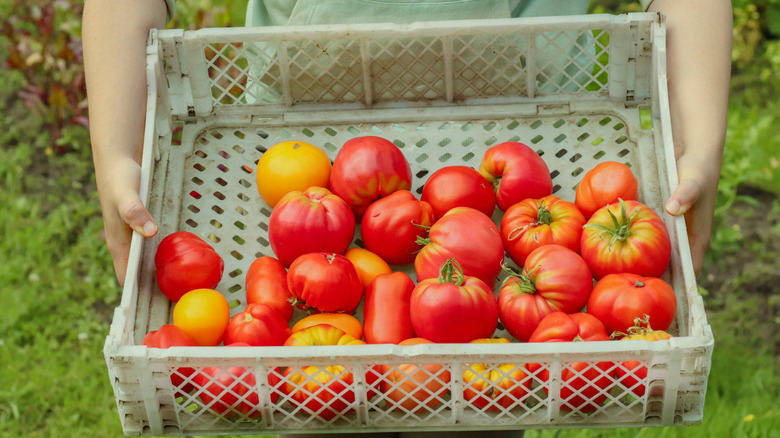
Trellises are a must for growing tomatoes because tomato plants like to spread out and can be heavy once the fruit starts growing. They drag on the soil, which can lead to disease, contamination from ground pathogens, and slugs eating them (don't throw out leftover beer — use it in your garden instead to repel slugs and snails). When you put down trellises next to tomato or bean plants, the vines will exhibit thigmotropism (where plants grow in response to an object that's touching them) and grow up the trellis. By growing vertically instead of horizontally, the tomato plants will get better airflow, resulting in a higher yield.
Trellises from the Dollar Tree are only a piece of the tomato-growing puzzle. While trellises help keep slugs away, they don't deter other pests. Basil, however, can because hornworms (which are so huge and weird) and aphids are repulsed by them. There are other clever reasons to plant basil and tomato together in your garden, including how basil will show signs of a fungal infection before a tomato plant will.
You can also repurpose unsalted water you cooked potatoes in by using it to occasionally water your tomato plants and other fruit. Potato water contains nutrients the plants need to thrive, including nitrogen and phosphorous. Just make sure the water is neither hot nor salted. Speaking of ingredients tomato plants need that you probably already have in your pantry, you can also sprinkle about ¼ cup of baking soda per tomato plant to lower soil acidity for tomatoes that aren't so tart.