

What A Banana's Color Can Tell You About How Nutritious It Is
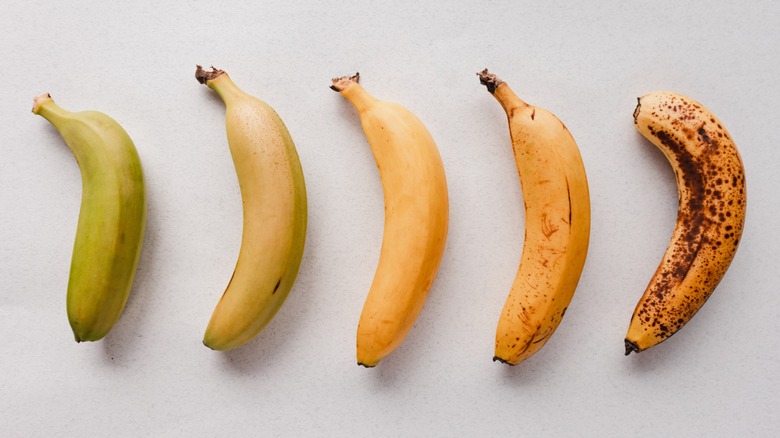
Across the country, in the produce aisles of any given supermarket, you'll likely see the same thing: shoppers peering at the nutritional labels on food packaging. These labels are a godsend for those of us who didn't ace math, as they detail what a single serving ought to be, as well as how much fat, sugar, and vitamins (if any) are in each portion. But wouldn't it be cool if there were an instant, visible way to determine a food's nutrition? Step forward, the humble banana!
We know there are many easy ways to keep bananas fresh for longer, and that their skin turns from green to yellow and finally brown-black as they ripen. But here's the cool part: Each stage of that process hits differently from a nutritional point of view. A banana's changing color is a roadmap to maximizing its benefits, and we mean more than just the potassium (though these fruits have more of it than bananas).
Let's start at the beginning, with green, unripe bananas and their BFF, resistant starch. Nuts, seeds, legumes, and plantains have loads of this carbohydrate. It's generally beloved by health experts because our bodies are slow to digest it, so it gets fast-tracked to the large intestine, where it becomes a veritable feast for our gut microbiome. Bananas that are a little riper — think yellow bodies with visibly green ends — are sweeter than fully-green specimens because the resistant starch has started to turn into sugar, but the fruit's iron and potassium content are also at their peak.
Mellow, yellow peak ripeness and an antioxidant goldmine
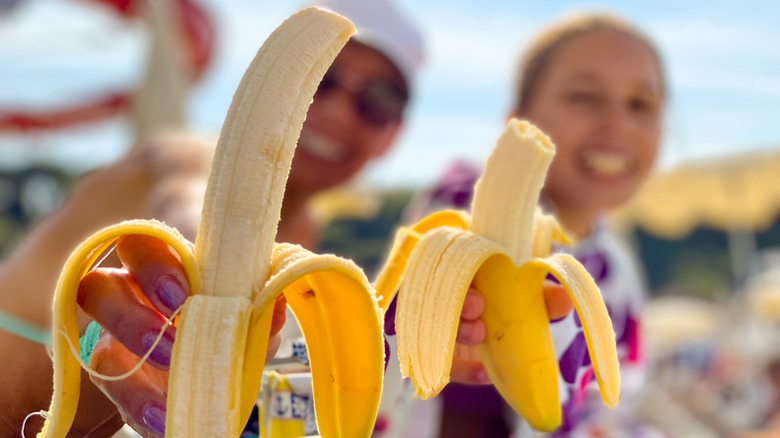
Fully ripe bananas are yellow from tip to tip and perfect for devouring on their own, pairing with Greek yogurt for a snack with protein oomph, or testing the science behind why bananas dominate the flavor of every smoothie they're in. Yellow bananas still have a reasonable amount of fiber, but the vast majority of their starch has been converted to simple sugars that our bodies need, so they're ideal for a quick burst of energy.
What they also have at this stage are higher antioxidant levels, which increase as the fruits shift into the over-ripe phase and brown speckles appear on the skin. Bananas contain several antioxidants, including flavonoids (which are linked to increased brain function), carotenoids (which can benefit our eyes), and phenolics (which have antimicrobial properties).
A spotty banana might look a little unattractive in your fruit bowl, but don't be fooled: it will up your vitamin B6 and C intake too. Even when there's not a scrap of yellow skin left, your banana is still the gift that keeps on giving. At this point, it's soft enough to whip up this three-ingredient banana bread, and the peels can be thrown in the compost.