

From Apollo To Artemis: Here's What Astronauts Eat In Space
In April 2026, the crew of the Artemis II boldly went further into space than any human had ever gone for many years prior, embarking on a 10-day mission to fly around the Moon. It was the first time in 50 years that we'd paid a visit, and while that is incredibly cool, as foodies, we couldn't help but wonder what the four astronauts would be eating on that amazing journey.
We may be lightyears away from machines that replicate meals, but food in space has come a long way from the rather un-tasty apple sauce Mercury prograt astronaut John Glenn squeezed from a toothpaste tube in 1962 (which sounds a lot like this processed cheese spread from the '70s) to the wide variety available in the 21st century. Not only has the flavor improved, but the way it is prepared would perhaps make the early space pioneers green with envy. Astronauts on the 1960s Gemini missions ate frozen foods that were thawed out and rehydrated with cold water before being pummelled into a soft, suckable mush. Modern astronauts at least get to cook their food!
The challenge of feeding humans in zero gravity has seen many breakthroughs over the years, including the development of technology that many of us have in our kitchens today. (Next time you heat up a ready meal in your microwave, pretend you're an astronaut, freshly returned from the Moon.) But what exactly did they eat? Let's take a closer look.
Beef and vegetables
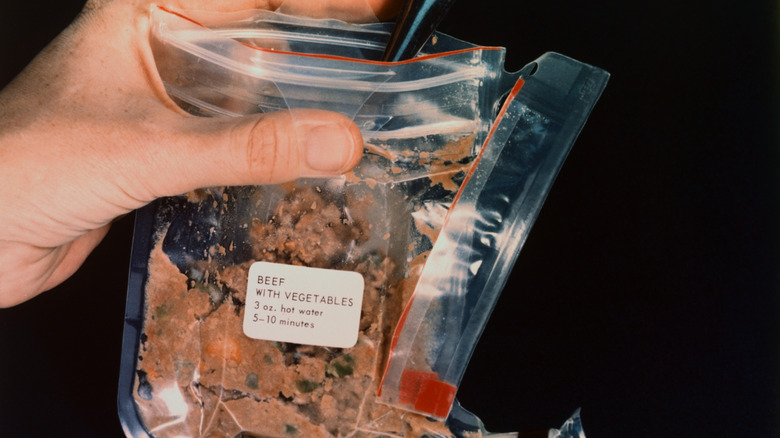
The Apollo missions, which ran from the mid-1960s until 1972, were famous for putting humans on the Moon, but they also broke new ground for how the astronauts were fed. As far back as 1968's Apollo 8, a spoon was supplied so spacefarers could eat their meals more normally, while the Apollo teams were the first to have hot water to rehydrate their food. That and a spectacular view must have made John Glenn and Buzz Aldrin's beef and vegetables taste out of this world.
Cakes and snacks
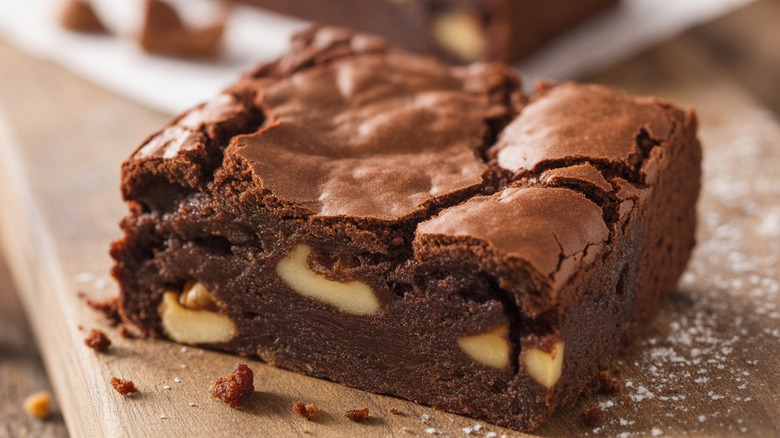
Being in space takes a heavy toll on the body, and so astronauts need to eat plenty of calories to keep up their energy levels. Snacks were an important part of the Apollo astronauts' diet, and included everything from chocolate cake, brownies, and pineapple fruit cake, to cheese crackers for those who preferred savory flavors. Less appetizing, but still necessary were the "nutrient defined food sticks" placed in astronaut's helmets for a quick bite.
Christmas dinner
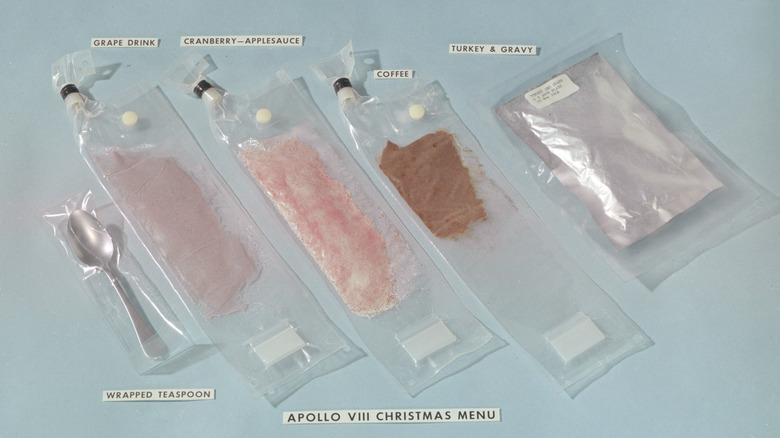
You rarely want the words "surprise" and "space" to appear in the same sentence, but in 1968 they did ... and with delicious results. While travelling back from the Moon on Christmas Day, the Apollo 8 crew unwrapped a turkey dinner with all the bells and whistles that didn't need rehydrating, thanks to clever packaging. The culinary gift also included three shots of brandy (presumably served neat and not on the rocks), but mission commander Frank Borman said the crew didn't have them.
Hot, canned food
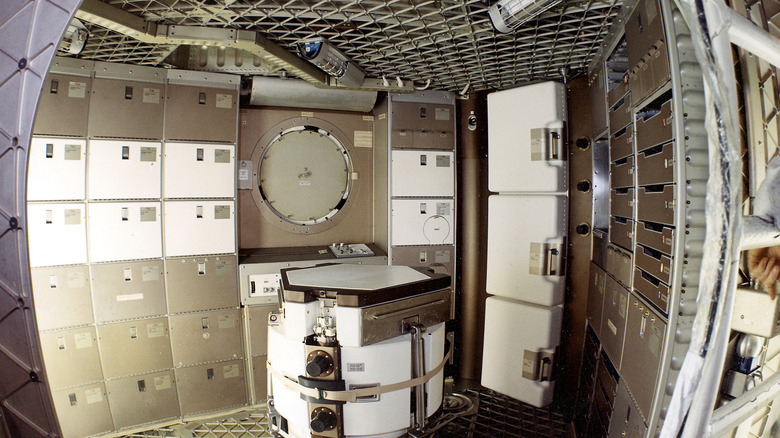
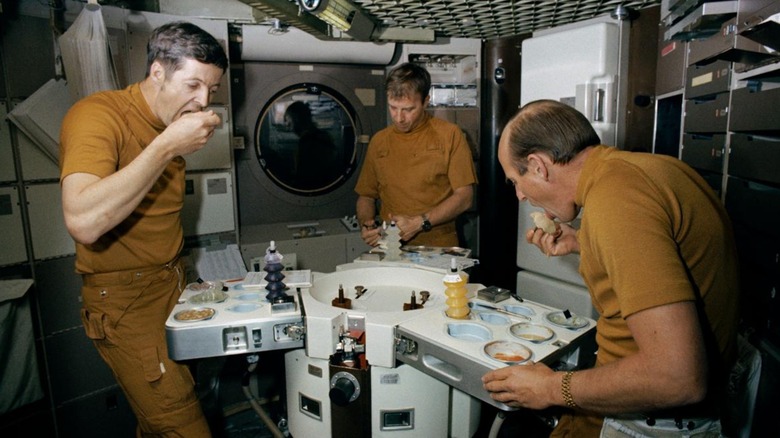
The 1970s saw the space race shift to longer-term missions, beginning with Skylab. Launched in 1973, was the first United States space station, and while astronauts ate canned or prepackaged food, how they enjoyed it was practically revolutionary. Skylab had a galley to replicate an Earth-like kitchen and came with trays sporting integrated heaters that warmed their meals. Best of all? There was a fridge for frozen foods — including ice cream.
Bread
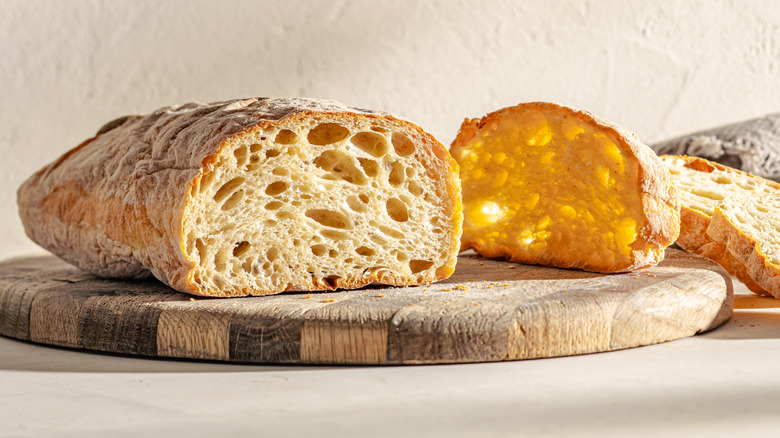
Gemini astronaut John Young's secret corned beef sandwich that he took into space in 1965 broke the rules, but it also showed how breadcrumbs were among the riskiest foods one could take in space. They might interfere with equipment or astronauts could breathe them in — all potentially major emergencies taking place hundreds or even thousands of miles away from Earth's surface. It took until 1988 for French company Lessafre to develop the first crumb-free bread for a joint Franco-Russian mission. Even better, those mini buns managed to stay fresh for at least two months (no need for space-based hearty ribollita soup recipe, then) and still tasted good.
Borscht in a tube
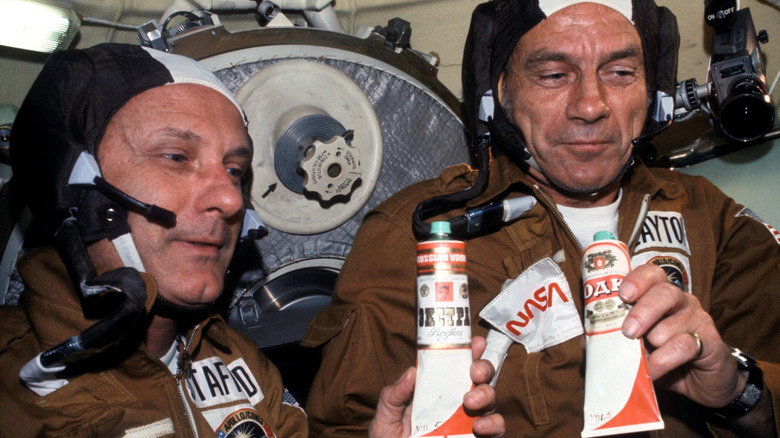
In July 1975, history was made in space when, for the first time, American and Russian astronauts worked together. Of course, the Apollo-Soyuz test project provided more than a chance to share science — astronauts also swapped foods. In one of the exchanges, U.S. crew commander Thomas P. Stafford and astronaut Donald K. Slayton were given tubes of borscht, Russian beet stew that had joke "vodka" labels stuck on top.
Backpacker's Pantry freeze-dried meals
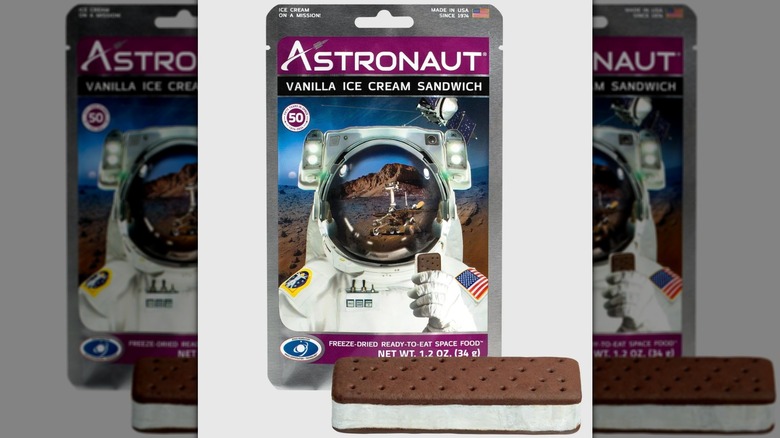
Getting into and staying in space costs millions of dollars per program. In 1981, the reusable Space Shuttle was launched and aimed to cut those overheads, but it wasn't the only change made to potentially save NASA and taxpayers money. According to ex-NASA food scientist Vickie Kloeris, the space agency purchased Backpacker's Pantry freeze-dried meals and repackaged them for the shuttle astronauts. Makes sense, as the company developed astronaut ice cream, after all.
Space-grown veggies
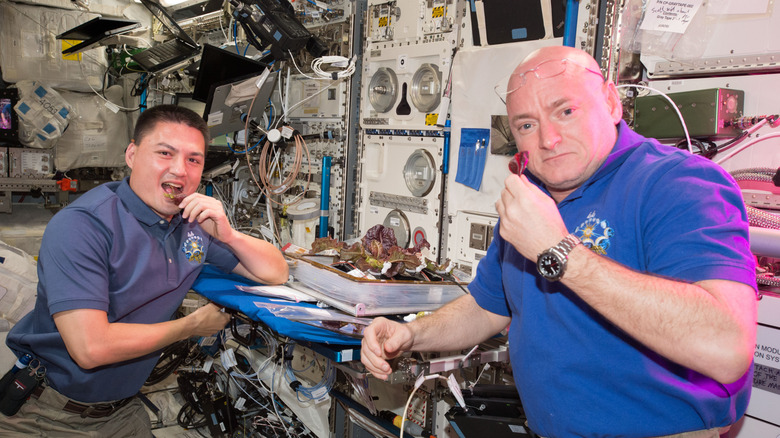
If there's one food astronauts miss the most in space, it's fresh fruit. Most of this kind of produce comes in stable containers like cans or pouches, but all that changed in 2014, thanks to the "Veggie" experiment on the International Space Station. This mechanised system enabled astronauts to grow and eat fresh greens including red and green lettuce, Russian kale, and mustard. Who knows, maybe fruit will be a future crop.
Mac 'n' cheese
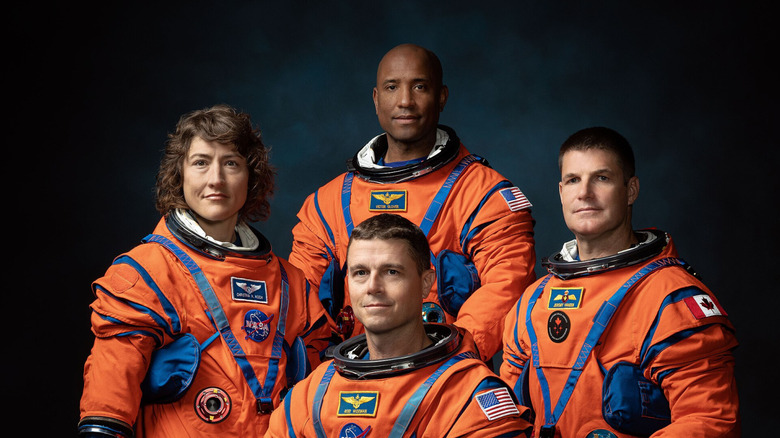
The 2026 Artemis II mission to fly past the Moon reignited the world's interest in space, and the crew was eager to share all aspects of their journey — including their food. In a video posted from the crew's capsule, Christina Koch and Jeremy Hansen showed how all food was in plastic bags or metallic pouches, including green beans and a rehydrated shrimp cocktail that was "actually pretty tasty." Koch added: "We do have to eat our vegetables, even in space, but don't worry, they do give us mac 'n' cheese" — though she joked in a previous NASA Johnson video that NASA nutritionists told her she couldn't eat it every day.