

What Does Potassium Actually Do For Your Body?

The foods we eat ideally contain all the vitamins and minerals that ensure our bodies function properly — especially those that we can't produce ourselves. Among them is potassium, at which point you're probably already thinking of a banana. We know there are plenty of other fruits that contain more potassium than the aforementioned fruit, but you might also be wondering why there's also so much fuss around the potassium electrolyte. What the heck does it do for us anyway?
Plenty, it turns out! Potassium is an essential mineral that manages several important functions to keep our bodies running like well-oiled machines. The reason you see sports stars and athletes wolfing down bananas is because the potassium in them is vital for ensuring our muscles — including the heart — contract properly. It also makes sure our cells have enough hydration and helps to regulate our nervous system. Potassium cuts the impact of salt on our blood pressure and protects our bones by minimizing calcium loss when we urinate. As if all that wasn't enough, the mineral also protects against kidney stones.
Low potassium intake can lead to hypokalemia, the symptoms of which can include constipation, muscle cramps, and heart arrhythmia. Our modern diet isn't doing much to prevent that from happening, either. Back in our hunter-gatherer days, humans generally ate more potassium than salt — a situation that has been flipped in the 21st century. As a result, high blood pressure affects around a third of adults in the United States, whose risk of having a stroke is likewise increased. Eating more foods that contain potassium can help restore that crucial balance.
Enrich your meals with potassium-forward foods, but don't go overboard
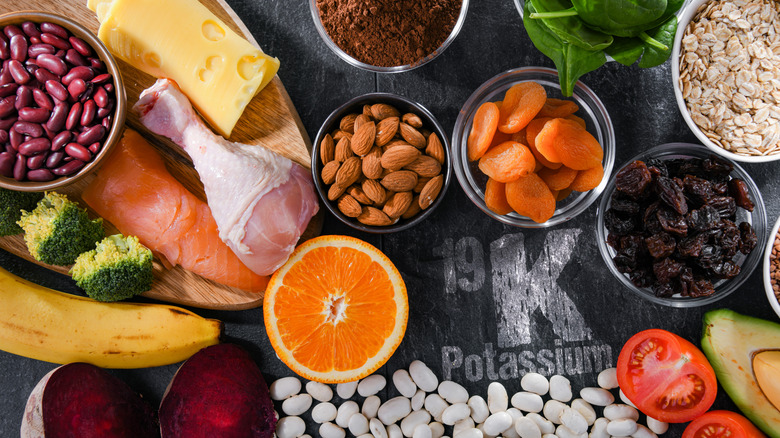
Ripening bananas are color-coded in a way that can tell us how nutritious they are, so when you want a quick boost of potassium, scarf them while the skins are still green at the tips. If bananas aren't your bag, you can easily add several other potassium-rich foods to your meals. For instance, while there are plenty of mistakes you can make cooking sweet potatoes, it's worth getting them right, as they're a great source of potassium. Likewise, mushrooms, cantaloupes, and dried fruits such as apricots can also provide this nutrient. Alternatively, throw a handful of cooked broccoli and spinach, or other leafy greens, into a blitzed tomato sauce for a more subtle potassium kick.
Be wary of going from one extreme to the other, however. Too little potassium can be bad for our health, but an excess of it — known as hyperkalemia — can also result in an irregular heartbeat, as well as fatigue and nausea. But how much is too much? Even though there's no specific daily amount for the mineral, it's unlikely that a single banana would provide too much potassium. The CDC cites recommendations of 2,600 milligrams a day for adult women and 3,400 mg for adult men, alongside no more than 2,300 mg of salt.