

This Is The Kind Of Fertilizer You Need For A Bumper Crop Of Lettuce
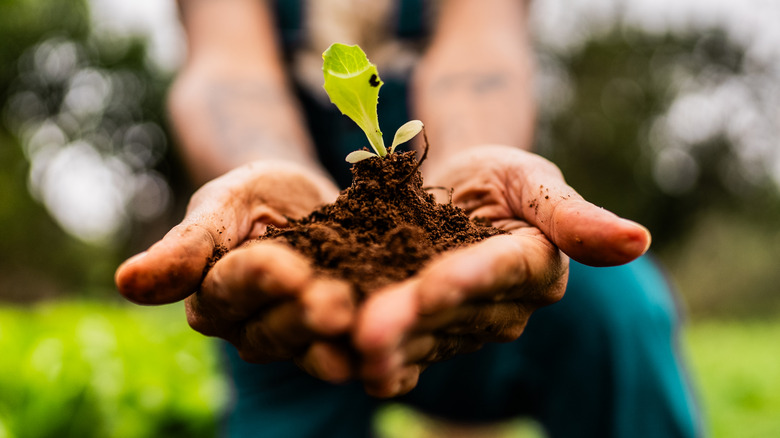
So many gardeners trace the roots of their passion to childhood, perhaps when they turned lettuce scraps into a tasty summer project. If you're like me and struggle to grow a single head of this salad staple or any other leafy greens, it could be because there just aren't enough nutrients in the soil. Thankfully, a fertilizer with the right combination of nitrogen, phosphorus, and potassium — NPK for short — will give your lettuce crop everything it needs to thrive.
Tomatoes flower and fruit, and need plenty of sustenance to do so. While there is a best fertilizer ratio for a bumper harvest of this plant, don't bother using it or a general fertilizer on your lettuce, because it could do more harm than good. Lettuce needs a more steady stream of nutrition to keep producing leaves, meaning the ideal formula for many types is 8-15-36. For those who don't speak fertilizer, that translates as 8% nitrogen for growth, 15% phosphate to support roots and water distribution, and 36% potassium to improve the lettuce texture and shelf life during storage.
NPK fertilizers with the 8-15-36 ratio won't overwhelm your lettuce seeds with too much nitrogen as they put down roots, though it's worth finding out how much potassium and phosphorus are already present in the ground with a soil testing kit to make sure you use the right amount. Alongside those three mineral powerhouses, find a fertilizer that contains other goodies, such as iron, zinc, and calcium.
Not all lettuces are the same, and the three-week fertilizer rule
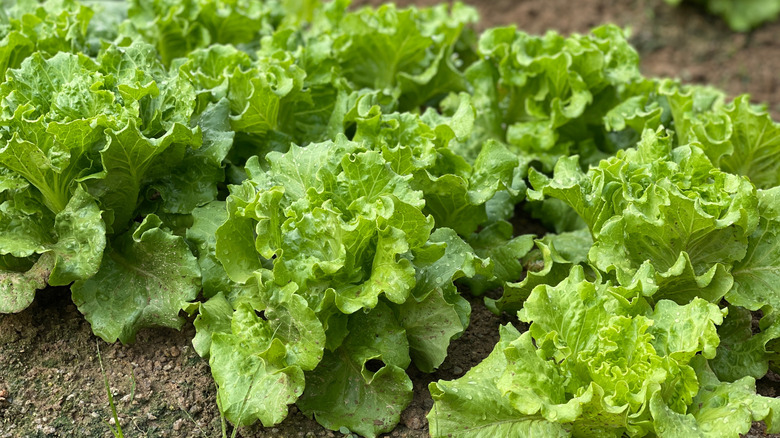
Switching to an NPK fertilizer that's better adapted to the needs of lettuce is a good move, but it's also important to know as much about the type you're planting, because not all lettuces are the same. Romaine or Cos lettuce takes a lot longer to reach maturity than other varieties, so they need a constant, steady nitrogen supply. In contrast, summer crisp and Batavia lettuces require more potassium during the warmer months to prevent wilting, while it is also crucial for head formation in varieties like iceberg.
Whether you want an early spring or early fall lettuce crop, give them the best start by preparing the soil with a fertilizer that releases nitrogen slowly. The instructions on the package should tell you how much to dose, depending on whether your lettuce seeds are in the ground or in a container like Costco's high-tech portable planter. If you're transplanting seedlings from under cover to the garden, know that three weeks after they've been moved, they will need a dose of fertilizer for a continuous release of nitrogen as they grow. Once the lettuce plants are established, be careful when feeding, especially in direct sunlight, as fertilizer-rich liquid can damage the leaves.