

12 Old-School Diner Foods That Are No Longer Popular
We may receive a commission on purchases made from links.
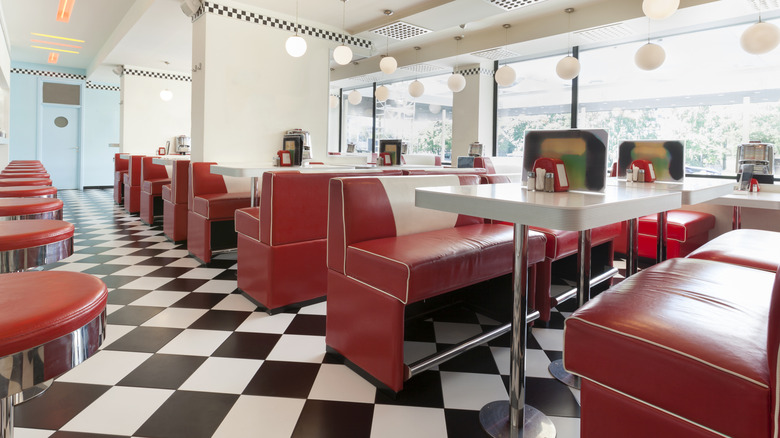
Millions of us have a vision of the all-American diner: Colorful, chrome-plated spaces where kids ate hamburgers, drank milkshakes, and listened to rock 'n' roll. But the history of these iconic eateries runs much deeper than that Hollywood image. Many started out as wheeled wagons, serving food to hungry workers at lunchtime and late at night, after most traditional restaurants had closed.
As their popularity grew, diners became permanent fixtures; places where folks from all walks of life had a seat at the same counter — at least in theory. They haven't always been safe spaces for women, people of color or minority social groups, but diners did give America's working class the opportunity to eat out like their middle class counterparts.
A lot of the food on offer aimed to fill the bellies of those working folks: Steaming bowls of soup and stew, breakfast staple meatloaf, pillow-soft pancakes, golden waffles, and eggs served sunny side up. Much of what diner patrons ate then remains on menus now, though not everything is as appetizing as it seems. That said, there are a few dishes that have fallen by the wayside, victims of changes in people's tastes and shifts in culinary fashion. Here are some old-school diner foods that are no longer popular.
Salisbury steak
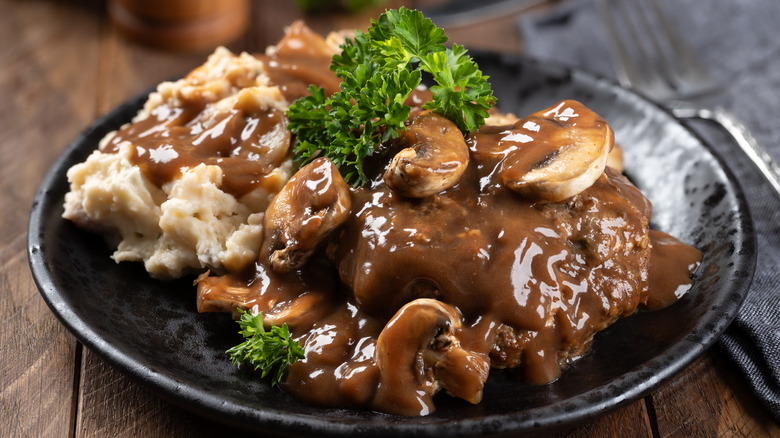
Dr. James Henry Salisbury believed eating more protein was the answer to combating illnesses, writing in his 1888 book "The Relation of Alimentation and Diseases" that people with digestive disorders should eat "muscle pulp of lean beef made into cakes and broiled." The ensuing dish was named after him and, in the early years of the 20th century, Salisbury steak became a national favorite.
Diners across the country came up with their versions: Ground beef patties were shaped and browned in a skillet, before being covered with thick mushroom gravy and baked until the meat was cooked. It was often served with mounds of fluffy mashed potatoes, and, as a menu item, Salisbury steak was relatively cheap for diner owners, but hearty and filling enough to satisfy even the hungriest diner.
Unfortunately, it was also a victim of its own success. The 1950s boom in frozen and canned foods saw lots of much-loved recipes swept up in the trend for convenience cooking. The final nail in the coffin for Salisbury steak was the decline of T.V. dinners in the 1980s. Nostalgic home cooks might rustle up this beefy dish from time to time, but it's a rare sight in 21st-century American diners.
Cream chipped beef
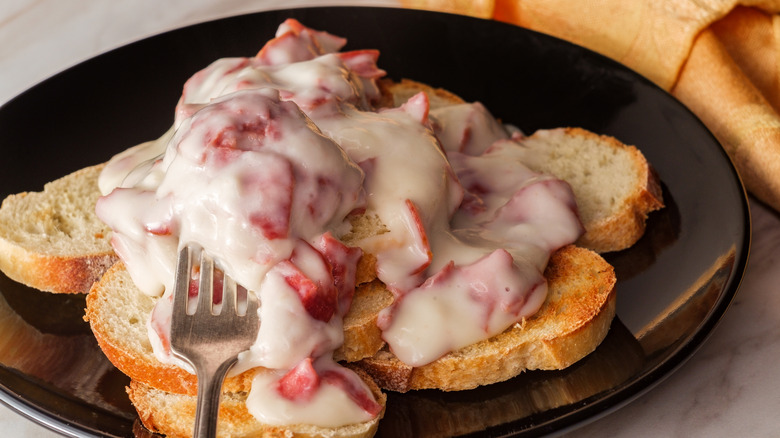
People have been drying and salting meat as a way to preserve it for thousands of years, and beef prepared this way is at the heart of this vintage diner recipe. The origins of cream chipped beef are unclear, but it has strong links to the military, making its first written appearance in the 1910 publication "Manual for Army Cooks." It called for 15 pounds of chipped beef to make enough food for 60 men, and recommended the meat be scalded if it was overly salty.
The chipped beef was then combined with a white gravy and served either on toasted bread or with mashed potatoes. Some versions also throw in peas or greens. While it doesn't sound or look like the most appetizing plate, it remained an Army staple for decades, gaining a host of unsavory nicknames, including "sh** on a shingle," or S.O.S. by soldiers who appreciated what was a tasty dish.
Those qualities made it popular among civilians, especially during the hard years of the depression. Migrants from Europe, who brought their cured, dried meats to the United States, added a fresh twist to the military recipe, and creamed chipped beef made its way onto diner menus across the country. Sadly, while the wider public's appetite for S.O.S. has dwindled, there are a few diners in the Philadelphia area that still serve it for breakfast.
Rice pudding
Diners are temples to comfort food, from deep bowls of stew served with hunks of bread, to stacked hamburgers and crisp fries, all washed down with endless cups of coffee. Yet one thing is clear from most menus: Savory dishes rule the roost. Yes, you can slurp on a range of malts or milkshakes, stick a fork into a multi-layer slice of cake, or gobble up a slice of pie, but desserts are almost an afterthought at many American diners.
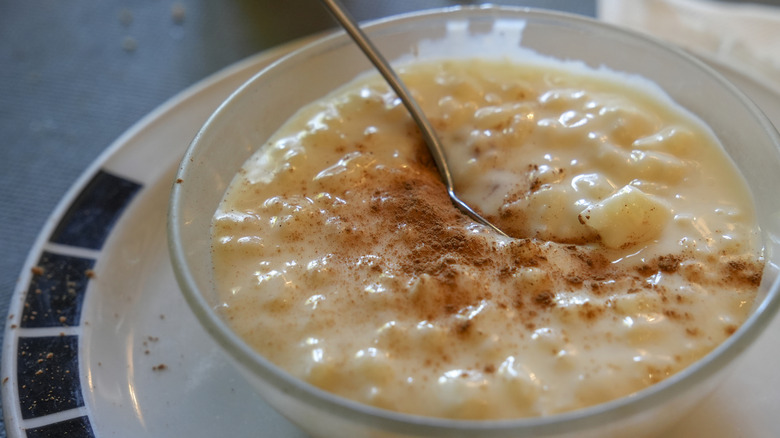
Pre-made or frozen desserts saved owners time and money, while still being enjoyable enough for sweet-toothed customers but there was a time when homemade fare was on offer. In the 1920s, rice pudding began appearing on diner menus across the United States, giving a sticky carbohydrate and sugar boost to everyone who stuck in a spoon. Diner-made rice pudding, oven-cooked, studded with raisins (not as controversially as what Drake did with them) and topped with cream, became a go-to dish, especially in the North.
Sadly, changing times meant changing consumer demands and rice pudding – like tapioca pudding – slowly fell out of fashion. Diner desserts, while still a minority menu item, are now dominated by fruit pies and mile-high cakes. Today, it's down to online foodies to recreate these much-loved milky puddings of the past, passing on their diner-style legacy to home cooks.
Roast beef Manhattan
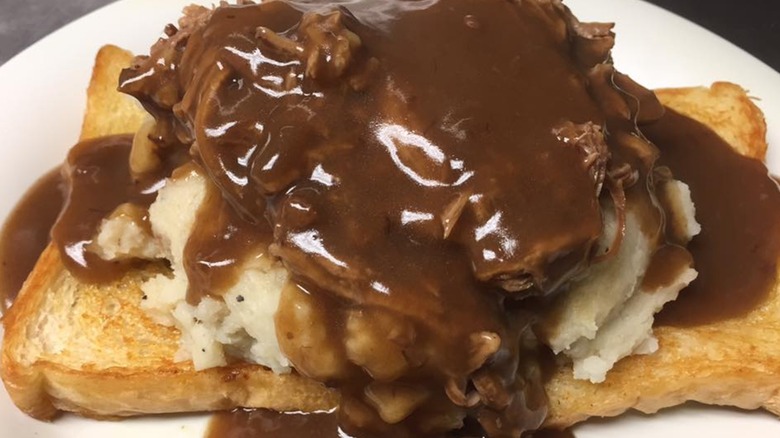
Few old-school diner foods generate as much conversation about their names than the roast beef Manhattan. But what exactly is a roast beef Manhattan?
To the untrained eye, it's a strange combination of bread, mashed potato, and velvety pieces of beef positively swimming in gravy. To those who ate and loved it, this mother of all open sandwiches is peak diner food, and each component is critical. The bread, for example, needs to be thick and white but not doughy, cut in triangles and arranged in a fan on the plate. The mashed potato (preferably made by hand) is laid on next, before slices of thinly cut beef are added. Finally, the whole plate is drenched in home-made gravy.
Although not commonly on offer in American diners these days, there are a few regional variations on the beef Manhattan. Some are served with pot roast beef or pork tenderloin; others with crustless bread or a golden gravy. In 2025, diner fans took to Facebook to find out where they could get their hands on an "open-face hot roast beef sandwich with mashed potatoes and gravy," or, to put it more succinctly, a Manhattan sandwich.
Coconut cream pie
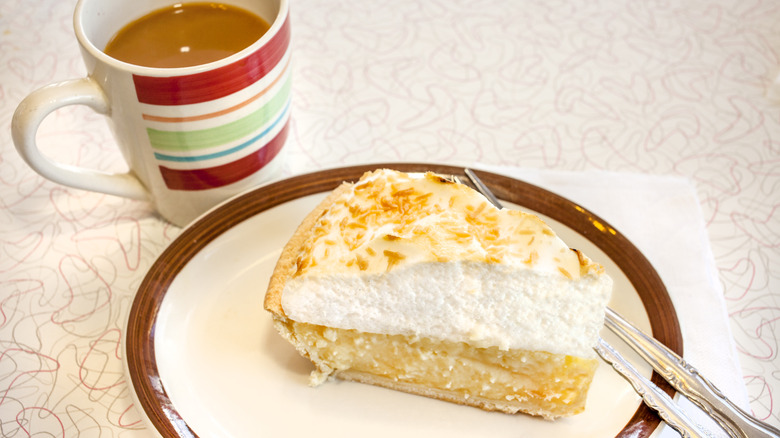
Pie has been a staple food at American diners from their earliest days. But many people's lists of favorite diner pies don't include a flavor that was one of the most popular of all — coconut cream pie.
Many foodies have fond memories of picking up a slice at diners and cafeteria-style restaurants, and enjoying forkfuls of the sweet, custardy dessert. They had Philadelphia's Franklin Baker to thank for the pie. Although fresh coconuts had been around for centuries, they quickly spoiled and were a health hazard to open. However, a 19th-century flour miller took a payment of fresh coconuts, dried them, and created a whole new industry.
Dried coconut was a key ingredient in coconut cream pie, and as diners became more popular, so the pie appeared on many a regional menu in the 1950s, sometimes topped with a huge mound of Italian meringue, sometimes not. Sadly, the time needed to make coconut cream pie meant it likely fell victim to diner owners' needs to save time and money, and was edged out in favor of simpler fare — luckily, not everywhere. You can still find them at select diners if you look hard enough.
Buckwheat pancakes
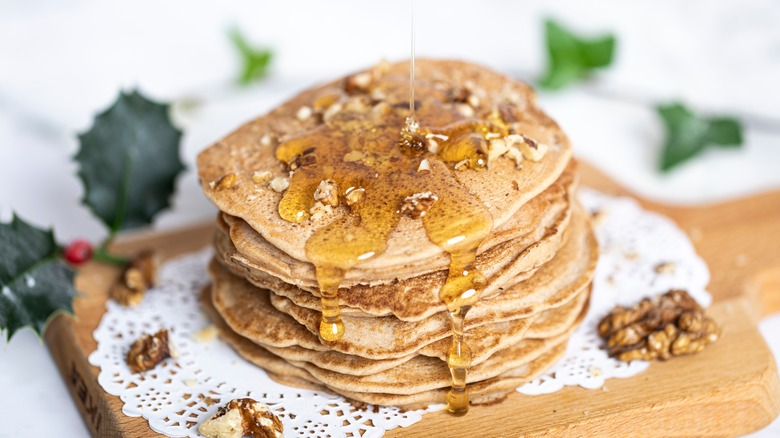
Many enterprising immigrants thrived in the golden age of the American diner, serving up dishes made from ingredients they perhaps knew better than their clients. Buckwheat was one. Used across the whole of Europe as well as in Asia, it's a seed, rather than a grain, so it's gluten free.
Like the French galettes made from the same flour, buckwheat pancakes were darker and had a more earthy taste than those made from white flour or more luxurious ingredients. In America, diner patrons loved them for breakfast, but they were popular in both sweet and savory dishes.
But over the years, buckwheat pancakes started to disappear from diner menus across the United States. While some theorize it was the rise of processed white flour, others suggest regional tastes caused the shift. But buckwheat pancakes haven't disappeared entirely. In 2024, CBS Mornings reported on a family-owned Western New York outlet, open for nine weeks per year, that still made them from scratch.
Turkey Devonshire
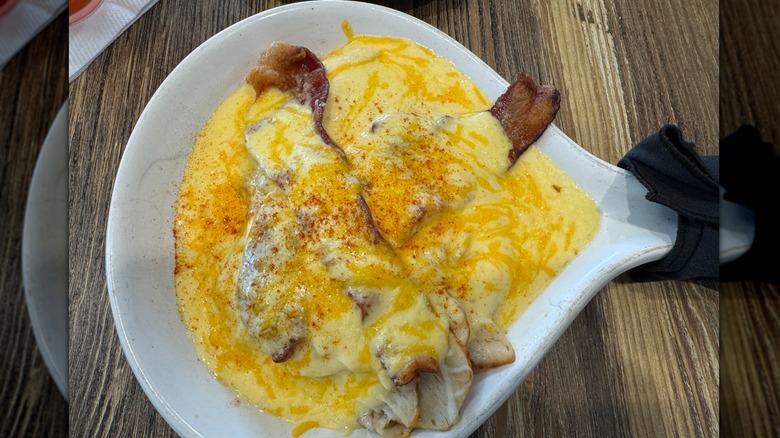
This iconic Pittsburgh platter sounds as if it stepped straight out of "Downtown Abbey," and, assuming the myth that Frank Blandi named it after a street sign is true, that was kind of the point. Turkey Devonshire was initially served to middle class restaurants as a "high-class answer to liver and onions," according to Dave Forman, per Belt Magazine. It was a heavy combination of turkey on toasted white bread, with cheddar cheese sauce, thick bacon, tomatoes, and a sprinkle of paprika piled on top before the whole thing was baked in the oven until golden.
It was a resounding hit in Pittsburgh's restaurants and soon made its way onto diner menus. There has been much online speculation about whether the turkey Devonshire was actually a twist on Welsh rarebit or Louisville's hot brown, but diner customers didn't care: They loved the cheesy, meaty open sandwich.
Unfortunately, the turkey Devonshire was another made-from-scratch dish that fell victim to the boom in processed foods in the 1950s and 1960s. As American diner owners capitalized on lower-cost ingredients, from heavy bread to pre-made sauces, the quality of the dish nosedived, leading to an inevitable knock-on effect on demand. The turkey Devonshire has since returned to the hands of higher-end restaurant chefs, who are breathing new life into this once-loved dish. Perhaps it won't be long before it's back in diners, too.
Egg cream
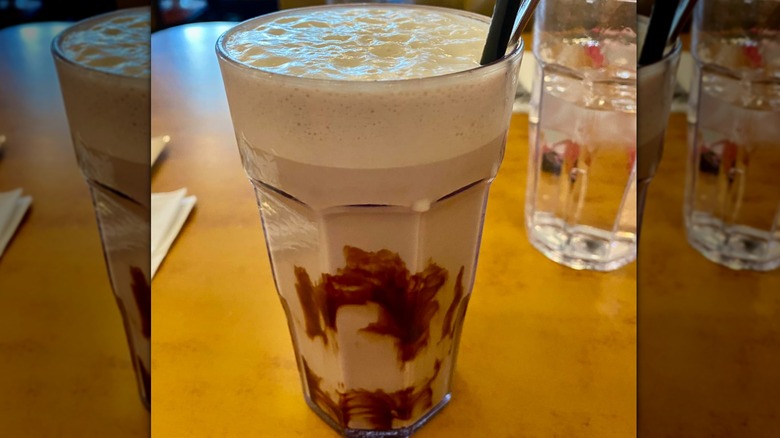
Between the 1940s and the 1970s, while American adults went to bars to drink and hang out, the country's youth did the same at diners and soda fountains. The latter were sometimes a part of the former, and the drinks menu was a feast of floats, malts, and milkshakes. In many of these outlets — particularly across New York, where they were created — kids could also order an egg cream.
There's a surprising amount of discussion about the origins of the egg cream's name. Whether it's a version of the Yiddish word for egg "echt" or a heavily accented order for "chocolate et crèam," nobody has really found an answer. It was, at least initially, a reflection of the ingredients used to make it, but as the recipe evolved, both the egg and the cream were ditched to become a blend of milk, seltzer, and Fox's U-Bet chocolate syrup.
For decades, you couldn't set foot in a New York diner without seeing egg cream on the menu, and the delicious drink's popularity spread out across the rest of the country, too. But egg cream faced two challenges: The decline of the soda fountain as youth culture changed, and the growing competition from bottled sodas. New Yorkers can still enjoy an egg cream, even alcoholic versions, across the city, but there are only a handful of other locations where this iconic drink can be found.
Liver and onions
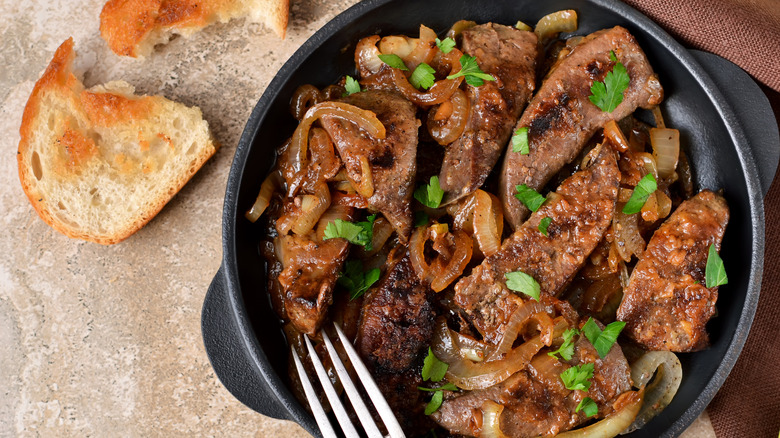
Slide a hot plate of liver and onions in front of anyone under the age of 30 and chances are they'll pass, hard. Yet decades ago, it was peak comfort food. It's easy to see why it would be a popular menu addition economically, but liver has been a culinary staple in many cultures for hundreds of years.
Even in ancient times, people knew liver was good for them. Egyptians believed it bestowed night vision, Native Americans thought it granted strength, and in Asia, the organ meat was said to have healing abilities.
Even if diner owners during the Great Depression and World War II didn't understand how nutritious liver was, they did know it was a cheaper meat. Teamed with onions, it became a melt-in-the-mouth menu staple across America for millions. But as one set of customers dwindled, successive generations turned up their noses at liver and onions, and it gradually faded from diner offerings. It pops up from time to time in the 21st century as an occasional special, so it's worth keeping an eye out.
Mutton stew
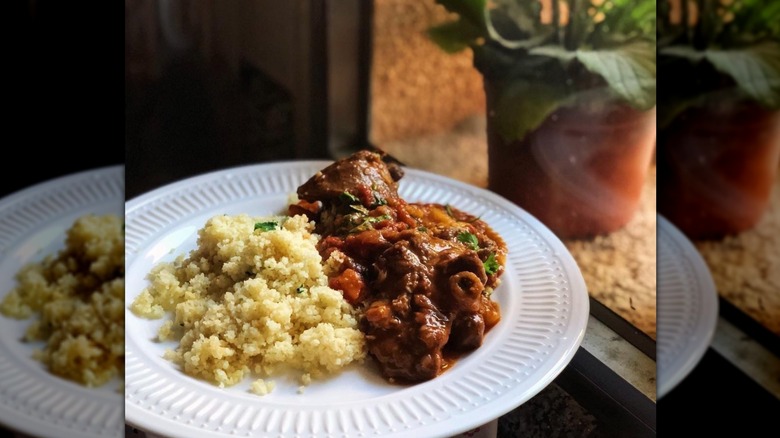
The internet is a great place to browse authentic diner menus from decades ago. This glimpse at the past not only reveals the enduring passion Americans have for diner staples such as omelets, patty melts, and milkshakes, it also sheds light on a few more obscure additions. One of them is mutton stew.
Lots of American diners served up bowls of thick, rich beef stew but mutton was not common, at least during the golden age of diners, post-World War II. It wasn't always the case: During the early years of the 20th century, mutton could be found on hundreds of restaurant menus. However, during the lean war years, when the meat was one of the few options available to home cooks, demand for it quickly wore thin. Then, there's the taste.
The main difference between lamb and mutton is that the latter comes from sheep that are at least two years old, and that stronger flavor can be an acquired taste. It's popular in South American countries like Mexico where it's cooked long and slow, and in immigrant communities with African and Middle Eastern roots. But across the wider United States, where sheep farming was found to be less cost-effective compared to raising pigs or cows, there's not much appetite for mutton.
Oyster stew
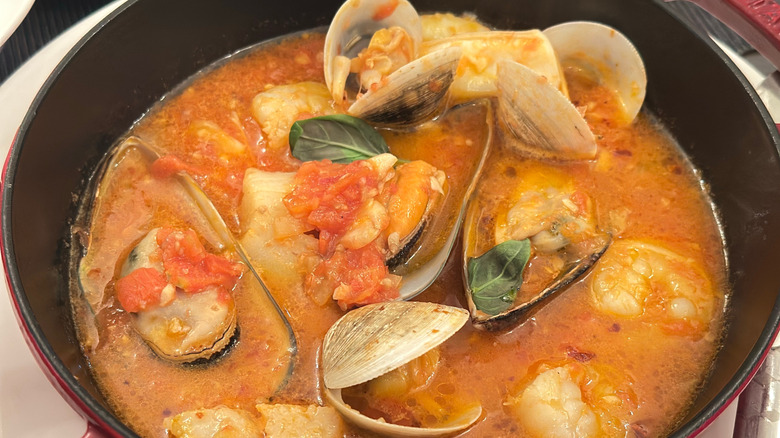
Depending where you place your finger on the timeline of human history, oysters have either been enjoyed by the very wealthy or grudgingly eaten by the very poor. They've been a part of our diet for thousands of years, and the ancient Greeks loved oysters so much, they began growing their own. Since then, the popularity of these tasty shellfish varieties has ebbed and flowed over the centuries, but by the 1800s, a production boom saw the price plummet, and the American working class couldn't get enough.
Markets and oyster bars sprang up in cities like New York, New Orleans, and Baltimore, while trains and the rise of refrigeration helped distribute canned oysters further inland. They were perfect for the diners that sprang up across the country in the early 20th century, where oyster stew regularly featured on menus. Recipes vary, but the classic stew is closer to a soup, with oysters cooked with onions, cream, and a few herbs or a dash of paprika.
In the years after World War II, oyster populations on the east coast of the United States, and elsewhere, were hard-hit by overfishing and pollution, while a rise in diseases during the 1970s almost wiped out the shellfish altogether. Although populations are recovering, food tastes moved on and demand for oyster stew among the working class petered out, though they remain popular on the luxury market.
Chicken à la king
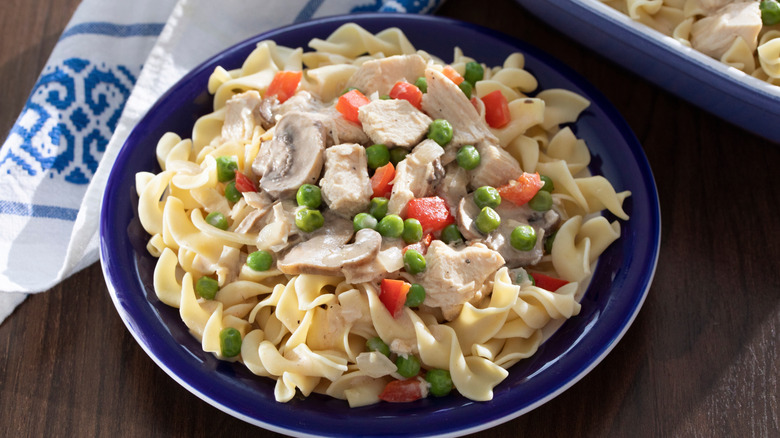
Food fashion moves at a slower pace than its clothing counterpart, but when change does happen, it can be swift and brutal. Chicken à la king is a prime example. No matter where it originated — claims include Philadelphia, New York, and London — the recipe is more or less the same: juicy chicken breast, pimentos, and mushrooms, covered in a thick white sauce. It can be served on anything starchy, usually toast, but macaroni or rice are fine, too.
For most of the 20th century, it was impossible to visit a restaurant or attend a society event without seeing chicken à la king on the menu. It achieved what so many recipes failed to do: Straddle the divide between fine dining and working-class comfort food. It was in that capacity that chicken à la king found a home on diner menus across New York City and beyond.
That popularity was perhaps part of the reason it fell out of favor among diner customers. Food brands, looking to capitalize on the appetite for chicken à la king, created canned and frozen versions that were pale imitations of the real, home-cooked thing. Although it's now pretty absent from menus, online foodies are giving a twist to the traditional diner recipe to keep the dish alive.