

10 Delicious Ways To Upgrade Boxed Cornbread
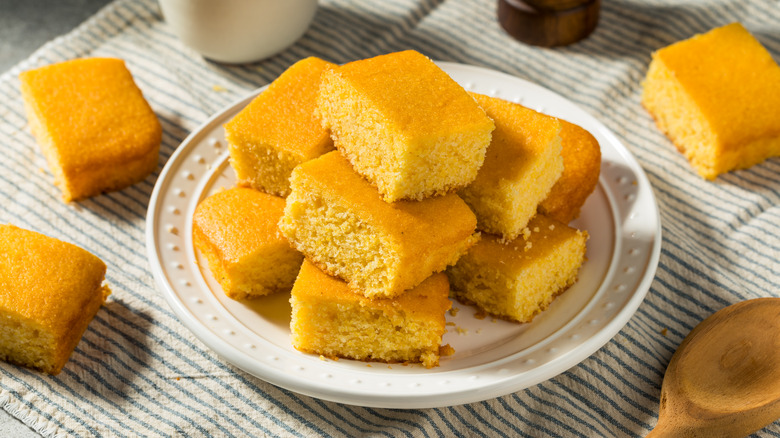
Whether you're a hobby baker, a professional, or a person who doesn't know much beyond slice-and-bake cookie dough logs, there's no denying the usefulness of a premade baking mix. From muffins to quick breads to cakes, store-bought mixes have their place in many pantries. They're easy, convenient, and fun. They don't require a lot of additional ingredients to make and can be a fun way to explore new sweet treats, especially if you're cooking with kids. If you're in a rush, pre-made mixes are ready to go when you are, without the added time spent sourcing and measuring different ingredients like flour, baking powder, and spices. If you have fridge staples like milk, eggs, and butter, you have the building blocks necessary to finish a premade mix.
While many may scoff at the idea of muffin or banana bread mixes, one boxed mix will always have its place in our cupboards: cornbread. Cheap and convenient, it's one of the best ways to satisfy a cornbread craving, stat. However, if you worry about cornbread being too dry, too crumbly or, frankly, too boring, we have delicious ways you can upgrade that regular old box of Jiffy. As an added bonus, you probably already have most of these upgrades already kicking around your kitchen.
Add even more corn
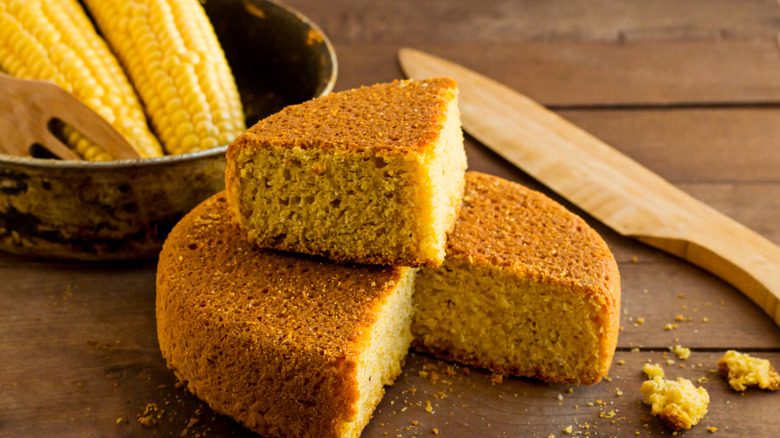
One of the most obvious ways to upgrade regular old boxed cornbread mix has to be, of course, more corn. A friend of mine makes a seriously delicious cornbread that's helped along with the assistance of creamed corn. Stirred right into the batter, it works just as well in homemade recipes as well as an easy-to-use boxed mix picked up from the grocery store. Creamed corn is leftover corn that's been cooked down until it has a creamy texture — without any added dairy. This extra ingredient adds some moisture as well as a touch of sweetness to the bread without going overboard into dessert territory.
Looking to add a bit more texture to your mix? That's where whole corn comes in handy. Whether you're grating it fresh off the cob (learn how with this easy Bundt pan hack) or cracking open a shelf-stable can, those kernels add some pops of texture and flavor. A cup of fresh or creamed corn will do the trick if you're adding it to your mix. Dry cornbread? Never heard of her.
Swirl in some sour cream
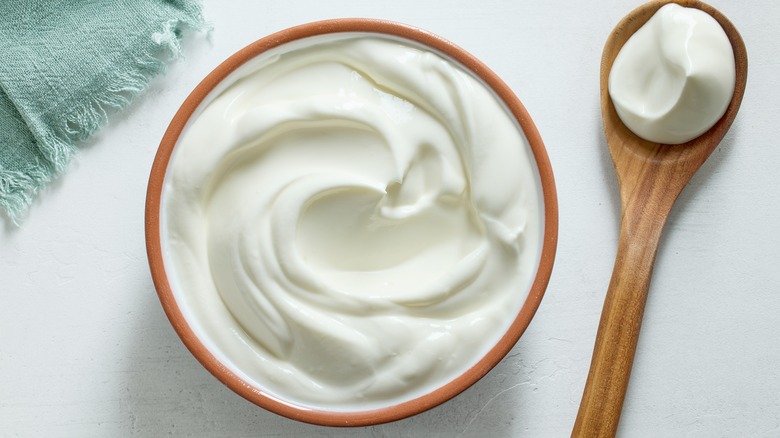
Speaking of dry cornbread (which nobody wants), make sure that yours is extra moist with the help of some sour cream. While the thick, tangy condiment has often been associated with chip dips, tacos, and other savory dishes, it also works surprisingly well in baked applications. Even the domestic goddess herself, Martha Stewart, likes to use sour cream in her banana bread.
Sour cream provides moisture and a subtle tang to cornbread, elevating it beyond any criticisms of dryness or dullness. The extra fat in sour cream keeps your bread moist, while the acidity in the condiment allows for a tender crumb. You don't need to grab a full container of the good stuff, either. Instead, use up the sour cream that's kicking around in your fridge from your last family taco night and put it to good use here. A few tablespoons — up to about ⅓ of a cup — added to a box of mix works perfectly.
Pour in some buttermilk
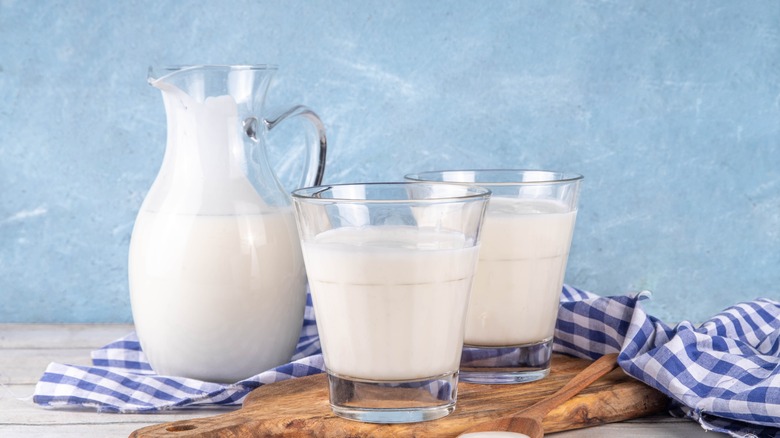
From pancakes to biscuits, anyone who's a fan of Southern-style cooking knows that buttermilk is king. With its subtle tang, this liquid is a must-use for any boxed cornbread mix. Like sour cream, buttermilk helps add moisture and tenderness to a regular boxed mix. The natural acidity in buttermilk helps break down the gluten in the mix, allowing for a softer, more tender crumb. Plus, it's more viscous than milk or water (the usual liquid additions to boxed cornbread), so less is absorbed through the baking process, which leaves your bread more moist.
If buttermilk isn't something you typically have on hand, it's easy enough to make your own. To do so, add 1 tablespoon of lemon juice or white vinegar to 1 cup of regular dairy milk. Allow it to sit for about 10 minutes in order for the acid in the vinegar or lemon juice to properly activate before using. You may not get that inherent buttermilk tang that pairs so beautifully with cornbread, but you will achieve a similar leavening effect.
Cut up some jalapeño peppers
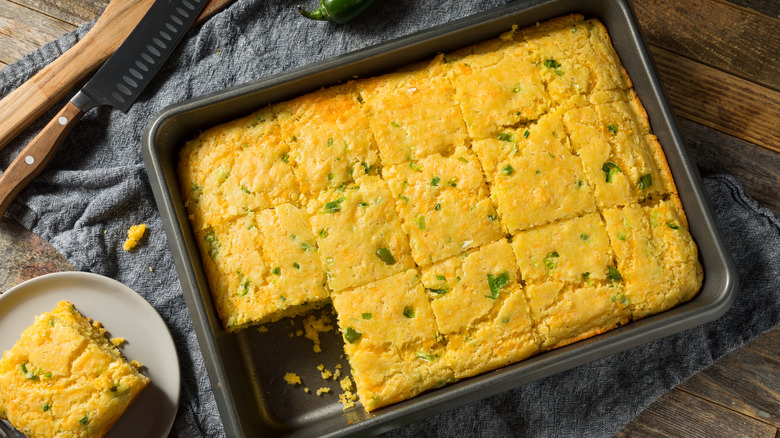
Cornbread is delicious as-is, but maybe you're in the mood for something with a little kick of heat. Some chopped jalapeño peppers should work quite nicely. For cornbread, we prefer using canned or jarred jalapeños instead of fresh ones. There are two reasons for this: First, jarred jalapeño peppers tend to be a bit milder than the fresh ones, allowing for some heat but not an overwhelmingly spicy flavor profile. Secondly, you can always be sure that the peppers you have on hand are tasty — just look at the expiration date.
To use jalapeño peppers in cornbread, we like to give them a bit of a rinse (as they can be quite salty right out of the jar) and chop them up to better incorporate them throughout the batter. For a bit of extra visual panache, you can lay whole slices on top of the cornbread loaf or muffins. The slightly briny flavor and pinch of spice really add some Tex-Mex flair to this Southern staple side. If you really can't handle the heat, some diced red bell peppers or poblano peppers are a much more mild (but still flavorful) option.
Sprinkle in some cheese

Everything tastes better with cheese, and that includes cornbread. With a savoriness and fattiness, cheese takes the classic mix up a notch into decadent realms of rich flavor. For cornbread (or cornbread muffins), we like using shredded sharp cheddar or monterey Jack cheese. These cheeses can stand up to the corny flavor while also complementing it.
To incorporate cheese into your cornbread mix, add it when you add the wet ingredients. Grate your cheese first, around ⅓ of a cup to start. Want it cheesier? We'd go as high as ¾ of a cup of the good stuff. Mix until combined before ladling into your prepared pan. For a crispy, cheesy crust, we also recommend sprinkling some shredded cheese on top about five minutes before you pull the bread from the oven. This ensures the cheese will be melty and bubbling but not burnt. You could also add a sprinkling of Parmesan on top for a little nuttiness that really lends a gourmet twist to this down-home dish.
Drizzle in some honey
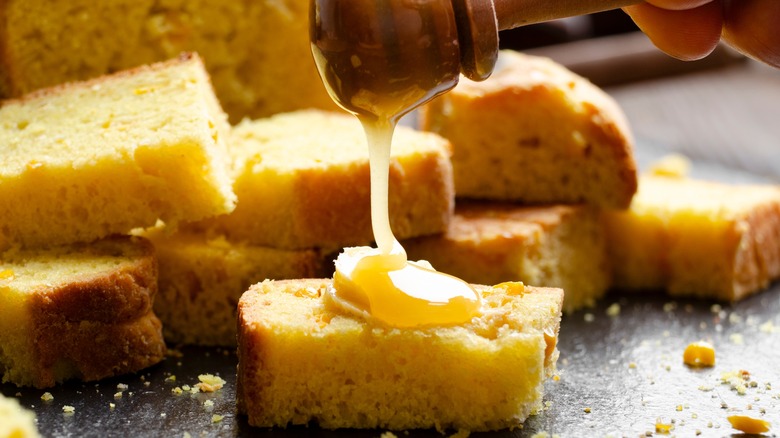
We love a hot wedge of cornbread slathered in butter and drizzled with some honey. It transforms the recipe from a side you'd serve with chili into something that borders on dessert. While we'll never knock smearing some honey on top of your cornbread, there's something to be said about incorporating it directly into the mixture.
When you're making cornbread, add in a couple tablespoons of honey with the other wet ingredients. We love the slight citrusy hit of an orange blossom honey, but there are a wide variety of honeys to choose from. To really lean into the sweet side of cornbread, you could also add some freshly grated orange peel. Citrus, honey, and corn make an incredibly delicious combination. We recommend this treatment for cornbread muffins for a little added elegance, but we wouldn't say no to this upgrade no matter how it was baked. Honey has the added bonus of being a liquid sweetener, which adds a little extra moisture to your cornbread. However, since it's a sugar, it may cause your bread to darken more quickly in the oven, so keep an eye on it to prevent over-browning.
Drop in some blueberries
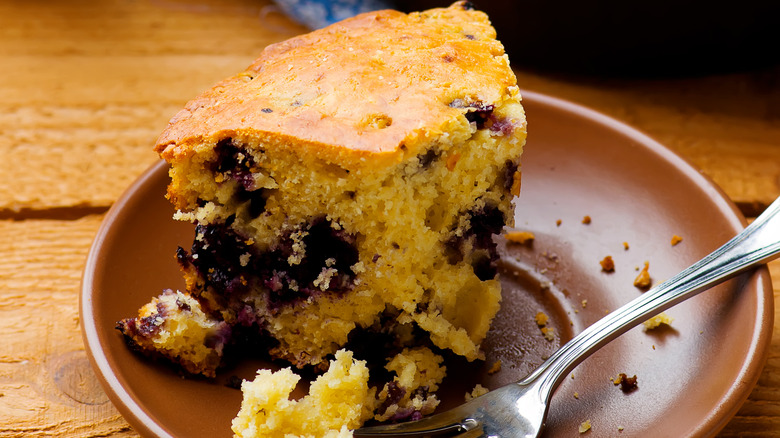
Two plants that are synonymous with summertime have to be blueberries and corn. Naturally, pairing these two together in a recipe is a no-brainer. Incorporate blueberries into your cornbread by folding about ½ cup into the batter or sprinkling a layer on the bottom of your pan and pouring your batter overtop, sort of like a blueberry slump. To prevent your blueberries from sinking to the bottom, toss them in a little flour before adding to your mixture. Be sure to incorporate the berries gently so they don't burst.
While frozen blueberries can be a great (and nutritious) choice for plenty of dishes, we like fresh blueberries to mix into our cornbread. The reason for this is because frozen blueberries tend to bleed into wet batters, leaving your baked goods looking a lot more purple — and unappetizing — than you might like.
Not into blueberries? Raspberries and blackberries would also pair wonderfully with a sweet cornbread and offer a fruity burst in every bite.
Stir in cooked bacon
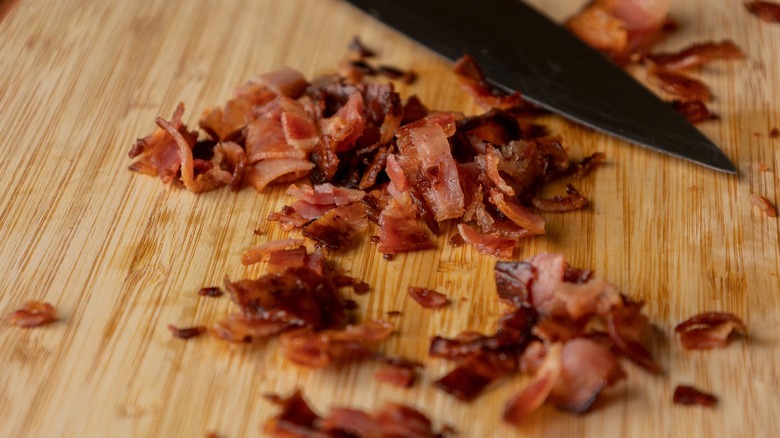
Protein is definitely having a moment right now, and what better way to add a little extra to your diet than with bacon? Before you pour your cornbread batter into your prepared pan, add ⅓ to ½ cup of cooked, crumbled bacon. The bacon adds a wonderfully smoky, savory quality to the cornbread and meaty notes that make it a must-have for your next brunch spread.
If you're a real bacon fan, consider using bacon grease as a replacement for the butter or oil in your recipe. To do this, strain out any bacon particles from the fat to prevent any burnt or acrid tasting notes. Allow the bacon grease to cool to at least room temperature. Add piping-hot grease straight from the pan will scramble your eggs and ruin the batter. If this sounds like too much bacon for you, you can always just use half the amount of oil or butter your chosen cornbread mix calls for and use bacon fat for the other half. Smoky, salty, and just greasy enough — what more could you want?
Chop up some pecans

Cornbread is great, but sometimes you really want something to break up that plush, soft texture. If you really want to embrace the Southern flair of this dish, why not add one of the South's favorite nuts, pecans? From wow-worthy French toast to ice cream, these nuts are more versatile than you think.
Ideal for those who prefer sweeter cornbread to savory, add about ¼ to ⅓ cup of chopped roasted pecans (depending on how nutty you like it). Roasting nuts is a must for recipes like cornbread, since roasting unlocks deeper, more complex flavors (just be sure to soak them first).
For a little extra oomph, we also suggest adding a sprinkling of brown sugar. Add a couple tablespoons to the batter and sprinkle a little on the bottom if cooking in a cast-iron skillet. The sugar caramelizes to give you a crunchy, crackly bottom that's irresistible. Not using a cast-iron skillet? A sprinkle of coarse sugar on top is also a game-changer.
Cook in a cast-iron skillet
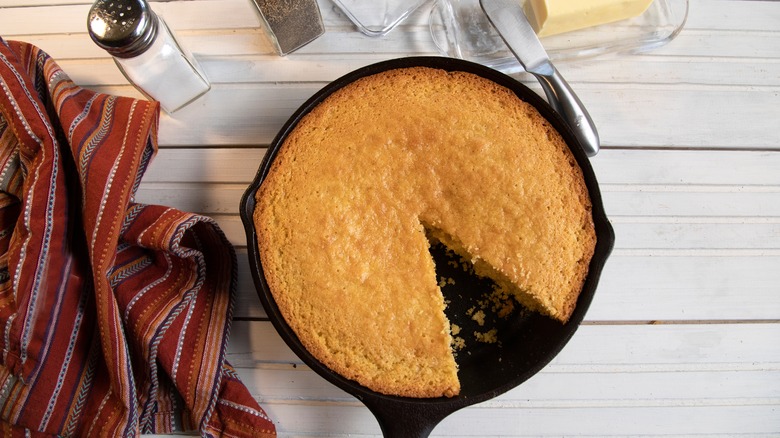
Not a mix-in, an added ingredient, or a recipe substitution; one of the best ways you can upgrade boxed cornbread mix is by cooking it in a cast-iron skillet. The same is true for cornbread that doesn't come from a boxed mix. A cast-iron skillet heats evenly, allowing the sides and bottom of your cornbread to crisp up nicely while still keeping the interior soft and tender. Plus, it adds some extra flavor.
To cook cornbread in a cast-iron skillet properly, you need to make sure it's piping hot. Then, add your chosen fat to your skillet (like butter or bacon grease) and make sure it's melted all the way around. This step, as well as the searing hot temperature, are vital to ensure that your cornbread batter crisps up on contact, giving you those all-important crispy edges. After you've poured your batter into the pan, you can place it in the oven to cook all the way through. Tender, moist, and delicious, this is the simplest way to upgrade boxed cornbread.