

Be Careful, As This Water Mistake Can Kill Your Sourdough Bread Starter
We may receive a commission on purchases made from links.
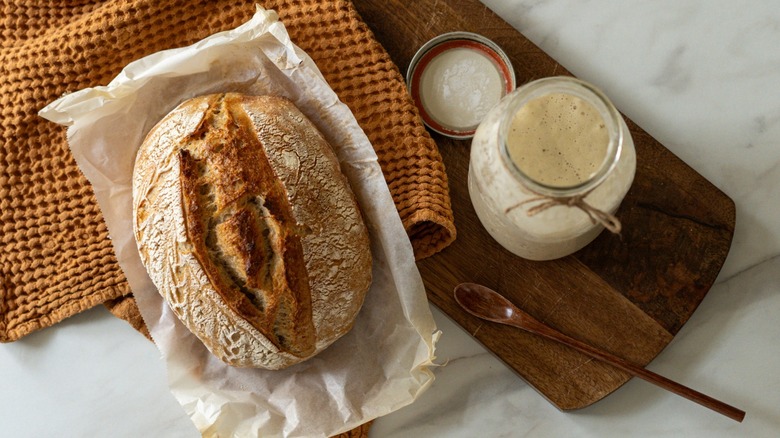
Nowadays, it seems like everyone and their mother is baking their own bread. Taylor Swift, who's never shied away from her foodie tendencies (did you know her favorite food is so, so relatable?), admitted to a sourdough baking obsession on fiancé Travis Kelce's "New Heights" podcast, revealing that she gifts loaves to her friends. If Tay-Tay is making beautiful bread, so are we. Sourdough has some nutritional differences from white bread, while many folks argue that it's simply more delicious. Baking your own sourdough loaves from a starter and beginning your homemade bread journey may seem intimidating, but it's really pretty painless ... so long as you don't accidentally kill your starter with the wrong water.
Water is part of the reason authentic San Francisco sourdough tastes different, and, no matter where you live, it's a vital component of your starter. If you're planning on using tap water, you may wish to test it first for the presence of chlorine or chloramines. Many municipalities treat tap water with either of these, which have an antibiotic effect that kills any potential ick in your faucet water. However, that may also translate to killing the good bacteria in your starter. Bread expert Nathan Myhrvold told sister site Chowhound that chlorinated water may also lend an unwelcome bitter edge to your sourdough loaf.
Using chlorinated tap water is a mistake that has caused many amateur bakers to fumble, so consider picking up a 17-in-1 tap water testing kit, which can impart a wealth of insight into your tap water ... including possible chlorine levels. If your tap water is chlorine-free, you're good to go. If not, perhaps pivot to using either bottled or filtered water and see if that improves your results.
Water has major impacts on your sourdough bread
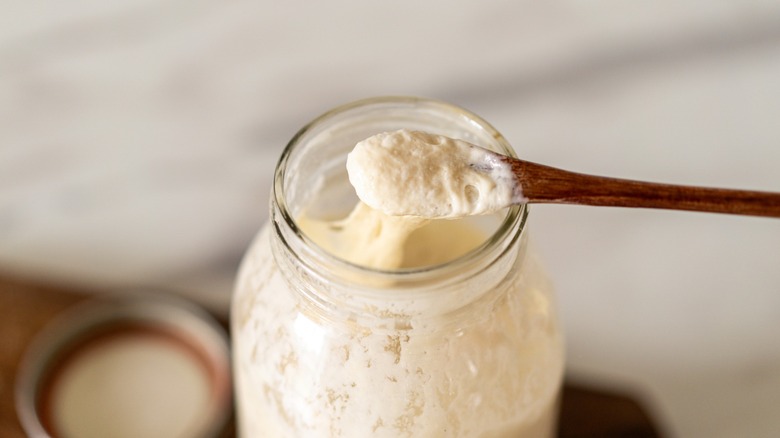
In short, water affects every aspect of your sourdough. How much water you use determines the consistency and elasticity of your dough and, once baked, plays a role in the structure of your loaf ... will it be airy and light, or dense and flat? Furthermore, the amount of hydration in your dough has a direct impact on the fermentation process, as wetter dough proofs more quickly. But that's not all that your water has to do when it comes to your baking. The content of your water, based on where you live or where you source your bottled water, can also be traced in your bready results.
Hard water, for instance, can fortify the gluten in your dough and may give fermentation a bit of a boost via trace minerals, while soft water often causes stickier dough that isn't as strong. Believe it or not, the pH levels of water also make a difference. Water that is more alkaline will lead to a duller flavor in your bread, which is less than desirable. Sourdough fermentation is ultimately a chemical reaction, and if you remember high school chemistry class, factors like pH and trace minerals can speed up, inhibit, or even neutralize important reactions. Every time you feed your sourdough starter and make an aesthetic, oh-so-picturesque loaf, you are kinda-sorta repeating a science experiment! For a happy starter that will lead to full bellies, test your tap water before using. It's just as important as accurately measuring your ingredients, and you will learn all sorts of information that can affect your bread.
Static Media owns and operates Foodie and Chowhound.