

The Country That Drinks The Most Tea, Hands Down
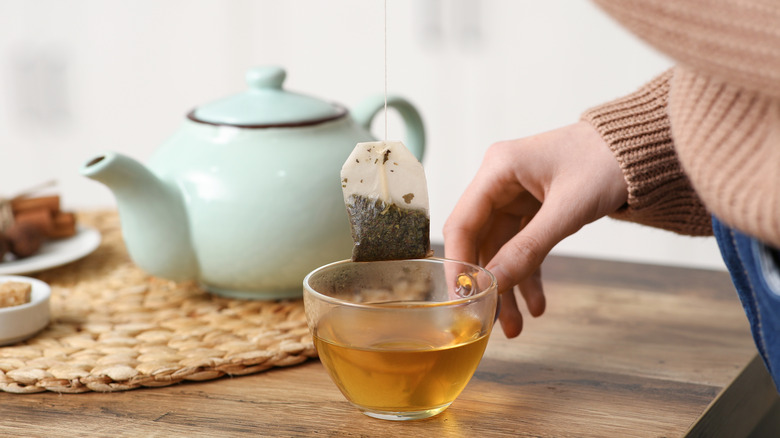
Perhaps you've heard the phrase, "not for all the tea in China," used to refer to something that a person could not be persuaded to do for any price. Little did you know, however, that "all the tea in China" is a lot. Chinese consumers guzzled 14.5 million tons of tea in 2022 according to World Population Review, earning the spot of the most committed tea drinkers in the world. India and Turkey pulled up second and third place with 6 million and 1.3 million tons of tea consumed, illustrating the fact that it wasn't even a close contest.
When you think about devoted drinkers of tea, perhaps your mind goes to the British, who originated the idea of afternoon tea and dainty sandwiches. (Keep in mind that there's a difference between afternoon tea and high tea!) The U.K., however, doesn't even crack the Top 10 on tea drinking by volume. China, on the other hand, absolutely can't get enough of the stuff. Whether you're dining at Yelp's pick for the best Chinese food restaurant or grabbing to-go styrofoam containers of lo mein from your local takeout counter, perhaps you should start brewing a pot of tea. It's the Chinese way, and, indeed, tea drinking is inescapably steeped (see what we did there?) in the fabric of the nation's culture and history.
Chinese tea drinking is a way of life

The first recorded tea drinking in China took place during the third century CE, and grew in prominence with the rise of Buddhism since Buddhists did not drink alcohol. Some scientists believe that it may have been drunk even earlier by emperors of the Han dynasty. For the first thousand years, Chinese tea consisted of either fresh leaves or tea cakes in which dried leaves were mixed with other herbs and spices. It wasn't until around the 14th century that tea consumption developed a recognizable form: dried leaves steeped in hot water from a teapot. Tea was one of the valuable commodities carried on horseback along the Silk Road, crossing the Tibetan Plateau.
Today, the ways that tea is consumed in China have deep cultural significance. Historically, tea was served as a sign of respect and welcoming. Hosts served guests tea when they visited, and guests were expected to drink at least a bit. On the occasion of weddings, brides and grooms served tea to their in-laws. Younger people served tea to older people. The tea bag, which was a major development in convenience when drinking tea, is still not fully embraced in China. If you are invited to partake in yum cha, or a teahouse meal, there is a strict code of etiquette that visitors are expected to follow. For example, you might knock on the table or tap your fingers on your teacup to thank the person who pours your tea. These customs tend to be regional, and picking them up is one way of immersing yourself in local culture.