

The Beginner Table Setting Mistake That's All Too Easy To Make
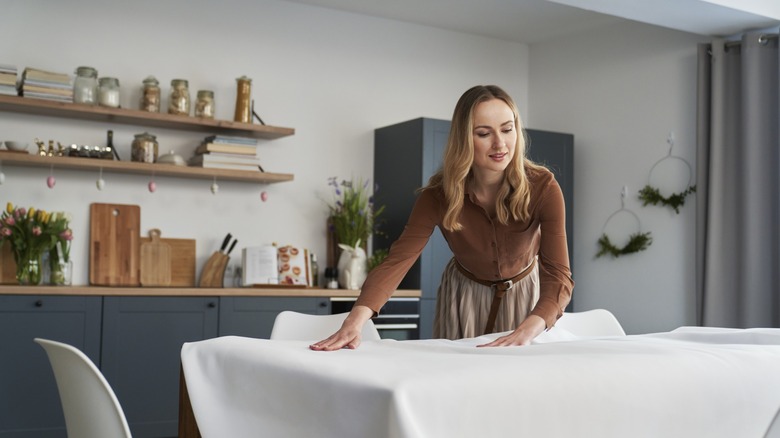
Every good foodie knows that cooking up an amazing meal is only part of the equation when it comes to gracious hosting — you also need to dish up dinner on place settings that set the food off to its best advantage. Science has determined that the plates you eat off of aren't inconsequential and can actually impact the way you taste your meal. Whether you are laying your place settings with vintage Limoges dinnerware worth a small fortune or viral, slightly goofy "chunky plates," one major mistake you might be making is overcrowding each diner's place. A sea of utensils, glasses, and plates might put you in mind of haute dining, but all that excess might overwhelm your guests with more "stuff" at their setting than they know what to do with.
When you set a table with too many utensils and dishes, not only do you create visual clutter that isn't aesthetically appealing, but you may also confuse your guests. The number of utensils is generally meant to match up to the number of courses, and, unless you are serving lots of those, you don't need all that extra detritus taking up real estate. For your average homemade meal, one pretty set of plates and a single set of utensils will get the job done. You can always dress up your settings with some unique glassware (to that end, make sure you know the right way to store your drinking glasses) or some artistic napkin rings. More isn't always better. In fact, sometimes, as the saying goes, less is more.
Why would anyone have tons of stuff at a place setting, anyway?
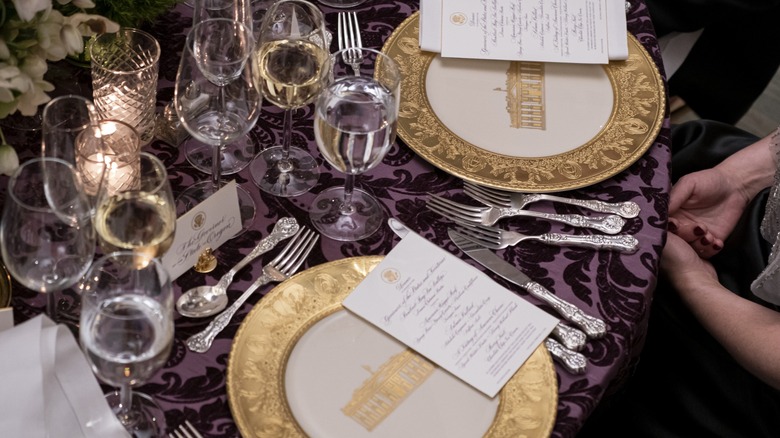
Over the course of human history, plate settings have evolved drastically and involved more and more components. Ancient Romans considered too many utensils to be tasteless, for example, but this attitude didn't stick. By the European Middle Ages, dinners might have been served off of common dinnerware called trenchers, and guests carried their own knives with them from place to place, as forks were a rarity. High-class Victorians, however, really took the art of lavish place settings to new heights. Obsessed with good manners and genteel appearances, they created uses for all sorts of new specialized implements, with dedicated forks and spoons for aspics, berries, and cake (not to mention specialized cups for keeping one's mustache tidy).
Luckily, however, 2020s dinner parties are not Victorian affairs. Many now realize that aspic spoons are not only painfully extra but also cost more effort to store, wash, and utilize than we want to expend. Most of us aren't living in a manor with a 12-foot dining table that affords enough real estate for elaborate place settings, anyway, and we don't have room in our pantries for all that excess. A good host needs to strike a balance between a nice place setting that lends luxury to the meal and not going overboard with bits and pieces that will overwhelm their poor guests. Luckily, that isn't hard to do. There is beauty in simplicity and letting one set of lovely dishes and utensils speak for themselves.