

For Better-Reheated Leftovers, Skip The Microwave
We may receive a commission on purchases made from links.
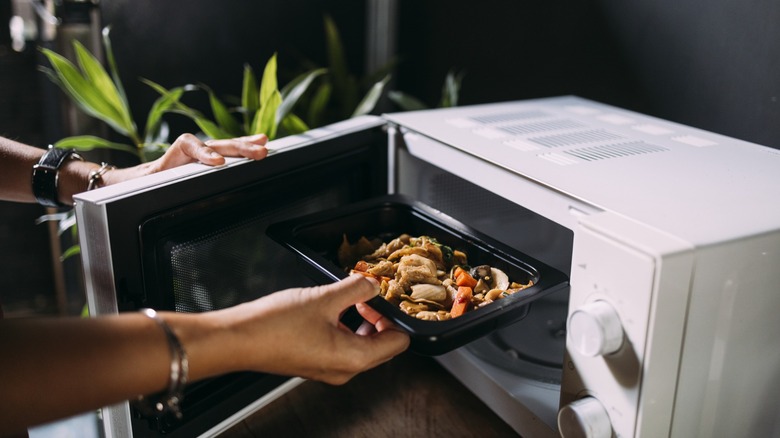
Sous vide isn't just a great way to make infused syrups and oils (although we do love doing that); it's also quite possibly the best method for reheating leftovers that you haven't previously considered. Look, we appreciate our microwaves but acknowledge that they aren't perfect when it comes to heating last night's food. Chef Mike can make food rubbery, heat it unevenly, and cause messy splatters. On the other hand, sous vide will heat your food evenly, preserving the original texture — as long as the texture isn't crispy — and ensuring that it tastes as good as when you first cooked it, with minimal mess.
You can buy a sous vide system like this one by Inkbird, and, with some vacuum-sealed bags, you are well on your way to sous vide glory. Don't let cost get you down, however, as some have had great success pulling off sous vide in a beer cooler, provided that you continually top off the hot water. The most important tool that you actually need for reheating leftovers this way is an instant-read digital food thermometer so that you can ensure your water and food are the right temperatures. Social media users proficient with this trick advise that you should aim for water just a few degrees cooler than the food was originally cooked at and plan on cooking your food 45 minutes for each inch of depth or thickness. No, this is not a quick and easy way to reheat leftovers like the microwave, but it can yield significantly better results.
What do home cooks have to say about sous vide and leftovers?
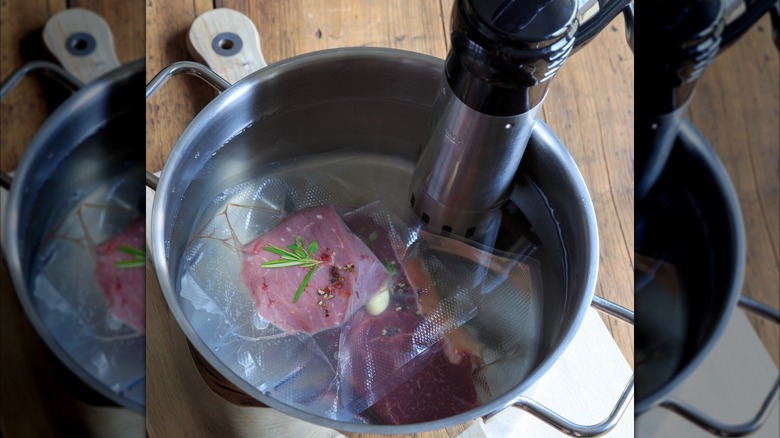
On Reddit, one commenter couldn't speak highly enough about sous vide for leftover meat in particular: "I hate leftover steak. Had some leftover ribeye one day, decided to try it reheated with a sous vide at 125 or something. Tastes like it was just cooked. I'll never reheat perfectly cooked meat any other way, sous vide all the way." Meanwhile, on a Facebook group, another user advocated for a hot water bath, just in different words: "Perfect reheating without changing the product at all. I've been doing this for years, try it, it's very convenient, you'll love it." Some users raised the question of whether sous vide would heat food quickly enough to keep leftovers out of the "danger zone" for contamination, and it seems to be near-universally agreed that proper cold storage was the key to eliminating this risk.
Just like with raw steaks, you have to decide whether you want to cook thick versus thin pieces of meat via sous vide, so you do have to make some decisions about your leftovers. If you are warming up a big chunk of something dense and you are in a time crunch, you might want to choose another reheating method, as sous vide is going to take quite a while. For a serving fit for one person, however, you likely aren't dealing with a lengthy process. A little discernment and common sense will help you decide what warming method is best for your food.