

Here's What It Means When Food Is 'Fresh Frozen'
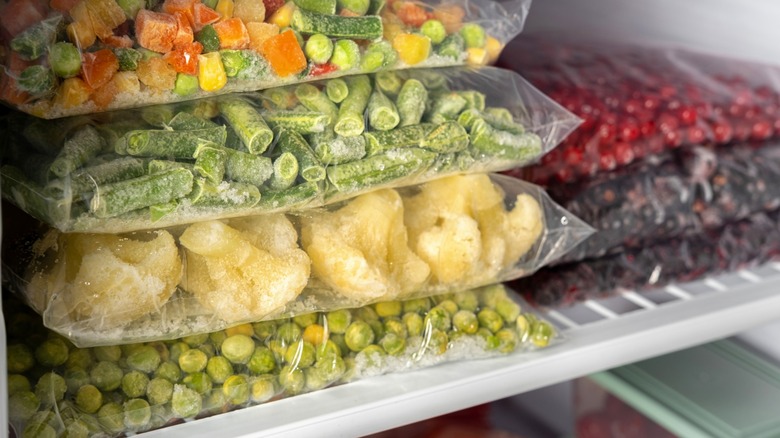
Picking the best food when buying groceries can feel frustrating at times, because it can seem like the presentation and marketing of products in a supermarket is one big mind game. There's a reason that milk is located at the back of the grocery store, for instance, and it's not random. Even the fact that grocery stores play music is a subliminal trick designed to influence your shopping habits. Knowing about all this psychological tomfoolery can easily make consumers suspicious of the jargon used by manufacturers. For example, when you see that a product is "fresh frozen," what does that even mean? Is it simply a term meant to entice you into what seems like a better product, but is actually a gimmick?
For once, the answer is "no." While some marketing tags are nothing so much as fluff, "fresh frozen" is actually a phrase that has real meaning you might appreciate. Simply put, food that is fresh frozen is preserved at peak freshness, ensuring that you get a product loaded with optimal taste, nutrition, and appearance. It's an FDA-defined term, which means that it can't just be tossed around willy-nilly. It frequently applies to frozen produce, like fruit and veggies, but you might also see it applied to fish. In many cases, fresh frozen foods are just as good as fresh, if not better, because they arrive at your home in the best condition possible after being harvested.
Fresh frozen foods are a great option for consumers who prize freshness
Over on a Reddit forum dedicated to spilling the secrets of professional kitchens, one commenter broke down a major advantage that fresh frozen foods can potentially have over fresh ones you buy at the store: "[F]rozen fruit/veg is usually more nutritious than fresh stuff, as fresh produce is usually held for up to year in storage before distribution. They keep them in fridges with low oxygen and high carbon dioxide to keep them "fresh" until they're ready to be shipped. Obviously you can't stop all natural processes this way so some nutritional value is lost because...the passage of time."
This claim is supported by facts. The "fresh" fruit you see at the supermarket may have journeyed leagues and leagues to get to that appealing heap on display, and such a voyage takes precious time away from the lifespan of your produce. That's one reason why grocery store apples have a wax coating. On the other hand, fresh frozen foods are suspended in time, being frozen right when they are sweetest, juiciest, and most delectable. Is one "better" than the other? That's in the eye of the beholder, but, from a scientific perspective, the frozen specimens might be a tad healthier.
When it comes to gimmicky marketing terms, "fresh" might be the biggest misnomer of all. There's not a great way to source only fresh food unless you live close to a farm and eat the goods quickly. Since most people can't do that, picking the next-best option is, well, the next-best choice. Fresh frozen food strikes a great balance between nutritional food that tastes great and sustenance that is available when you need it, optimized for storage.