

Can You Freeze Food In Glass Jars Without Making A Shattered Mess?
We may receive a commission on purchases made from links.
Freezers are a crucial tool for home chefs, allowing you to save seasonal produce deep into the rest of the year while at peak freshness, putting leftovers on ice (literally), and safeguarding your homemade stock for plenty of future soups. We've covered the best types of cheese to store in the freezer and hacks for perfect minced frozen garlic. If you are trying to eliminate waste from disposable containers and bags while also avoiding plastic, the question of freezing glass undoubtedly entered your brain at least once. And, yet, you kinda feel like that's a bad idea ... doesn't glass have a tendency to shatter in the cold and make a huge, dangerous mess in your freezer?
Back things up a scooch. Glass doesn't automatically break when frozen; it shatters under stress. To be pedantic, you can absolutely freeze food in glass vessels as long as it is freezer-safe glass. This might be tempered glass, borosilicate glass like these glass freezer-safe containers (which have tempered lids). If your glass jars are marked freezer-safe, you are good to use them for cold storage of food, as long as you don't fill them right up to the top. The moisture in food expands when freezing, and this stresses the glass, which can cause cracks even in the "right" glass.
Online resources will advise you that you can safely freeze food in other types of glass, but you do this at your own risk. It might be possible to use regular glass more safely, but you always run the risk of creating a disaster if just one thing goes wrong.
If you do use regular glass for freezing food, there are a few factors to keep in mind
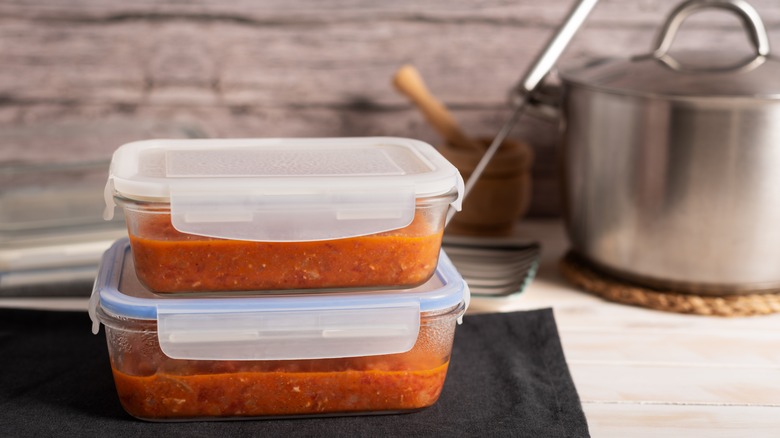
Numerous online sources point to the feasibility of utilizing regular glass in the freezer, such as canning jars or empty jelly containers. One more time: you can't guarantee the safety of glass in the freezer that isn't freezer safe. Those who claim that they have frozen jars in the freezer for years with few or no shatter incidents agree that one main factor leads to success — leaving room in the jar for the food inside to expand without stressing the glass.
In canning parlance, "headspace" is the term used to refer to the room you leave at the top of the jar when freezing food. Relatively dry foods may not expand much, but the higher the water content, the more the food will expand when freezing. Soups, fruits, and fluids are especially prone to this, so if you freeze your homemade pasta sauce or bring home some of Nonna's soup to store, you will also want to be extra mindful of headspace in your freezing.
Liquid in food isn't always as obvious as broth, however. If you store rice in the freezer – which works surprisingly well – you need to account for the absorbed water in the granules. Wide-necked jars are the safest vessels for freezing, since you don't have to worry about a narrow neck that could inhibit safe expansion. Used properly, glass can be a hygienic, endlessly-reusable, tidy method for freezing foods. Always cool your food adequately before freezing and label your jars for both food safety and easy identification.