

Local Grocery Stores Are Hidden Gems When Traveling. Here's Why
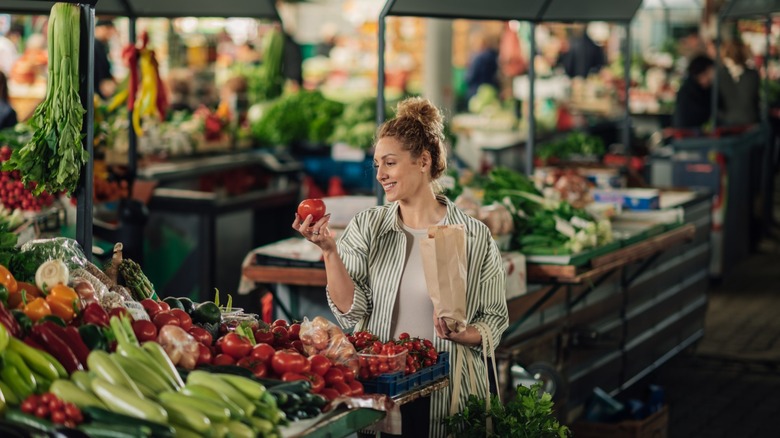
Whether you are traveling to another city in your own country or halfway across the world, one fact holds true for foodies: right after the landmarks of renown and famous museums, you should go hang out at a local grocery store. Popular restaurants and the food carts outside big tourist attractions will feed you overpriced, homogenized grub that caters to the palates of the masses and is the fare that locals think tourists want to ingest. However, the supermarket, farmer's market, or corner store where the locals buy their food offers a peek into the way that normal people in [insert destination here] actually eat, offering you a more authentic experience.
Travel writer Rick Steves says that you should avoid French onion soup in Paris during the summertime because this popular soup isn't in season and is only prepared for gullible visitors without discerning taste. We bet, however, that Steves would approve of tracking down a small, French-speaking grocer and perusing the daily specials, produce you can't get at home, and even unhealthy breakfast cereals that the locals enjoy. Even in America, there's a movement towards offering locally grown and prepared fare at grocery stores, meaning that the food store truly is the place to go to find out what local specialties happen to be. This could be as diverse as enormous quahog clams in New England or wine-flavored potato chips in England, to say nothing of the mélange of new-to-you spices, fauna, and produce that you'll find in crowded Asian markets. Furthermore, shopping locally supports the economy of your destination and is often a hack for cheaper eats.
Local grocery stores offer a closer peek at your destination (and will please your budget)

Traveling intentionally means that you seek to really feel out the vibes of your destination, not the touristy picture that many less-conscientious visitors are satisfied with. Not surprisingly, food targeted at tourists usually commands a premium price. On the other hand, if you eat like a local, you stand to save quite a bit of money for your next trip. Different areas have different staple foods that are often in generous supply and of a wholly different quality than you might get at home. So, don't be afraid to dig in! This could mean gorging yourself on the game meats that are abundant where you're staying or even checking out a Southern grocery store with multiple flavors of rotisserie chicken. No matter how far-flung your destination (even if it's not far-flung at all), this rule applies.
As a bonus, when you shop at local grocers, your money stays in the community, as opposed to hitting the pockets of individuals or corporations growing fat on lucrative tourist traps. This is another tenet of traveling ethically and goes hand-in-hand with the slow travel movement. Slow travel proponents would be enthusiastic about shopping elbow-to-elbow with locals to really drink in the experience of the place you are visiting. You need not be intimidated to step off the beaten path, either. In an age of Google Translate, all you need to do is be able to politely ask how to get to a good grocery store. Let your wandering feet, curious eyes, and insatiable taste buds do the rest of the work!