

Don't Throw Away Your Old Herbs Just Yet. Try This Instead
We may receive a commission on purchases made from links.
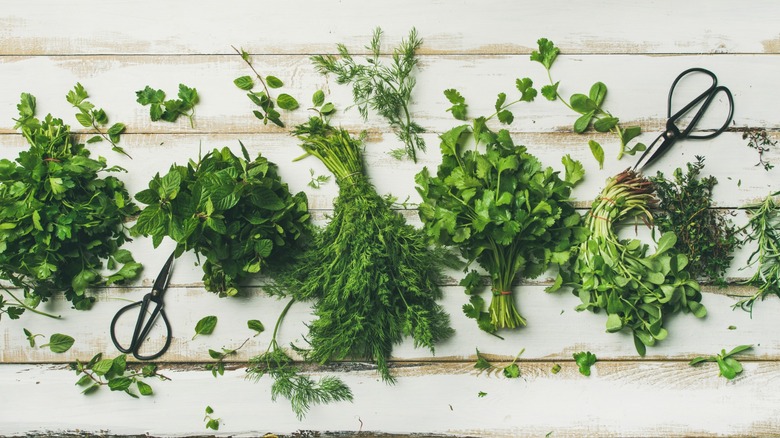
We previously discussed a paper towel hack for storing fresh herbs and making them last longer. Sometimes, however, despite your best efforts to keep herbs crisp and use them up in a timely manner, that basil or rosemary you have in your fridge up and wilts on you. This is not only wasteful, but kind of a bummer, as herbs are a delicious addition to many meals and we can't help but think of all the flavor we're missing out on when herbs go bad. Frozen herbs are another hack that can preserve your garden's bounty, but this can ruin the texture. When faced with wilting herbs, should you just bin them? Not so fast!
If the herbs you've been sitting on are not looking their best, one valid answer is to dry them. In many cases, you can substitute dried herbs for fresh ones interchangeably and save money on the powdered specimens at the grocery store, which are not nearly as potent as the herbs you dry yourself. Of course, if your herbs smell musty, or are already moldy or slimy — it's time for the bin.
Special equipment is not necessary for drying herbs, although you can't go wrong with a countertop food dehydrator if you plan on drying large amounts of herbs and want to save time and space. In any case, drying old herbs preserves their function, albeit in a changed form. There are a few ways you can go about the drying process, depending on your resources and equipment, but none of the methods are hard or labor-intensive.
Discover all the ways you can dry herbs instead of tossing them
Your options for drying herbs basically boil down to air-drying techniques or those that introduce dry heat. Air-drying is as simple as the name suggests: you just hang the herbs in bunches on a rack in a warm place with little humidity. Time and a little bit of vigilance to deter pests does the rest. As a bonus, drying herbs can add to the aesthetics of your kitchen, introducing a rustic touch — especially if you doctor up your rack with pretty ribbons or other decorative touches.
If you want a speedier, hands-on way to dry your herbs, the oven or microwave are great alternatives to a dedicated dehydrator. Your keys to remember are low heat, short bursts of time, and plenty of air circulation. In the oven, this might mean keeping the door propped open. In the microwave, you want to lay your herbs in a single layer cushioned by paper towels.
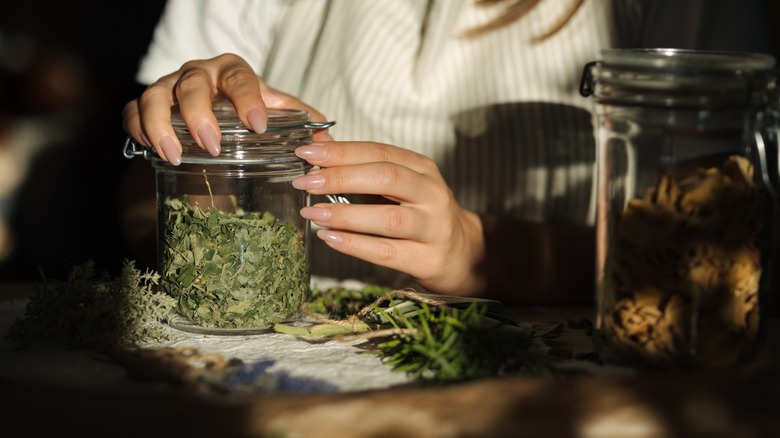
Once your herbs are dry, no matter what way they arrived at that state, you can grind them using a mortar and pestle and store them in an airtight jar the same way you would store-bought herbs or spices. For the freshest taste, keep your herbs away from both dampness and direct sunlight. You'll enjoy the sharp taste of your herbs, which otherwise might have been thrown away, and preserve them for later use.