

The Country That Produces The Most Cashew Nuts In The World
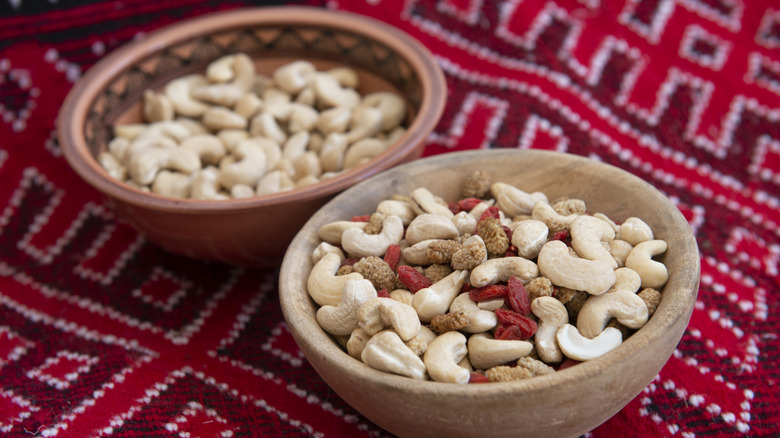
Over the past couple decades, one West African nation has become the world's largest producer of raw cashew nuts. The Ivory Coast, also known as Côte d'Ivoire, supplies a significant share of the cashews that so many of us love. Cashews thrive in the northern part of Côte d'Ivoire, where the dry, tropical climate is suited to cashew trees (their native habitat is Brazil). The Ivory Coast has long been known as the world's biggest cocoa producer, but cashew trees were first planted in the latter part of the 20th century to combat soil erosion. They've since grown into a major agricultural industry that produced 1.5 million tons of raw cashews in 2025. For many rural households, cashews became an attractive option for farmers who were exhausted from volatile cocoa prices and climate pressure.
Ivory Coast's rise to the nutty top didn't happen out of nowhere. As global demand for cashews surged, the Ivorian government began offering tax incentives to expand cashew cultivation and attract outside investors. Thanks to plant-based eating trends and the nut's reputation as a healthy, versatile ingredient, the cashew became more popular, especially with many American consumers looking for alternatives to cow milk. By the mid-2010s, the Ivory Coast had overtaken India and Vietnam in raw cashew production, exporting hundreds of thousands of cashews annually and becoming the backbone of the global supply.
Cashews bring complications to Ivory Coast
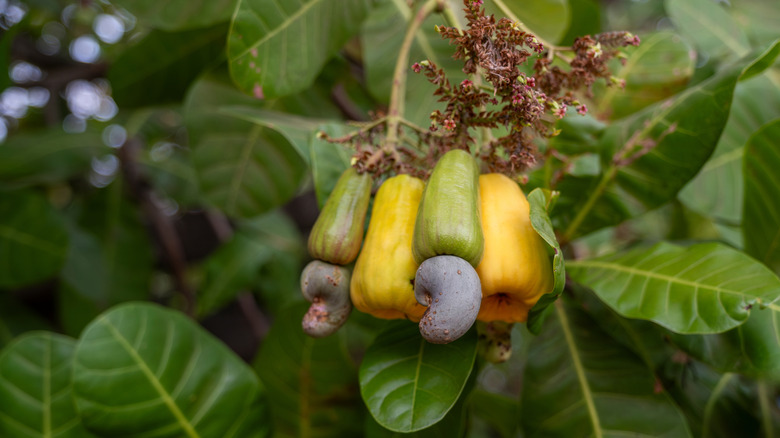
Like many agricultural crops, processing cashews is complex and hazardous, particularly because it involves removing shells, which contain oils that can burn your hands. Because of this, the Ivory Coast still exports most of its harvest in its unprocessed form to Vietnam and India, where large-scale processing industries were already established. But that relationship meant that while Ivory Coast farmers did the hard labor of growing and gathering the cashews, other countries got most of the profit. That balance has slowly begun to shift. More recently, new Ivorian processing plants have opened, and export rules increasingly favor semi-processed or finished kernels. While many challenges remain, more cashews are now being processed within the country than ever before.
Unfortunately, the cashew craze comes at a cost. Large portions of the country's savanna and forest have been eradicated in favor of the monoculture crop. Similar to mowing down the rainforest for versatile cacao fruit to make chocolate and other products, orchards of cashew trees not only lack biodiversity but also force the country to rely heavily on a single crop. When cashew sales hit a slump in 2023, the economy of the Ivory Coast almost collapsed.
For now, the cashew boom remains a double-edged sword. Yes, the crop has brought income, stability, and global relevance, but it also placed a potentially dangerous dependence on a single crop that requires labor-intensive harvesting and processing. So the next time you wonder why cashews are some of the most expensive nuts at the store, you'll know why.