

The Best Time To Eat Breakfast, According To Science
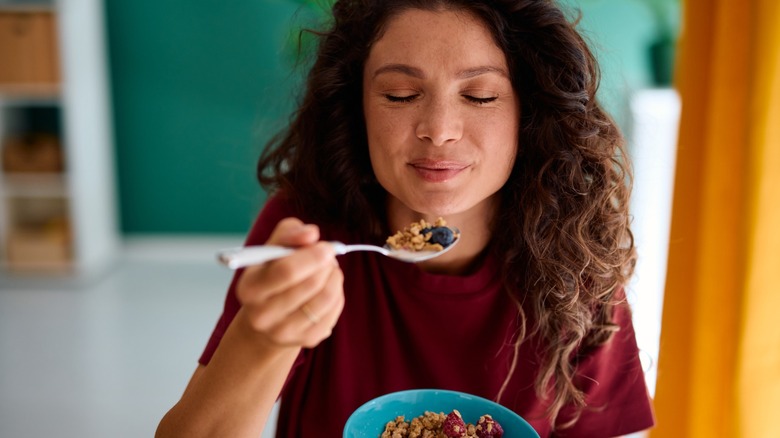
Having previously discussed why you should drink water in the morning, we figured out that timing counts when it comes to starting your day on the right foot. Come to discover, however, the timetable on which you eat your first meal of the day also has possible implications for your health. The best time to drink coffee is a matter of science, and so is the ideal scheduling of your breakfast.
A study published in Communications Medicine surveyed almost 3,000 older adults and determined that eating breakfast more than two hours after waking was associated with a greater rate of mortality. The later the breakfast was eaten, the higher the rate of mortality. The study results posited that eating within two hours of getting up in the morning was beneficial, but it has been noted that cause and effect were hard to determine. Did the old folks suffer ill health because they ate later, or were poor dietary habits associated with health struggles?
Controversial results aside, there is still plentiful research to back the idea that you make your body happiest when you eat within two hours of waking up. Breakfast literally means "breaking the fast," and this act lets your metabolism get revving and stabilizes your blood sugar for a long day ahead. There is evidence that promptly eating breakfast can help you manage your weight by stimulating the response of natural GLP-1s in your body. The study of when to eat, as opposed to just what, is an emerging field of scientific research, and it's increasingly believed that food consumption is tied into the same circadian rhythms that regulate our sleep patterns.
Breakfast is more important than you might assume

Whether your wake-up meal consists of toast, cereal, or even an old-school breakfast dish you rarely see today, there might just be something to that oft-repeated saying that breakfast is the most important meal of the day. A literature review published by the journal Nutrients gathered hundreds of years of research on the topic of breakfast and mentioned the fact that folks who skip breakfast often make up those missed calories later in the day ... only with foods that were fattier, more sugary, and less nutritious than standard breakfast fare. This would seem to back up the idea that eating fairly soon after waking is important, because if you don't take the edge off your hunger early on, you may be more likely to attempt to satiate yourself with less-healthy foods later.
This isn't scientific, but there's also the logical assumption that if you make breakfast a deliberate part of your day soon after waking, you have more control over your daily dietary destiny. Setting aside even a humble breakfast bar from a wrapper, for instance, might save you from hitting a drive-thru or vending machine for a snack that's not terribly wholesome. If you have the chance to really pick and choose your macros, like a high-protein egg sandwich or some overnight oats, all the better. Making breakfast a part of your "start the day" routine apparently will pay dividends no matter how you slice it and, though there's no concrete proof currently, just might help extend your lifespan.