

Fork Tender Prime Rib Starts Before You Cook It
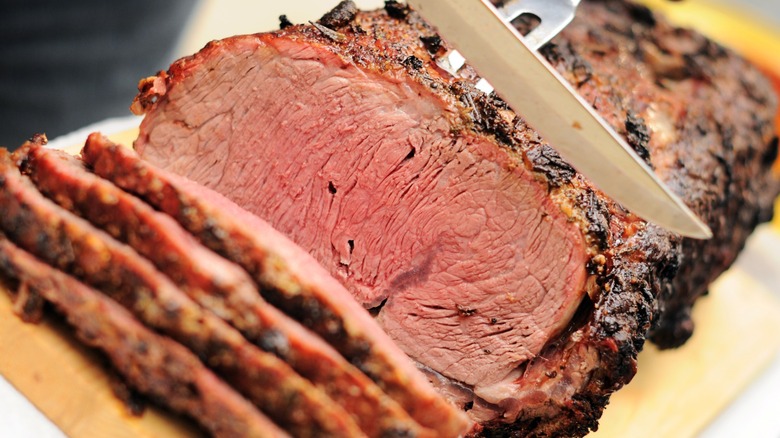
With a little searching, it's easy enough to find fork-tender prime rib at a steakhouse (we covered one such eatery), but preparing this pricey, delicious cut of meat at home to restaurant quality can be challenging. You've undoubtedly heard of complicated techniques involving precise temperature over very certain periods of time, dozens of hints for salting and seasoning, and instructions on how long to rest the meat. Dare we venture to say, however, that the secret to delectable, tender prime rib starts in the grocery store? We aren't just talking about buying rib roast versus prime rib (although this is also important), but also about buying your prime rib bone-in versus boneless. Hear us out: cooking your beef with the bone in makes a significant difference, no matter how else you switch up your recipe.
First of all, many "rib roasts" are boneless, while a true "prime rib" section has bones intact. Don't have the grocery store butcher debone your meat, even if it's tempting! The in situ bones actually work as insulation for your meat, allowing the protein around them to cook more slowly and evenly. If you are looking for rare, supple beef, leaving the bones in while you cook can be an absolute game-changer. You are, of course, free to debone your meat before serving and eating. This only applies to the time while the beef is in the oven.
Are there other reasons to leave the bones in your prime rib?
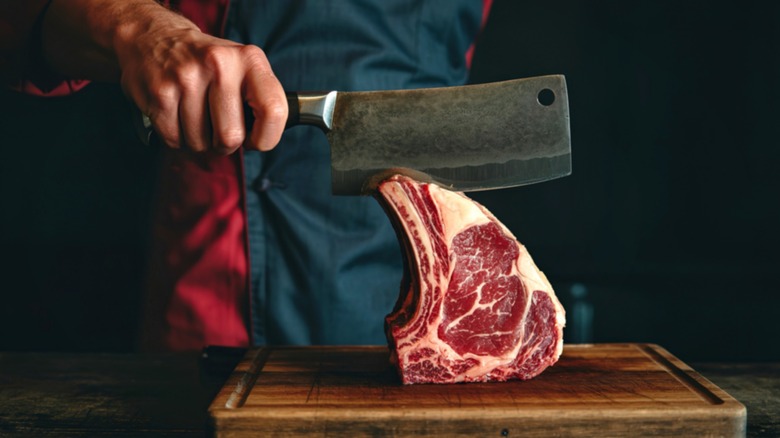
Some have theorized that leaving the bones in your prime rib allows flavor embedded deep in the bones to infuse your beef and make it taste better. Credible sources say that this might not be true, so cooking prime rib with bones should be more about achieving melt-in-your-mouth tenderness, not flavor. On the other hand, know that bone-in meat does, in fact, take quite a bit longer to cook, which is a real concern for those trying to plate up a gourmet dinner. Because of that same insulating effect we discussed, the meat doesn't come to temp as quickly. This is both a benefit (nay, the whole point!) of cooking bone-in and a downside that you might have to account for. Not an insurmountable obstacle, by any means, but definitely worth noting.
Some social media home cooks have attempted to have the best of both worlds by having their prime rib deboned by a butcher, then tying the bones back on atop the fat cap to hopefully gain back the plusses of cooking with intact bones. This, however, is probably a bad idea. The reality is that strapping bones on your prime rib will likely only impede it from searing on the outside from the high temperature you are probably cooking with, which negatively impacts both flavor and appearance. If you want the benefits of bones, leave the roast intact until it's ready to dish up.