

10 Genius Ways To Reuse Butter Wrappers
We may receive a commission on purchases made from links.
While not all food-related stuff can be thrown in the recycling bin (we're looking at you, cheese-covered pizza boxes), there are plenty of items that can be given a second life. Don't want to spend money on seed starters? Put these plastic food containers to good use instead. Get your daily potassium boost from a banana? There's more than compost to be made from their peels.
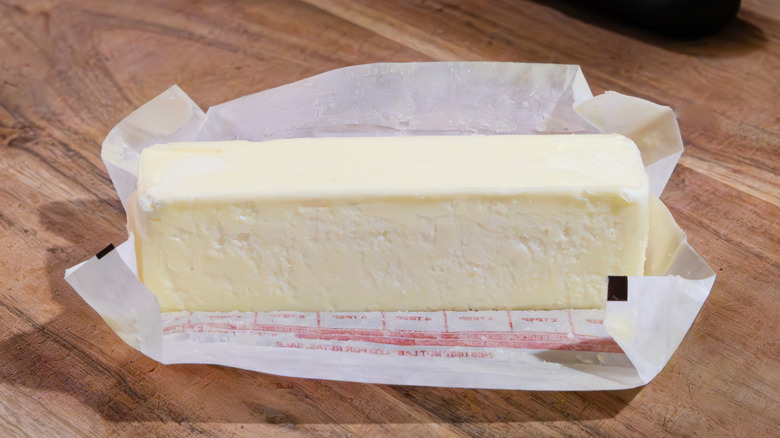
The fact is, our kitchens are full of things we can reuse. While some only have one or two other purposes, others are multifaceted in their practicality. One of the best is the humble butter wrapper. Most sticks come sharply wrapped in foil or paper which, when they're scraped of their contents, are tossed in the trash by millions of home cooks. Little do they realise they're throwing away a versatile culinary tool.
Anyone who loves the great outdoors knows a lightly crumpled butter paper or two can be a great way to start a camp fire, or even a charcoal grill, if you're out of lighter fluid. Back in the kitchen, putting butter paper over balls of cookie dough ensures they won't stick to whatever you use to flatten them — and that's just the start. Pull up a chair for more genius ways to reuse butter wrappers.
Covering steamed puddings
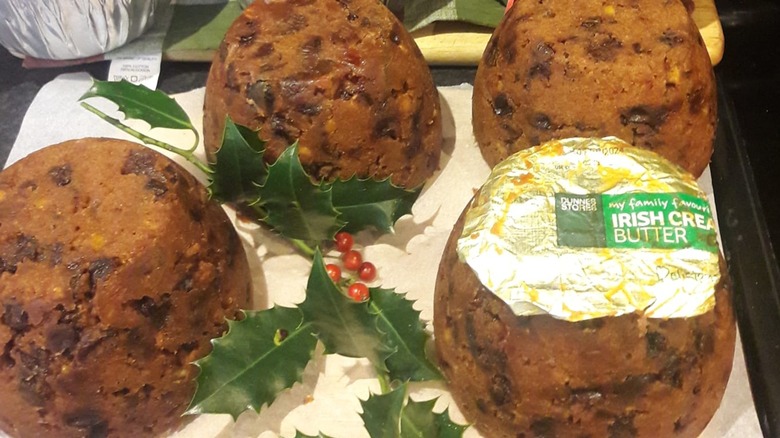
Irish playwright George Bernard Shaw famously referred to the United States and United Kingdom as two countries separated by a common language. While there's a lot of American foods the world doesn't understand, it's not all one-way traffic. Steamed puddings are a mystery to most U.S. home cooks, but across the pond, they're part of the cultural fabric, especially at Christmas. They also offer a handy way to reuse our butter wrappers.
The batter for a steamed pudding is the same as any white or yellow cake — though you can adapt it in lots of ways. Cooking it, however, is slightly different. Once the batter has been put into a heavy bowl, it needs to be sealed (we'll come back to this in a moment) and placed in a pan of boiling water, where it will steam for as long as needed to cook. Some dense Christmas puddings can take up to eight hours, but a simple sponge can be done in a fraction of the time in a Dutch oven.
So, where do our handy butter papers come in? Lots of home cooks use them to seal in the pudding, preventing water from seeping inside. Even if you use a plastic lid or a folded piece of foil, slipping in a butter wrapper makes sure your finished pudding will be soft and gooey, rather than soggy and unappetizing.
Easily separate sliced or frozen foods
There's a hack for everything these days, especially when it comes to organizing your refrigerator. Freezer tips, however, appear to be thinner on the ground. But, whether you're the proud possessor of a model that's full of drawers or, like me, own a chest-type freezer, used butter papers have a function that can serve you very well.
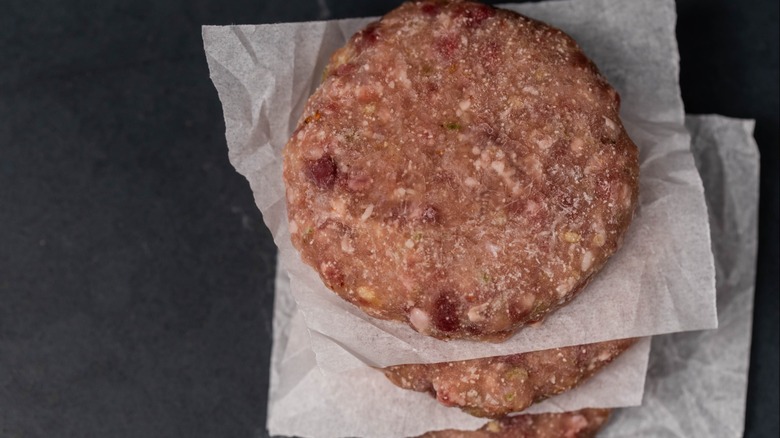
We've all been there: trying to separate homemade burger patties that have fused into a single, beefy lump, when you really only want one or two for the kids' lunch. I'm notorious for using a hammer and a screwdriver (not recommended if you care about your countertops) and, if that doesn't work, ordering take-out. Now I have a better solution.
Old butter wrappers are the perfect way to keep the burgers from fusing together. Unlike aluminum foil, they won't find their way into every meaty crevice and become instantly invisible. An added plus is they can be wrapped tightly around the patties to keep them all together, so you don't end up dumpster-diving around your chest freezer trying to find them all. Butter papers are also brilliant for separating any sliced foods or baked goods, like cookies, that you want to freeze. Pop them in a bag when they're fully frozen and thaw the amount you need, when you need it.
Add moisture to just-cooked rice
We've been eating rice for thousands of years, and whether you boil, steam, or fry it, there's always a way to turn it into the superstar element of a dish. But the reality is, many home cooks have a hard time getting their rice right. Celebrity chef Bobby Flay has his own rice-cooking method, but we've got another trick up our sleeve.
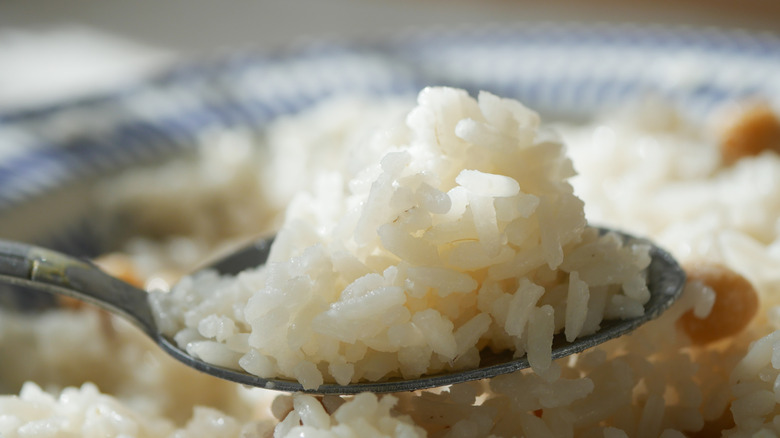
If you find your rice — whether you're cooking plain white, wholewheat, or the bougie wild kind — always ends up a little on the dry side, a leftover butter wrapper can come to the rescue. It's important to make sure there's a little bit of residue on the paper; one that's been scraped completely clean won't do the job. Place your butter paper on top of the rice while it's still in the pan and replace the lid. Leave it for around five minutes, then serve your delicious, butter-infused rice. It will work for couscous too, though you'll still need to fork it lightly afterward.
It's not the only hot food to benefit from a sheet of butter paper. Placing it on top of roast chicken gets the skin good and golden, while many home bakers rub fresh-out-of-the-oven bread loaves with butter wrappers. Along with a layer of flavor, the butter also gives food a gorgeous shine.
Wrap baked potatoes in them before cooking
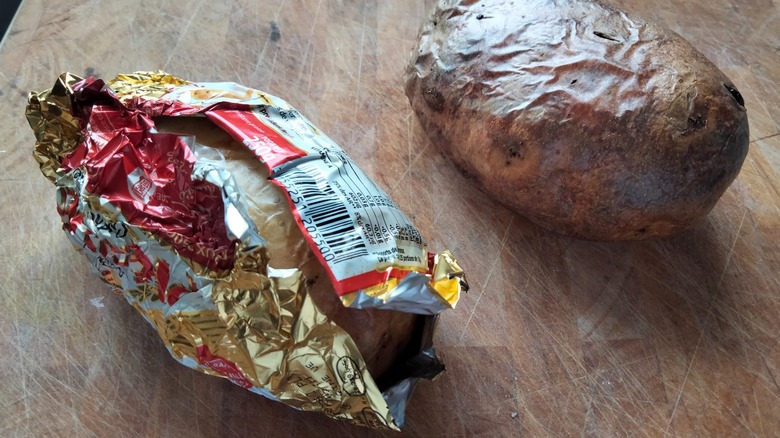
People who love baked potatoes fall into two camps: those (like me) who love a crispy exterior, and those who prefer melt-in-your-mouth skin. Achieving the former requires a generous rub of good quality, real olive oil and not much else. For a softer potato skin, many people wrap their tubers in aluminum foil, sealing in all the moisture as it cooks in the oven. But that's not the only way to do it.
A leftover butter wrapper will do exactly the same thing. I gave it a whirl to see if it really worked, and I'm pleased to report that it does. I used a metalized wrapper and made sure there was a little butter sticking to the inside before pressing it tightly around my pre-pricked — but still raw — potato (nobody wants an exploded dinner).
My potato wound up being a fraction too big for the butter wrapper. It would have been wise to check if it fit beforehand, but — after an hour in a 390 F oven — I had a soft, fluffy baked potato. The skin was paler and a little more yellow than the unwrapped cousin I'd done at the same time, but the butter paper meant no extra butter was needed after cooking. Best of all, I didn't have to worry about the most common aluminum foil mistake: working out which side of the wrapper to use.
Grease glass dishes or pans
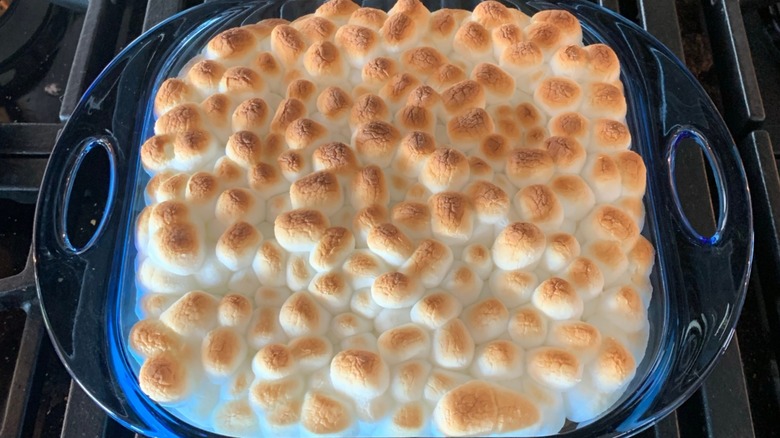
One of the most fun things about being a foodie is collecting fancy dishware, like this vintage brand, and having a different pan for every culinary occasion. But keeping them in tip-top condition can be tricky, especially in households where home-cooked meals are the norm, or baking is a regular activity.
You could try this method to keep your sheet pans like new, or you can prevent food from sticking with a swipe or two with a leftover butter wrapper. There are three great reasons for doing this: First, the soft paper allows you to get into every nook and cranny of your favorite ceramic dish, baking tin or stove-top pan. Second, the small amount of butter on the paper won't leave your food swimming in grease. Third, unlike some sprays, butter contains no chemical ingredients.
Those aren't the only benefits butter wrappers have for your kitchenware. While some people use them to help season a cast iron skillet, others insist they are perfect for polishing stainless steel pans and lids. Give them a gentle rub with the wrapper, followed by a buff with paper towels or a clean cloth, and voila: a fabulous mirror shine.
Butter corn on the cob

Is there anything better than sinking your teeth into a crispy, sweet, and juicy cob of corn? It's a signature summer ingredient across the United States, whether it's piled high at a barbecue or parked alongside a family-sized bowl of crisp, green salad. You can pump up the heat with a dash of famous savory seasoning, but sometimes the simplest flavors are the best. For corn on the cob, it's all about the butter.
Getting the spread on the cob might be a must, but it's not easy. Dolloping a knob of butter on a pile of corn looks lovely in a magazine or on screen, but in reality, it runs off and pools sadly on the plate. Rubbing an entire cob onto a block of butter will likely horrify other diners and won't do much for our heart health. What's a corn-lover to do?
Grab a butter wrapper! There's enough grease on the paper to cover one decent-sized cob of corn without the butter sliding off, so you get maximum flavor with minimum mess. If you're going to have a big family dinner or a cookout, you can even plan ahead and save several butter wrappers in a bag in the fridge, so everyone's got one for their corn.
Make pouring sticky liquids easier
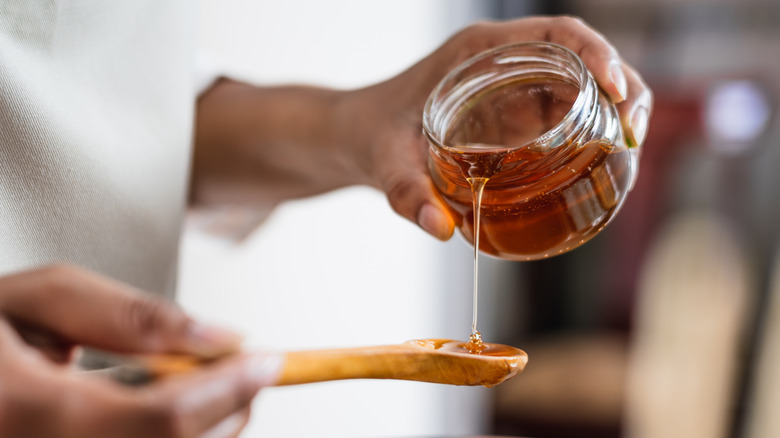
Millions of people take their morning coffee sweet, and you could fill a storecupboard with the range of ingredients that can stand in for sugar. While some of them are easy to spoon into a steaming mug of joe, others require a little more patience. If you got your hands on a bottle of pure maple syrup, or you always reach for a jar of honey to flavor your drink, you've got to wait for the sticky stuff to make its way to where you want it to go. A butter wrapper can help speed up the process.
Giving your spoon or wooden dipper a quick rub with a leftover butter wrapper will prevent the maple syrup or honey from sticking to the utensil. Not only will it help the gloopy liquid slide quickly and easily into your cup, your drink won't taste of butter. It's not the only assistance a butter wrapper can give when it comes to sticky stuff.
If a recipe calls for a measured amount of peanut butter or molasses, you could make like Martha Stewart and use a squirt of spray oil on your measuring cup to keep the ingredients from sticking. But it's easy to drench measuring cups or bowls, leaving you with more grease than you need. Using a leftover butter wrapper to grease your cups makes it easier to control how much of a barrier you need, and it works with everything from slow-moving liquids to cake batter and even bread dough.
Lubricate kitchen knives
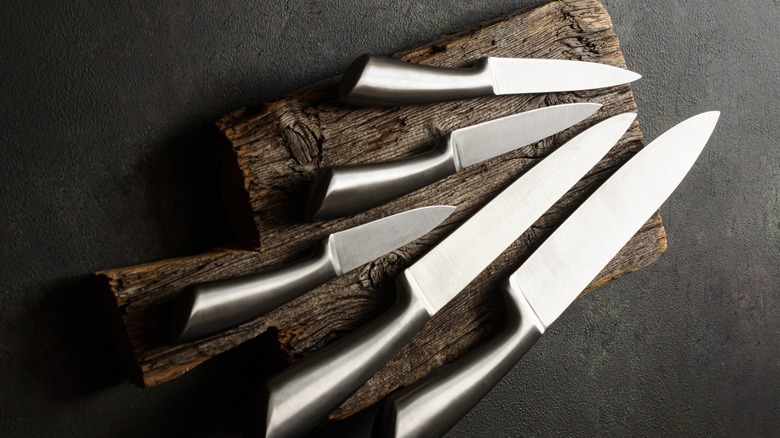
Professional chefs know it's important to take good care of their knives. They're an expensive investment, but keeping them sharp and clean makes them safer, as well as more efficient. Good quality kitchen knives, like this all-purpose model from Victorinox, are more accessible than ever for home cooks. They also come with all kinds of advice on protecting the blades with various oils.
Luckily, you don't have to be the proud owner of an artisan blade to benefit from a hack that will help you get the best from your equipment. A butter wrapper can be a great way to make cutting produce easier. Lubricating the blade by rubbing the paper along it will help you slide through tough vegetables like carrots or potatoes, and it's also great for foods that stick to the blade, such as cheese or cucumbers. Butter wrappers can be used on all kinds of kitchen knives, speeding up food preparation and potentially preventing cuts, since you don't have to slide items off the blade every few chops.
Keep leftover cheese fresh
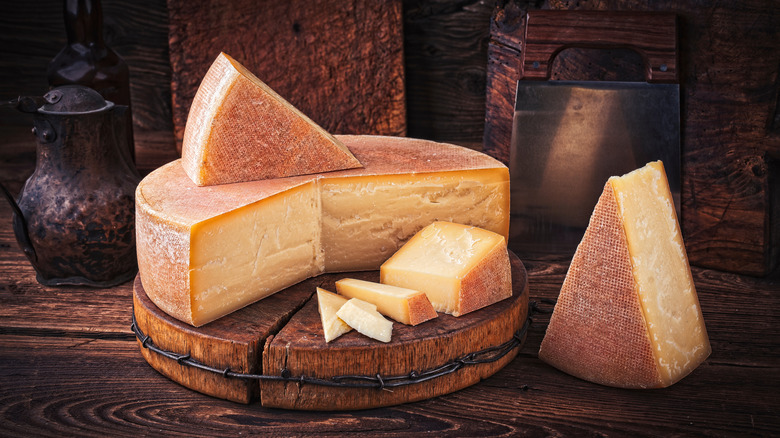
Hands up if you've ever grabbed a hunk of cheese out of the fridge, seen tell-tale evidence of mold (ew) but scraped it off with a knife and eaten a piece anyway? Same. It seems many of us make this mistake when storing cheese and end up with all kinds of stuff growing on it. Hard cheese is especially a problem child for many home cooks, with its tendency to crack and develop spots of mold. A butter wrapper can put an end to that particular foodie frustration.
Many people advise spreading butter on the cut ends of the cheese to keep it moist and stop bacteria growing. They suggest simply scraping it off when it comes time to use the cheese, but if that makes you feel a bit queasy, we've got a simpler solution. Cover the exposed part of the block in a leftover butter wrapper. It provides moisture to stop the cheese from drying out and won't smother it in unwanted grease.
When the wrapper is in place, you can cover the cheese in plastic wrap, parchment paper or pop it in an airtight container before putting it in the fridge. The next time you fancy some cheese, it'll be delicious and less likely to be mold-ridden.
Line a cake tin
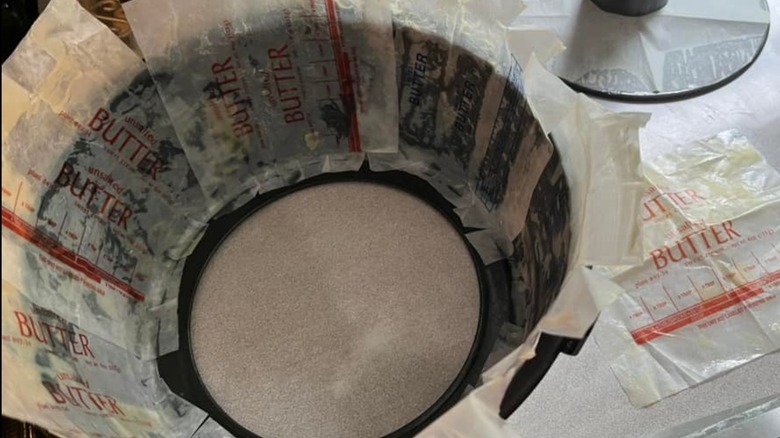
Who doesn't love a home-cooked baked confection? Whether you whip up a tried-and-tested family recipe or crack open your favorite boxed mix, you'll still end up with a delicious, sweet treat. Spontaneous baking can be fun, but running out of parchment paper isn't quite the spoke in the wheel it used to be, thanks to leftover butter wrappers.
You can use butter wrappers — in a pinch — to line your cake tin. Some veteran home bakers may raise an eyebrow, thinking you were mistaking them for parchment paper, but this is still a legitimate hack. This social media user showed off their successful bake using a tin lined with butter wrappers, and they're not the only ones to have done so.
Online commenters expressed their doubts about whether butter wrappers were safe to use as tin liners, given they may have wax on the outside, while others insist waxed paper has been used in baking for years. Some people expressed concern about the potential for chemicals used in the wrappers leaching into food. If in doubt, and you have no parchment or baking paper, you can simply stick to using your butter wrappers to grease your tins before flouring them.