

This Failed Steakhouse Chain Only Has One Location Left. Can You Guess Where?
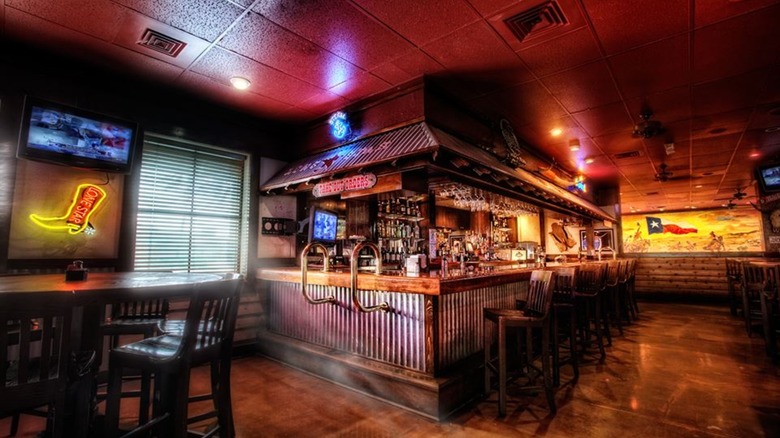
American history has seen the fall of more than one once-thriving steakhouse, from York Steak House to Ponderosa to the Mr. Steak restaurant chain. In late 2025, we ranked popular steakhouse chains. If we'd made such a list 20 years ago, it would be unthinkable to exclude Lone Star Steakhouse & Saloon, a then-behemoth of the industry. At its peak, Lone Star had 267 restaurants in most American states. Similar to familiar names like LongHorn today, Lone Star was a mid-level steakhouse that was nicer than casual dining, but less pricey and formal than fancy steakhouses.
Time was not kind to Lone Star, which, by 2019, had closed the last four North American locations that were still hanging on. Come to find out, there's only one Lone Star location left in the world, and it's not in the continental U.S. Actually, it's in Guam. Its website kicks back an error, but an active Facebook page shows this location is currently open for business. Social media displays the fact that the Guam Lone Star is still running very much like a familiar chain steakhouse: there's a happy hour, a Bloomin' Onion analogue, juicy steaks, and thick burgers. Holiday celebrations include special dinners, like a turkey plate with all the fixings. The restaurant recently celebrated 30 years of business, and gives every impression of going strong. The same cannot be said for the chain it once belonged to, which is dead as a doornail thanks to a string of poor ownership decisions.
What happened to Lone Star Steakhouse?
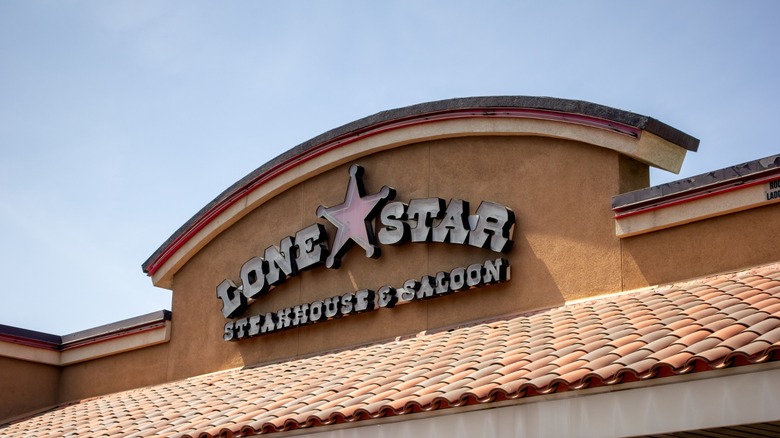
Outback Steakhouse may have its origins in Florida, but Lone Star Steakhouse came to be a bit further up the East Coast. The first Lone Star location opened in 1989 in Winston-Salem, North Carolina. It was the brainchild of Jamie B. Coulter, who was, at the time, a big deal in Pizza Hut franchises. He based his restaurant concept on Texas Roadhouse: comfortable, laid-back, and fun. The chain took off like lightning, and expanded quickly. Perhaps too quickly, in fact.
Despite the looming financial crisis that would later be known as The Great Recession, Lone Star's management pushed ahead with opening new restaurants. This strategy worked right up until it didn't ... and the closings started. Massive competition and declining sales caught up with the chain, and it was sold twice to private equity firms that essentially ran it into the ground with questionable decisions (like selling real estate and leasing it back) that momentarily pleased shareholders, but ultimately spelled doom for the business.
In late 2016 and early 2017, 14 Lone Star locations in nine states closed overnight, with no explanation. As 2017 wore on, the number of restaurants dwindled down to 30, with former members of upper management disavowing any knowledge of what was going on, and the media struggling to make sense of disorganized, contradicting stories. It took only about two years for the straggling locations to shut their doors, usually with no notice. It's heartwarming to see Lone Star living on successfully with one single location in Guam, but sad to think of a prosperous chain brought down by greed and unwise management.