

How To Properly Trim A Prime Rib Before Cooking
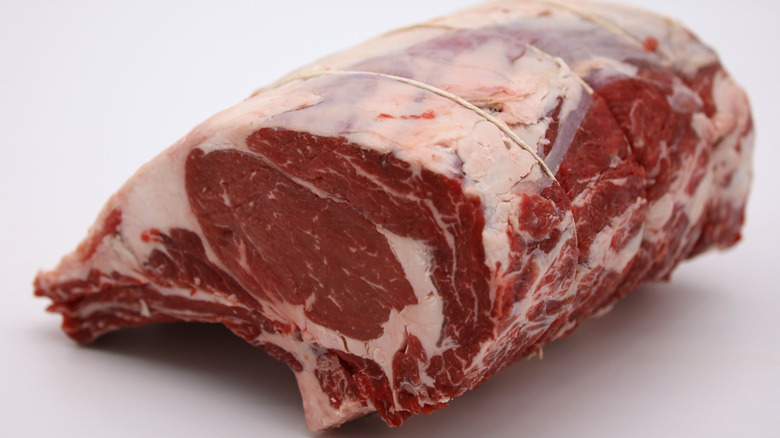
Whether you're planning an intimate dinner for a loved one or hosting a splendid holiday fête, prime rib is a festive and luxurious centerpiece to any table. With such a costly piece of beef — and keep in mind that there's a difference between prime rib and (equally spendy) rib roast! — nailing it and serving this cut at its absolute best is of paramount importance. You don't just want to waste your money, but also expectations can feel sky-high. To that end, how exactly do you trim a prime rib before you cook it? Do you trim it at all?
Prime rib is naturally fatty, as it comes from a less-exercised section of the cow. Whether you choose a boneless or a bone-in cut (and we recommend you buy bone-in for fork-tender prime rib), you may find that the butcher has already trimmed the meat for you. If so, you don't need to worry about it. Fat, as you may have heard, is flavor. However, if the meat is untrimmed, you will want to cut away at least some of the fat because there's typically too much for it to fully render out. How much is up to you with regard to how much marbling you prefer.
To trim, get a very sharp knife and slice delicately at the fat cap, trimming rather than gouging. Remember that, even with fat-averse eaters, you don't want to remove every ounce of the stuff, because your meat will likely dry out in its absence. Once you've trimmed it to your liking, flip the meat over so it's bone-side up and remove the unpleasant membrane.
Here are some extra tips to keep in mind when trimming prime rib
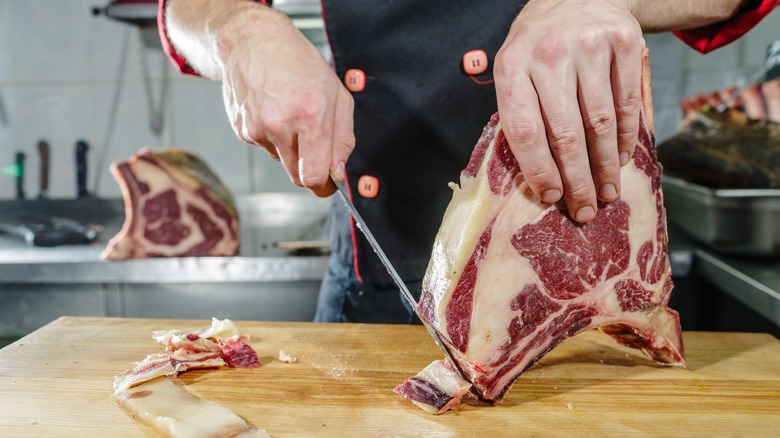
There's a cheaper meat cut that's a worthwhile budget alternative to prime rib, but, for a special occasion, only the real thing will do. Don't let the price tag intimidate you out of treating your meat properly and with confidence! On Reddit, a self-proclaimed chef had some pithy advice: "[I] would cross hatch it over the top, cutting deep enough to barely penetrate the meat [...] Fat keeps the meat moist and is delicious when slow cooked properly. Do not fear the fat. [W]hen scoring the top the goal is to cut the layer under the fat so it can seap [sic] into the meat, but not so much that you allow heat to penetrate unevenly."
Which leaves one more trimming topic: trimming prime rib into steaks! A whole prime rib has seven bones and can be an unwieldy piece of meat for an inexperienced home cook. Trimming the fat cap can actually be easier on a whole prime rib roast because it peels off in a strip. To make "roast cuts" that will be attractive on a plate, trim the fat between the knobs of bone and slice the steaks between each bone, making even cuts. Whether or not you leave the bone intact when serving is a matter of presentation. Taking it out is more convenient for your diners, but leaving it in does impart a certain primal je ne sais quoi. If you doubt your butchering skills, ask the pros at the meat department or butcher shop to do it for you before taking it home.